



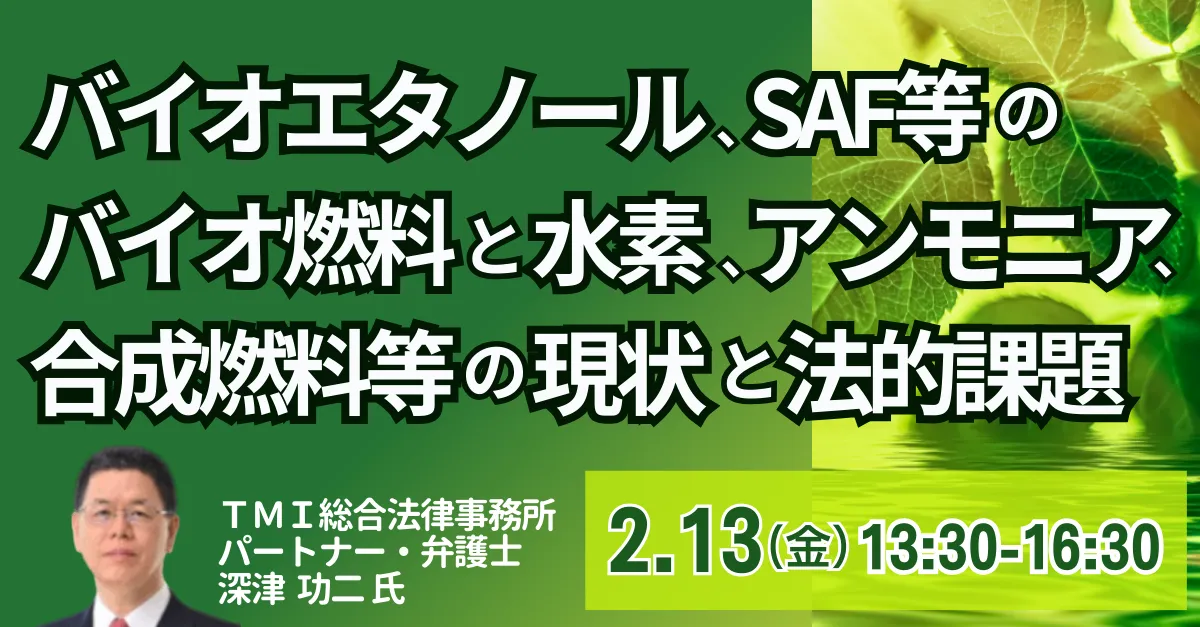
Exploring the Current Status and Legal Challenges of Biofuels and Hydrogen
Understanding Biofuels and Hydrogen in Today's Economy
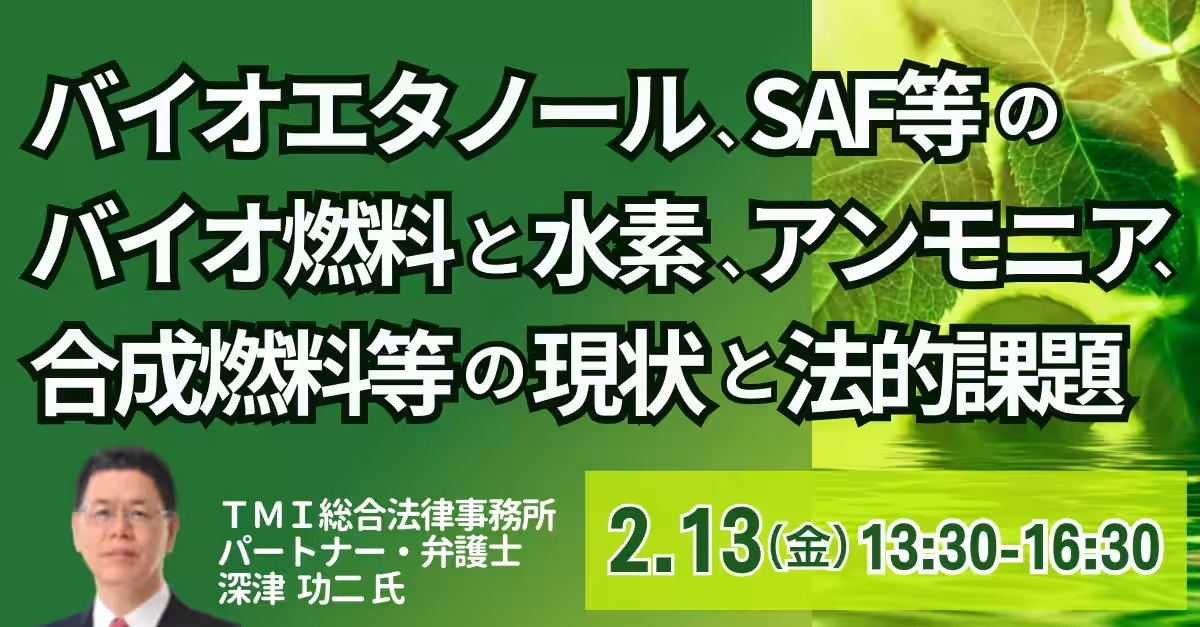
On February 13, 2026, JPI (Japan Planning Institute) will host a crucial seminar focusing on the current landscape and legal challenges surrounding biofuels like bioethanol and sustainable aviation fuel (SAF), alongside hydrogen, ammonia, and synthetic fuels. The event aims to provide insights into how these energy sources can facilitate a decarbonized society.
The speaker for this seminar will be Koji Fukatsu, a partner and attorney at TMI General Legal Practice. His expertise will guide attendees through the complexities of biofuels and hydrogen legislation, especially in light of the emission trading systems set to be implemented in 2026.
Biofuels: Current Status and Directions
In recent years, the demand for renewable energy sources has been rising globally. Specifically, biofuels have garnered attention for their potential to reduce greenhouse gas emissions. During this section of the seminar, we will delve into different types of biofuels, including:
1. Bioethanol - A prevalent biofuel derived from renewable sources, its current usage and future potential will be discussed.
2. Biodiesel - Another popular biofuel, biodiesel's advantages and challenges will be examined.
3. Sustainable Aviation Fuel (SAF) - The seminar will cover the growing importance of SAF in reducing aviation's carbon footprint.
Hydrogen and Related Fuels: Current Landscape
In addition to biofuels, we will explore other critical components in the journey towards a decarbonized future:
1. Hydrogen and Ammonia - These fuels are pivotal in achieving zero emissions; their production, applications, and regulatory environment will be covered.
2. Synthetic Methane - A critical examination of synthetic methane, its creation, and efficacy as a fuel source.
3. Synthetic Fuels - These fuel types, designed to mimic traditional petroleum-based fuels, will be analyzed for their potential market impact.
Emission Trading Systems
As Japan begins to implement emission trading systems by 2026, the seminar will offer insights into relevant frameworks such as:
1. EU-ETS - Understanding the European Union's Emission Trading System and its implications is essential.
2. Japan's GX-ETS - A comparative analysis of Japan’s upcoming system against established international benchmarks will be conducted.
Certification and Credit Systems
The discussion will also highlight various certificate and credit systems, including clean fuel certificate systems designed to promote renewable energy usage and lower emissions. This will enhance understanding of how compliance with these regulations can be achieved effectively.
Interactive Q&A Session
The seminar will conclude with a Q&A session, allowing participants to engage directly with the speaker and clarify doubts regarding the legal frameworks surrounding biofuels and hydrogen.
Networking Opportunities
One of the distinctive features of this seminar is the networking session. Attendees will have the chance to exchange business cards and foster connections with both the speaker and fellow participants. This platform aims to cultivate professional relationships that can lead to collaborative opportunities in the future.
Registration Details
Participants can choose to attend in-person, through live-streaming, or via archived content that will be available for two weeks post-event, allowing for flexible viewing options. The participation fee is set at 37,470 yen (tax included) for one person, with discounts available for groups and local government affiliations.
About JPI
Established over 50 years ago, JPI continues to serve as a bridge between government, businesses, and academic institutions, providing valuable insights and facilitating discussions that drive national policies and projects forward. Through exclusive, focused seminars, JPI aims to empower senior executives and decision-makers with pertinent information necessary for successful project execution.
For more details and to register for the seminar, please visit JPI's seminar page.

Topics Energy)
【About Using Articles】
You can freely use the title and article content by linking to the page where the article is posted.
※ Images cannot be used.
【About Links】
Links are free to use.