


Survey Reveals the Impact of Generative AI on Human Resource Development Strategies in Japan
Understanding the Need for Change in HR Development due to Generative AI
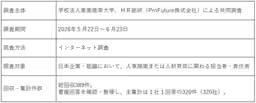
In a groundbreaking study conducted by the Institute of Management and Industry Science at San-no University, in collaboration with ProFuture Inc., insights have been gathered regarding how Japanese companies are adjusting their human resource development strategies in the age of generative AI. The survey targeted HR personnel from 320 companies, soliciting their perspectives on the integration of AI technologies into HR practices. The findings shed light on both the opportunities and challenges that generative AI presents for workforce training and skill development.
Key Findings from the Survey
1. Broad Recognition of the Need for Change but Limited Implementation
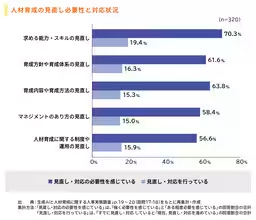
The survey revealed that while a notable 79.1% of respondents believe generative AI will significantly affect their HR development strategies, only 15.0% to 19.4% have made actual changes in various areas such as skills enhancement, training methodologies, and management approaches. This considerable gap illustrates a disconnect between recognizing the necessity for adaptation and taking actionable steps.
2. Unclear Strategic Direction Hinders Development
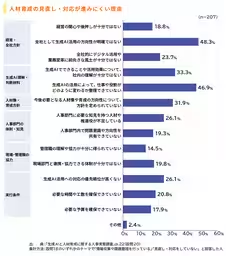
A prominent barrier to the advancement of HR strategies in the context of AI is the lack of clarity surrounding the organization's overall direction for AI integration. Approximately 48.3% of participants cited this as a primary concern. Almost as many (46.9%) indicated that they struggle to understand how AI will reshape job roles and responsibilities, complicating their HR strategies.
3. Challenges Felt Most by Management
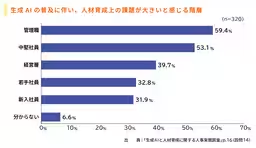
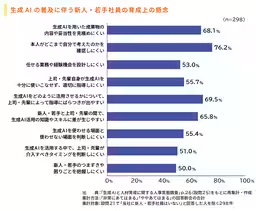
Interestingly, 59.4% of managers reported feeling that the challenges posed by generative AI are particularly significant, followed by 53.1% of mid-level employees. Concerns regarding how new technologies will alter work dynamics and competencies highlight the urgent need for adequate training and clear guidelines on the use of AI in the workplace.
4. Limited Training and Awareness Initiatives
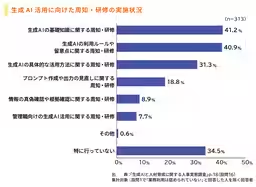
While 41.2% and 40.9% of HR respondents have implemented training programs focusing on the fundamentals of generative AI and its usage rules respectively, only 7.7% have offered such initiatives specifically for management staff. This emphasizes the crucial gap in awareness and preparedness at higher organizational levels, where the need is most acute.
5. Difficulty Assessing Employee Development
HR personnel expressed significant concerns regarding their ability to evaluate the independent thought processes of new and young employees, with 76.2% finding it challenging to determine how much critical thinking is applied by these individuals in their tasks. This raises questions about the effectiveness of training methods that rely heavily on AI outputs without proper checks on quality and thought.
6. Utilization of Generative AI among HR Professionals
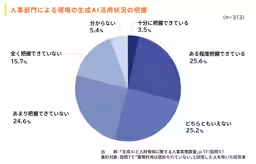
Despite many HR professionals frequently using generative AI themselves—46.6% reported using it almost daily—only 29.1% of HR departments feel they have a firm grasp on how AI is being utilized on the ground level. This gap in knowledge could hinder the effective oversight and development of staff competencies.
Conclusion
The survey reflects a pivotal moment for Japanese organizations as they navigate the intersection of generative AI and human resource development. While the recognition of needed changes is widespread, the actual steps toward implementing these changes remain limited. Fostering clear communication and structured training based on the challenges identified in the survey will be essential for organizations wishing to thrive in this new landscape of work.
For further insights, the complete report is available for download here.
Topics People & Culture)

【About Using Articles】
You can freely use the title and article content by linking to the page where the article is posted.
※ Images cannot be used.
【About Links】
Links are free to use.