



Exploring the Paradox of a 'Death-Distant Society' in Japan's Aging Culture
The Paradox of a 'Death-Distant Society' in Japan
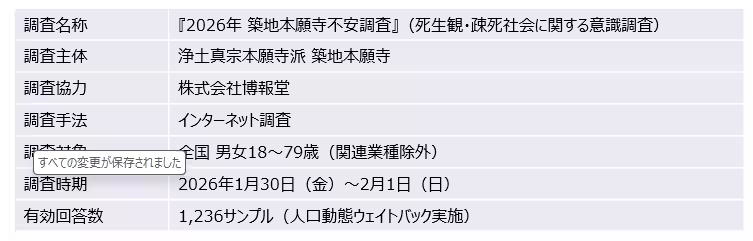
Recent studies show that around 40% of Japanese people feel disconnected from the concept of death, unveiling a concerning trend in the so-called 'death-distant society.' Conducted by Tsukiji Hongwanji, a Buddhist temple located in Tokyo's Chuo Ward, the survey aimed to understand how modern anxieties are related to the way people perceive death. The study engaged 1,236 participants aged between 18 and 79, highlighting a significant disconnect between individuals and their encounters with death, despite living in an era characterized by rising mortality rates.
1. Defining the 'Death-Distant Society'
The phrase 'death-distant society' describes a phenomenon where, even as the number of deaths continues to rise with an aging population, individual experiences with death are becoming increasingly rare. In recent years, social changes such as the rise of nuclear families, an increase in single-person households, and the common practice of dying in hospitals have drastically reduced the frequency of direct encounters with death. Thus, while the quantity of death may rise, the quality of personal experiences surrounding it declines, leading to a broader societal avoidance of this inevitable reality.
2. Key Findings from the Survey
The survey revealed seven critical insights about contemporary attitudes toward death.
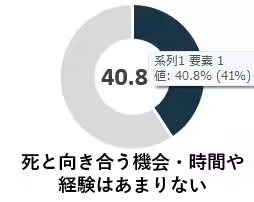
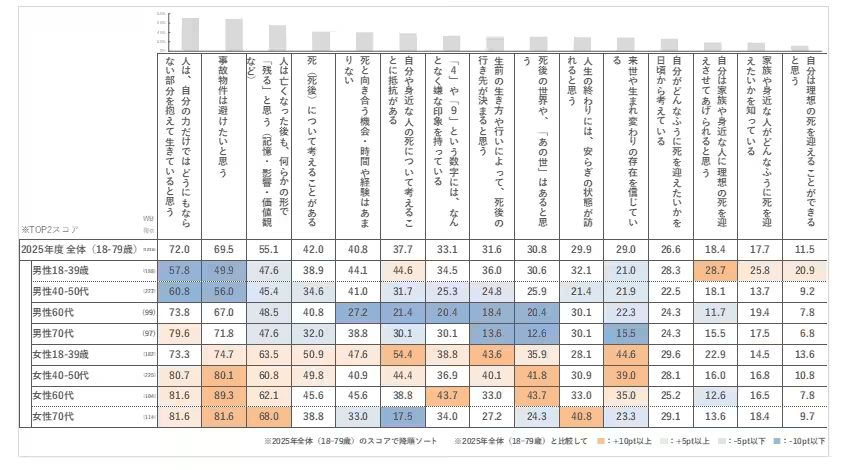
1. A Strong Disconnect: Approximately 40.8% of respondents acknowledged limited opportunities or experiences regarding death. The younger generation, in particular, expressed a significant lack of connection with deceased relatives, with about 20% stating they do not know the location of their ancestors' graves.
2. Generational Perceptions of Personal Mortality: For younger individuals, the concept of their own death is often viewed as a terrifying mystery. In contrast, older generations tend to accept death as an inevitable part of life, suggesting that experience and acceptance come with age.
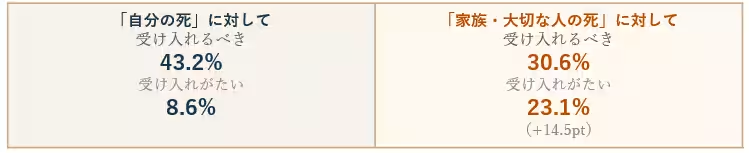
3. Difficulty Accepting Others' Deaths: Participants demonstrated a stronger aversion to the idea of losing connections with loved ones than to their own mortality, highlighting a growing fear of loneliness in today’s society.
4. Gender Differences: The findings also indicated notable gender disparities in perceptions of death. Men reported difficulty acknowledging death unless prompted by specific events, while women were more likely to consider death in everyday situations, indicating a heightened emotional and psychological sensitivity towards the topic.
5. Resilience through Experience: Individuals who reported more encounters with death exhibited a greater ability to address their anxieties proactively. Conversely, those who distanced themselves from death showed a tendency to engage in avoidant behaviors when faced with stress.
6. Emotional Responses to Deceased: Around 80% of respondents claimed to reflect on deceased individuals, yet younger respondents expressed more negative feelings associated with loss than their older counterparts, suggesting that life experiences can transform sorrow into gratitude.
7. Awareness of Mortality as a Motivator: Open-ended responses indicated that encountering death often inspired individuals to live more meaningfully, underlining the connection between recognizing mortality and enhancing the quality of one’s life.
3. Societal Anxiety and Disconnection from Death
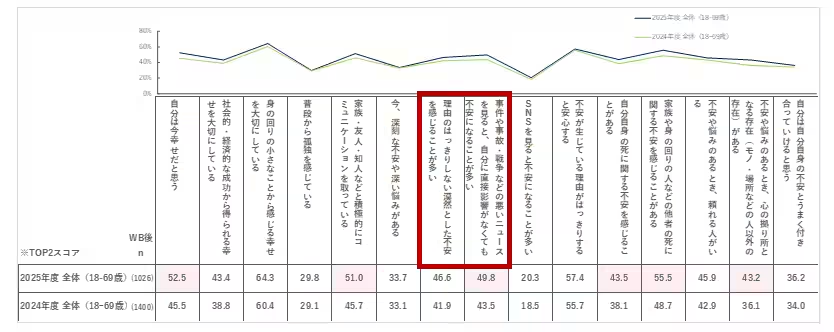
A significant portion of respondents (over 40%) reported feeling vague anxieties triggered by bad news, indicating a rise in public distress. Importantly, those with little experience facing death resort to escapism rather than confronting their fears.
The 'death-distant society' appears to nurture vulnerabilities, suggesting that avoiding the subject of death may weaken individuals’ capacities to cope with it when it inevitably arises. This disconnect could be an underlying factor contributing to the anxieties prevalent in contemporary society.
Conclusion
While the results of this study do not establish a cause-and-effect relationship between the distance from death and everyday fears, the correlations they uncover warrant attention. Tsukiji Hongwanji's message stresses the importance of confronting our mortality and acknowledges a universal aspect of human experience: the struggle against anxiety. The temple’s teachings urge observers to consider the significance of life and death as intrinsically connected, maintaining an open dialogue about these subjects in a world where they are often taboo. As society grows wary of issues surrounding mortality, we are reminded of the profound need for understanding and acceptance within ourselves and our communities.
In a time where life can feel overwhelmingly hectic, finding space for contemplation about death can be crucial in fostering resilience in the face of modern anxieties. The insights garnered from this study inspire a deeper understanding of how to navigate our existence in a culture that often shrouds the conversation around death.

Topics People & Culture)
【About Using Articles】
You can freely use the title and article content by linking to the page where the article is posted.
※ Images cannot be used.
【About Links】
Links are free to use.