


Customer Harassment in Hospitality: A Growing Concern Ahead of Legal Mandates
Customer Harassment in the Hospitality Sector: Survey Insights
Introduction
In recent years, customer harassment has become an increasing concern within the hospitality industry. A survey conducted by Dive Group, based in Shinjuku, Tokyo, aimed to assess the current state of customer harassment incidents and the preparedness among hotels and other lodging facilities to address these issues. As regulations mandating measures against customer harassment are set to take effect in October 2026, understanding the gravity of this issue and providing support to the sector is crucial.
Background of the Survey
The revised Labor Policy Promotion Act, passed in June 2025, outlines obligations for all business operators to protect employees from significant inconveniences caused by customers. The hospitality industry is particularly vulnerable, with employees interacting closely with customers for extended periods. Previous reports indicated that 46.4% of businesses in the accommodation and food service sectors had received inquiries regarding customer harassment, significantly surpassing the overall industry average of 27.9%. Dive Group sought to investigate the extent of this issue and the current readiness of the hospitality sector to tackle it.
Survey Findings
Prevalence of Customer Harassment
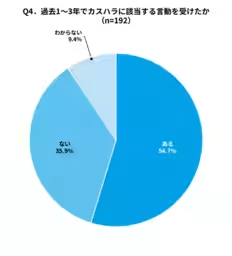
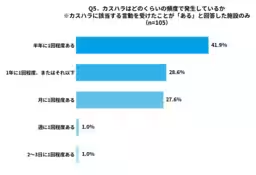
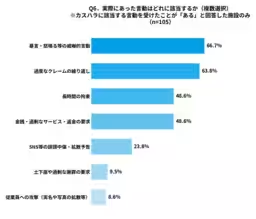
The survey revealed that 54.7% of responding facilities had experienced customer harassment in the past 1-3 years. Alarmingly, about 70% of these incidents occurred at least once every six months. The types of harassment reported included threatening behaviors (66.7%) and repeated excessive complaints (63.8%), with nearly half of the respondents also experiencing demands for money or excessive services.
Preparedness for Legal Compliance
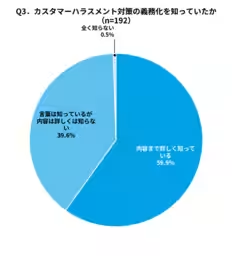
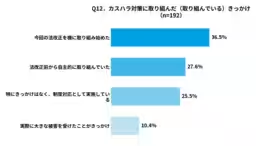
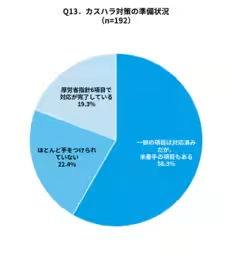
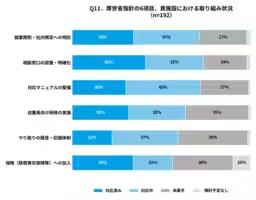
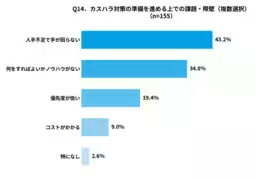
Despite the upcoming legal obligations, only 19.3% of facilities reported completing all six required measures outlined by the Ministry of Health, Labour and Welfare. Over half of the respondents (58.3%) indicated they had implemented some measures while leaving others unaddressed. The most significant barriers to preparation were identified as staff shortages (43.2%) and a lack of know-how regarding the necessary actions (34.8%).
Challenges and Support Needs
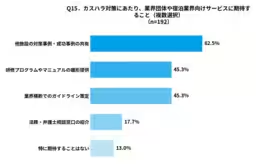
Given the high stakes involved, the survey also uncovered various challenges. More than half of the respondents (62.5%) expressed a desire for industry associations to share successful strategies and examples from other establishments as a means of mutual support. Other significant needs included the provision of training programs and the establishment of industry-wide guidelines.
Impact on Employees
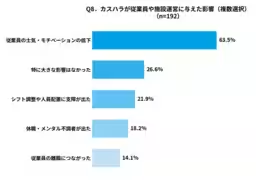
The consequences of customer harassment extend beyond immediate discomfort. According to the survey, 63.5% of respondents reported a decline in employee morale and motivation as the most significant impact. Additionally, issues such as difficulty in scheduling shifts and even employee turnover have become pertinent risks associated with customer harassment incidents.
Effectiveness of Current Responses
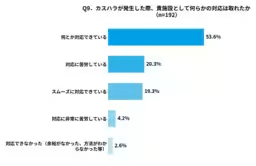
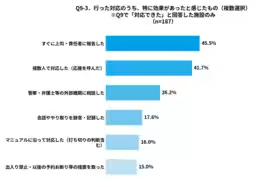
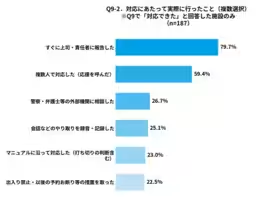
When gauging their responses to incidents, 53.6% of facilities stated they managed to cope adequately. However, 27.1% admitted to struggling or being unable to respond effectively during harassment situations. The most common response was to report incidents to a superior (79.7%) or to seek assistance by calling additional staff (59.4%). Still, the perceived effectiveness of these responses varied, with external consultations with law enforcement or attorneys proving to be the most effective (98% affirmation of effectiveness).
Conclusion
As the hospitality industry braces for mandatory compliance with customer harassment legislation, the findings of this survey underscore a critical need for comprehensive strategies to protect employees while also improving the overall working environment within the sector. The readiness to tackle customer harassment requires a collaborative approach, sharing insights, and implementing standardized practices to ensure a safer and more supportive workplace for all. Moving forward, addressing the existing gaps in knowledge and resourcing will remain essential for the sector's sustainability.
About Dive Group
Dive Group, established in March 2002 and based in Tokyo, focuses on supporting human resources, regional revitalization, and the development of talent in the hospitality industry. Their mission aims to tackle the challenges faced by the tourism sector and contribute to sustainable tourism at a national level.

Topics Consumer Products & Retail)






【About Using Articles】
You can freely use the title and article content by linking to the page where the article is posted.
※ Images cannot be used.
【About Links】
Links are free to use.