



Revolutionizing AI Data Centers: The Future of Battery Storage Systems
Introduction
The burgeoning landscape of artificial intelligence (AI) is fiercely transforming data centers into significant power consumption infrastructures. In light of this shift, a new report titled "Battery Energy Storage Systems (BESS) for AI Data Centers" sheds light on the evolving technologies within the sector.
Understanding Dynamic Loads
As AI clusters evolve, they've reached impressive power densities, with some racks drawing hundreds of kilowatts. This escalation isn't just about increased power; it includes the unique operational characteristics of AI workloads, which demand both responsiveness and stability from power systems. Traditional power supply designs now face challenges due to the sharp fluctuations in power loads inherent to AI.
Embracing High Voltage DC Systems
To address these concerns, leading hyperscalers are pivoting towards integrating high-voltage DC distribution systems with energy storage solutions. Notably, the adoption of 1500V DC architectures offers substantial efficiency improvements over previously utilized systems such as 48V, 400V, and 800V. This transition facilitates reduced distribution losses and simplifies the electrical equipment necessary for operation.
Moreover, batteries are evolving beyond simple backup mechanisms to function as stabilizers for fluctuating AI power demands, acting as “capacitive power sources” to mitigate sudden changes in load.
Material and Process Innovations
This trend towards efficiency and stability is pushing not only battery manufacturers but also those involved in materials development to rethink their strategies. Innovative designs must consider materials resistant to high-voltage and high-temperature environments, alongside advanced methodologies such as dry process techniques for creating thick electrodes. The push to redefine energy density and longevity of batteries is becoming crucial in this competitive landscape.
Exploring Post-Lithium Technologies
The report also delves into the emerging technologies anticipated to overshadow lithium-ion batteries, including sodium-ion, nickel-zinc, and iron-air batteries. Researchers are analyzing the structure and performance data of these alternative chemistries to gauge their potential impact in upcoming years.
A Comprehensive Market Analysis
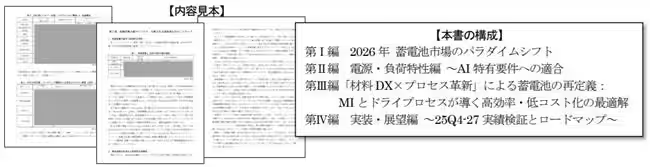
The report's analysis spans four essential perspectives: market dynamics, power architectures, material advancements, and implementation technologies. It features detailed assessments of 30 leading global companies, scrutinizing their strategies and market positions against projections for the latter half of 2025 and into 2027.
Furthermore, it provides insights into the implications of new regulations such as Battery Passport initiatives, which are increasingly becoming vital in evaluating the traceability and ESG (Environmental, Social, and Governance) cost factors of battery technologies.
Conclusion
Overall, this authoritative report serves not only as a resource for stakeholders in the battery supply chain but also for industries wanting to understand the underpinnings of power distribution in next-gen AI data centers. This knowledge is critical as infrastructure evolves to meet the distinctive demands of a data-driven future.
About CMC Research
CMC Research, based in Chiyoda, Tokyo, is at the heart of delivering cutting-edge insights into market trends and technological advancements across various materials and chemicals. They regularly host seminars and publish reports to enhance knowledge in these fast-evolving sectors. For more details, visit their website at CMC Research.
Topics Consumer Technology)
【About Using Articles】
You can freely use the title and article content by linking to the page where the article is posted.
※ Images cannot be used.
【About Links】
Links are free to use.