



Hitachi Launches HARC for AI to Maximize AI Agent Implementation Effectiveness
Maximizing the Impact of AI Agents with HARC for AI
Hitachi's latest initiative, the Hitachi Application Reliability Centers (HARC) for AI, is set to commence on October 7, 2025. This service is designed to ensure that enterprises fully realize the benefits of AI agents by tackling unique operational challenges associated with AI. The offering is an expansion of HARC, which has already delivered operational improvements to over 60 global clients. Following a successful trial period for international markets starting in April 2025, Hitachi now plans to bolster its domestic services.
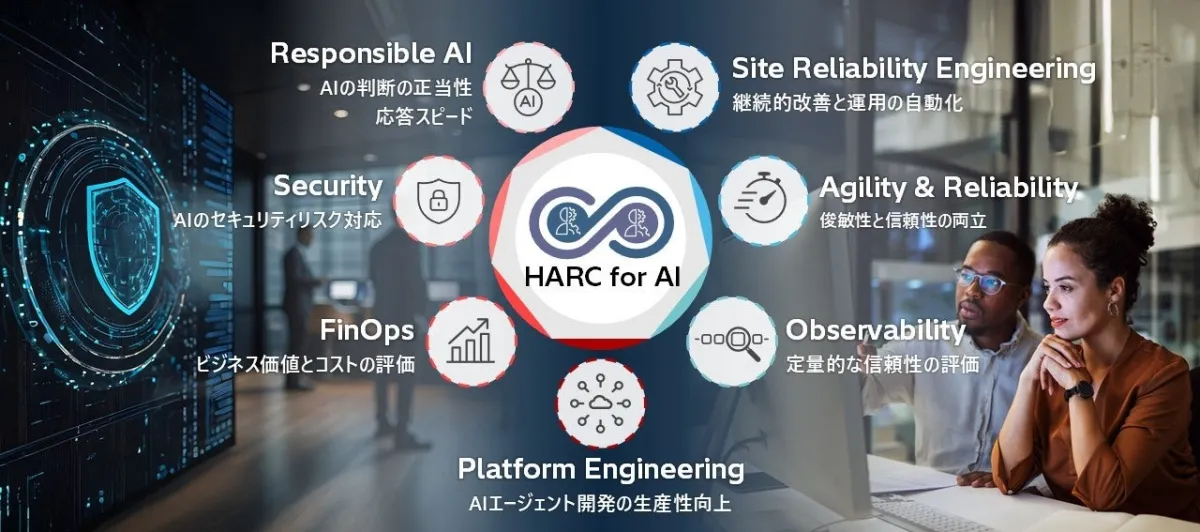
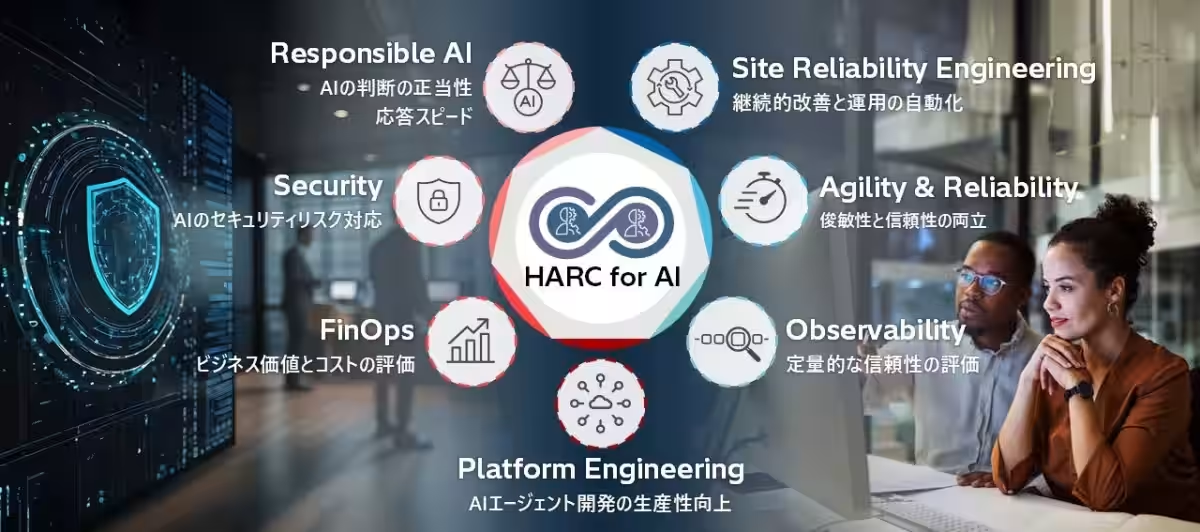
HARC for AI supports organizations facing challenges such as the validity of AI agent decisions, declining response times, cost increases, and security risks. Leveraging Hitachi's extensive experience in AI usage, the service enables continuous monitoring and improvement to address these operational hurdles. This unique approach helps establish robust governance for safe and effective AI utilization, providing organizations with insights into their systems for persistent enhancement, ultimately maximizing the value of AI agents and contributing to sustained business growth.
As Jun Abe, Hitachi's Executive Vice President and Head of the Digital Systems & Services Division stated, "Hitachi has effectively promoted the utilization of AI agents across various levels, from executives to engineers. Our expertise in analyzing business risks and advanced maintenance practices is demonstrated through over 200 successful deployments across the group. Our long-standing experience in IT systems has paved the way for such accomplishments. The extensive domain knowledge accumulated through our products and systems is our greatest strength, acting as a critical key to maintaining proper governance and operational success for AI agents. We are committed to enhancing AI as a partner that extends human capabilities to address client and societal challenges. As we push forward, we aim to deliver value created through digital means to everyone, aspiring to realize a 'Harmonized Society' that is safe, secure, and sustainable."
Background
In the current business landscape, the urgent need for sustainable growth drives an increasing reliance on AI for value creation and adaptability. As a result, IT systems supporting enterprises are transitioning to designs and operations that inherently consider AI. However, this evolution comes with challenges such as ensuring governance, optimizing costs, and keeping pace with rapid technological advancements. This has led to heightened demand for comprehensive services that facilitate continuous monitoring and improvement.
Features of HARC for AI
Based on the principles of Site Reliability Engineering (SRE), HARC for AI is a managed service that supports operational transformation by addressing AI’s unique operational challenges. Its primary features include:
1. Continuous Improvement of Governance and Cost Monitoring
- Governance is essential for expanding AI usage in business. Hitachi leverages the globally utilized evaluation framework, R2O2.ai, to provide appropriate monitoring and tuning support based on practical experiences, contributing to improved quality of operations.
- Effective cost evaluation requires understanding the total cost of the AI infrastructure in addition to setting goals for the balance between business value and costs. HARC for AI facilitates the establishment of shared evaluation criteria for all stakeholders through assessments and advice on FinOps practices, conducting continuous evaluations and adjustments to enhance operational readiness in a changing business environment.
2. Enhanced Security Risk Management and Data Access Control
- HARC for AI manages and controls complex data access within AI agent environments using open standard protocols, such as Model Context Protocol (MCP). Hitachi contributes to the standardization and dissemination of authentication and authorization technologies, strengthening data governance and thereby preventing unauthorized data exposure.
- Security engineers collaborate with specialized groups within Hitachi to visualize security risks, enable prompt action during incidents, and manage emerging risks associated with AI applications effectively.
3. Accelerated Improvement Cycles for AI Agents and Applications
- To enhance efficiency, resources, and implemented features must be visualized with clear usage rules established to prevent repetitive development by engineers. Hitachi’s engineers assist in designing and implementing these frameworks to allow application developers to focus on enhancing operational logic, independent of skill variations among engineers. Consequently, productivity is increased, enabling a faster development and improvement cycle for AI agents and applications.
The HARC for AI service epitomizes Hitachi’s commitment to driving the responsible development, adoption, and operation of AI. In tandem with its R2O2.ai framework, this service enables effective management of AI observability, lifecycle, and performance tuning, converting theoretical best practices into practical application for businesses around the world.
About Hitachi
Hitachi is at the forefront of creating a Harmonized Society, utilizing IT, operational technology, and products through its Social Innovation Business (SIB). With a global reach in sectors such as Digital Systems & Services, Energy, Mobility, and Connected Industries, along with a strategic SIB business unit designed to create growth opportunities, Hitachi is committed to generating value from data in its effort to resolve challenges faced by clients and society. In the 2024 fiscal year, Hitachi forecasts revenue of approximately 9.78 trillion yen, supported by 618 consolidated subsidiaries, employing about 280,000 staff worldwide. To learn more about Hitachi’s offerings, visit Hitachi's official website.
Topics Business Technology)
【About Using Articles】
You can freely use the title and article content by linking to the page where the article is posted.
※ Images cannot be used.
【About Links】
Links are free to use.