



Breaking the Stereotypes of Disabled Employment in Japan's Era of 2.7% Employment Rate
Breaking the Stereotypes of Disabled Employment in Japan's Era of 2.7% Employment Rate
As of July 2026, Japan will raise the legally mandated employment rate for people with disabilities to 2.7%. Yet, even today, there are over 60,000 businesses that fail to meet this requirement. In addition, the rise of questionable practices in the form of outsourcing disabled employment has raised concerns within the National Diet. The pressing need now is to redefine the employment landscape, not merely allowing disabled individuals to "earn on their own" but rather creating opportunities for them to "earn alongside" others.
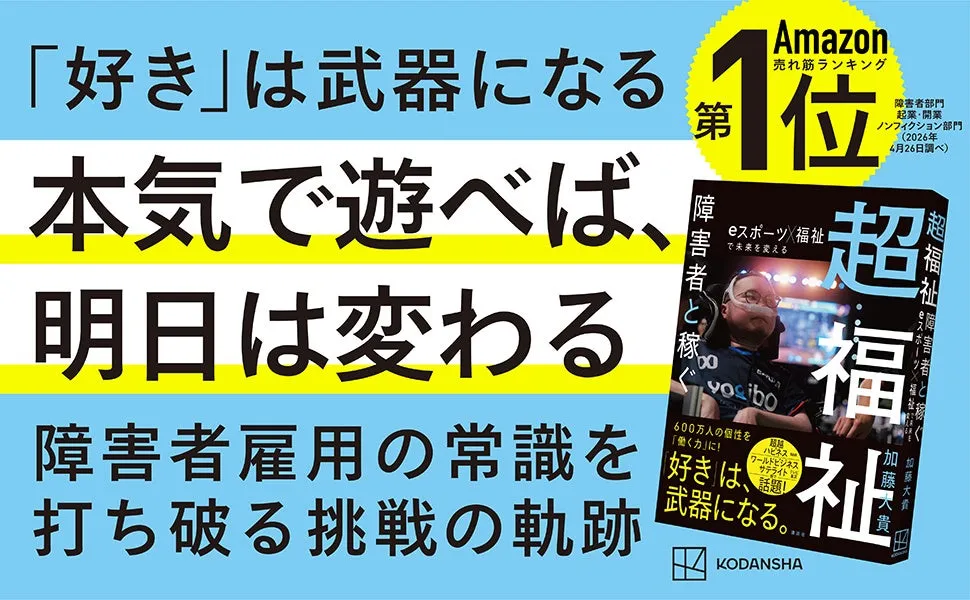
This revolutionary perspective is explored in the upcoming book "Super Welfare: Earning with the Disabled," set to release on June 25, 2026, by Kadokawa. Author Daiki Kato shares transformative stories about breaking the conventional narratives surrounding disabled employment.
Harnessing the Power of Gaming in Employment
In Japan, there are approximately 10.62 million people with disabilities, but only around 640,000 are employed. To unlock the potential of those eager to work, Kato identified a new avenue: eSports. The ability to engage in eSports demonstrates crucial professional skills such as digital device proficiency, strategic thinking, adaptability to online environments, and interpersonal communication—all essential in the modern workplace.
Recognizing this, Kato established "ePARA," an initiative that creates environments where disabled individuals who are passionate about gaming can excel. Through the innovative use of AI technology, ePARA has begun to create platforms that enable individuals with disabilities to showcase their capabilities on par with their able-bodied peers.
Empowering Across Abilities: From Voice Acting to Engineering
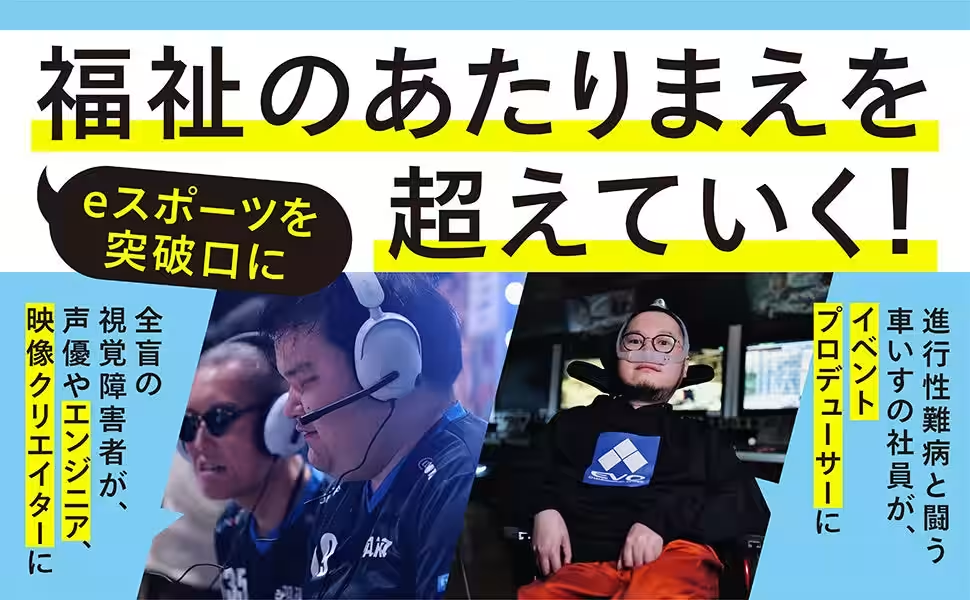
Among the diverse talents nurtured at ePARA are individuals blazing trails despite challenges. Employees include a wheelchair user who successfully manages events while battling a progressive illness, and a visually impaired person who excels as a voice actor, engineer, video creator, and peer supporter for others with disabilities. These stories exemplify the success disabled individuals can achieve when given the right opportunities.
As a testament to its impact, ePARA's annual revenue stands at 250 million yen, with the average salary for disabled staff reaching 120,000 yen. This upcoming book will serve as a critical business document, providing practical insights into how companies can thrive by employing disabled individuals and showcasing real-life success stories.
About the Author: Daiki Kato
Daiki Kato is the founder of ePARA and a leading voice in the movement for improved employment opportunities for individuals with disabilities. After graduating from law school, Kato spent eight years working as an official in the Tokyo District Courts. His experience as a staff member at a welfare organization highlighted the challenges faced by people with disabilities and the elderly, motivating him to launch the eSports-based employment support event "ePARA" in 2019.
Within a year, he incorporated the initiative and currently employs 20 individuals with disabilities, having supported over 1,000 individuals in their employment journeys. Kato has appeared on various media platforms, including "Super Happiness", "NHK Specials", and "Heart Net TV", and actively shares his knowledge through public speaking engagements. His work has also received recognition from Japan's Ministry of Economy, Trade and Industry, and he is currently engaged in a collaborative initiative supporting disabled empowerment between Japan and Saudi Arabia.
This groundbreaking book, "Super Welfare: Earning with the Disabled," will be available for purchase at local bookstores and online. It invites readers to rethink the paradigm of disabled employment and discover how inclusivity can lead to mutual prosperity.

Topics People & Culture)

【About Using Articles】
You can freely use the title and article content by linking to the page where the article is posted.
※ Images cannot be used.
【About Links】
Links are free to use.