



Progress Towards Domestic Certification of New Thrombolytic Drug T-Flavor for Ischemic Stroke
Breakthrough in Stroke Treatment: Tenecteplase Challenges Alteplase
Recent results from the T-FLAVOR trial have sparked excitement in the medical community, indicating that the new thrombolytic drug tenecteplase shows superior effectiveness compared to the currently utilized alteplase in treating patients with acute ischemic strokes. Conducted by a collaborative team led by Dr. Teruyuki Hirano of Kyorin University Hospital and Dr. Kazunobu Inoue of the National Cerebral and Cardiovascular Center in Osaka, this significant study assessed the performance of these medications in 18 medical centers across Japan.
The Significance of Timely Treatment
With stroke being one of the leading causes of serious long-term disability, timely medical intervention is crucial. The T-FLAVOR trial focused on patients who suffered an ischemic stroke resultant from a main artery occlusion and were treated within 4.5 hours of symptom onset.
In this randomized controlled study, patients were assigned to receive either tenecteplase or alteplase in a 1:1 ratio. The results were published online in the prestigious medical journal, JAMA Neurology, highlighting the essential role of such trials in affirming new therapies and advancing towards new drug approvals in Japan.
Trial Details and Outcomes
The trial enrolled a total of 218 patients between 2022 and 2025, with 107 receiving tenecteplase (0.25 mg/kg) and 111 receiving alteplase (0.6 mg/kg). Notably, the average age of participants was 77.1 years, with a population distribution of 58% male and 42% female.
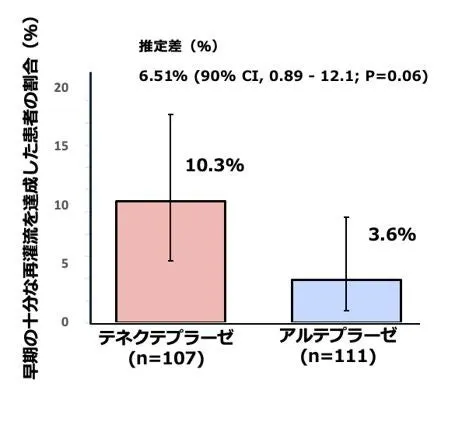
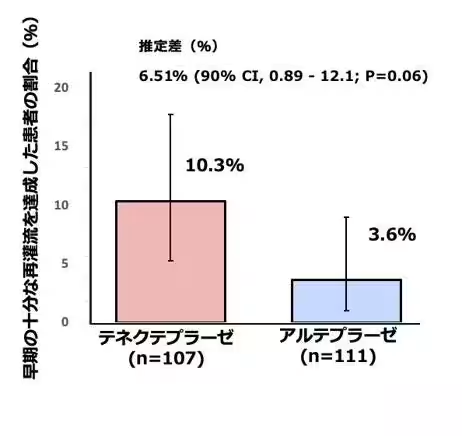
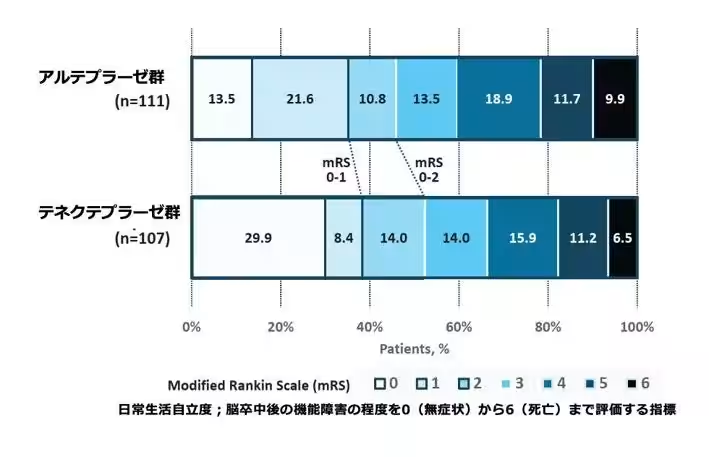
The major outcome measure demonstrated that the early recanalization rate at the start of endovascular treatment was significantly higher in the tenecteplase group, recording 10.3% versus only 3.6% in the alteplase group—an impressive estimated difference of 6.5%. While the study also evaluated secondary outcomes such as functional independence and neurological improvement after 90 days, the results did not show statistically significant differences. Nonetheless, the findings suggest a favorable trend towards better recovery in the tenecteplase group.
Safety and Approval Prospects
Another critical aspect of the trial was the assessment of safety. The incidences of symptomatic intracranial hemorrhage were comparable between the two drug groups (2.8% for tenecteplase vs. 1.8% for alteplase), and the mortality rate within 90 days was also similar (6.5% for tenecteplase vs. 9.9% for alteplase). These results affirm the safety of tenecteplase, suggesting that it could be a preferable option for Japanese patients compared to the lower-dose alteplase currently in use.
Given that Japan had been lacking this drug, and with the urgency for effective treatments for acute ischemic stroke, this trial represents a significant step forward. The Ministry of Health, Labour and Welfare in Japan is currently deliberating on the approval of tenecteplase based on these promising findings.
Looking Ahead
Excitingly, as this trial showcases tenecteplase's potential to deliver faster and more effective treatment with preferable logistics—a single short infusion vs. an hour-long process for alteplase—it paves the way for improving healthcare delivery, particularly in urgent and emergency medical settings.
The T-FLAVOR trial underscores the crucial intersection of research, innovation, and patient care, holding the promise of transforming the landscape of acute ischemic stroke treatment in Japan. As we await further developments regarding drug approval, the findings indeed herald a new era in stroke therapy.
Acknowledgments
This groundbreaking research was supported by various organizations, including the Japan Agency for Medical Research and Development (AMED) and others, demonstrating the collaborative spirit essential for advancing medical science.
For further details about this study and its implications, please refer to the published work in JAMA Neurology and the research team’s contact information for inquiries.
Topics Health)



【About Using Articles】
You can freely use the title and article content by linking to the page where the article is posted.
※ Images cannot be used.
【About Links】
Links are free to use.