



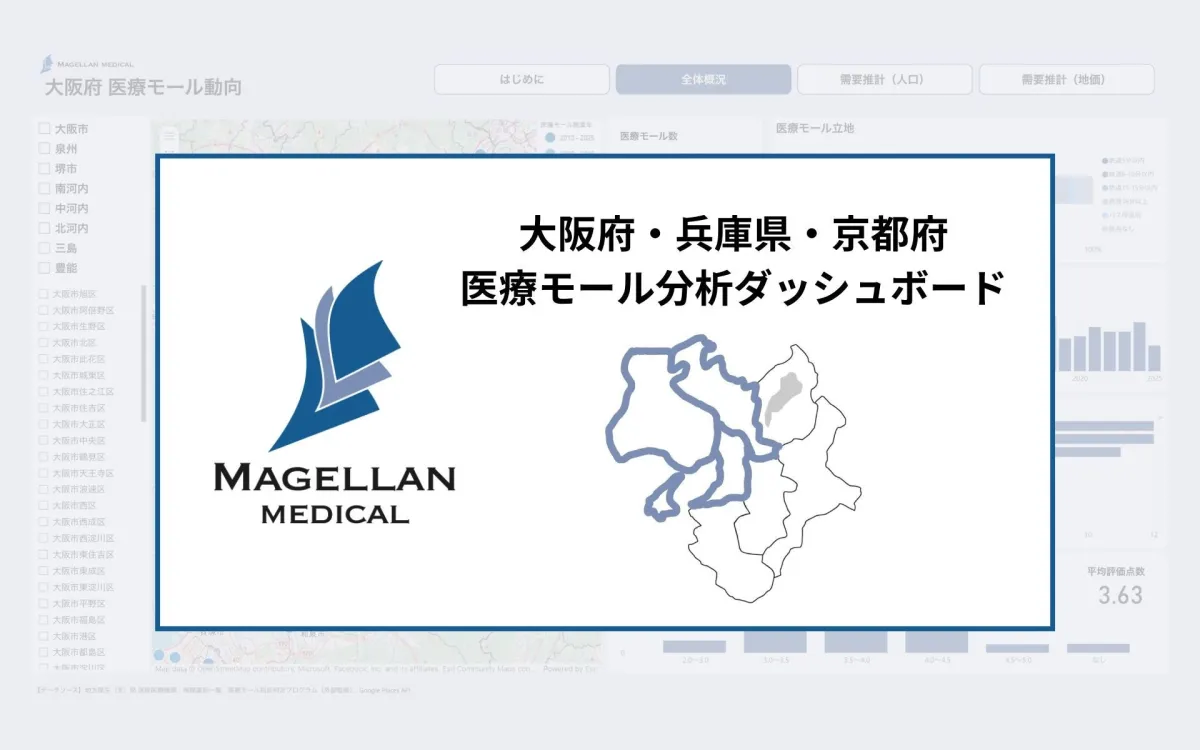
Magellan Medical Expands Medical Mall Market Insights in Kinki Region
Understanding the Medical Mall Market in Kinki Area
Magellan Medical, aiming to be a guiding light for medical mall management, has released a new market trends dashboard for the Kinki region, which encompasses Osaka, Hyogo, and Kyoto. Utilizing Microsoft Power BI, the company has expanded its previously offered data insights to include detailed analyses of 731 medical mall establishments in the area. This includes distinct insights based on railway lines, contributing to a comprehensive understanding of the market landscape, which could become crucial for businesses in healthcare, such as pharmacies, developers, and consulting firms.
Overview of Kinki Region Medical Mall Statistics
According to the latest report released by Magellan Medical as of November 2025, the number of medical malls in the Kinki region stands at 731. Breaking this down, Osaka leads with 433 malls, followed by Hyogo with 252 and Kyoto with 46. This total accounts for nearly a quarter of all medical malls nationwide, second only to the Tokyo metropolitan area, which boasts 1,611 establishments. The sheer concentration of facilities in this region has created a pressing need for stakeholders in the healthcare business to stay updated on market trends to inform their strategic decisions.
Features of the New Dashboard
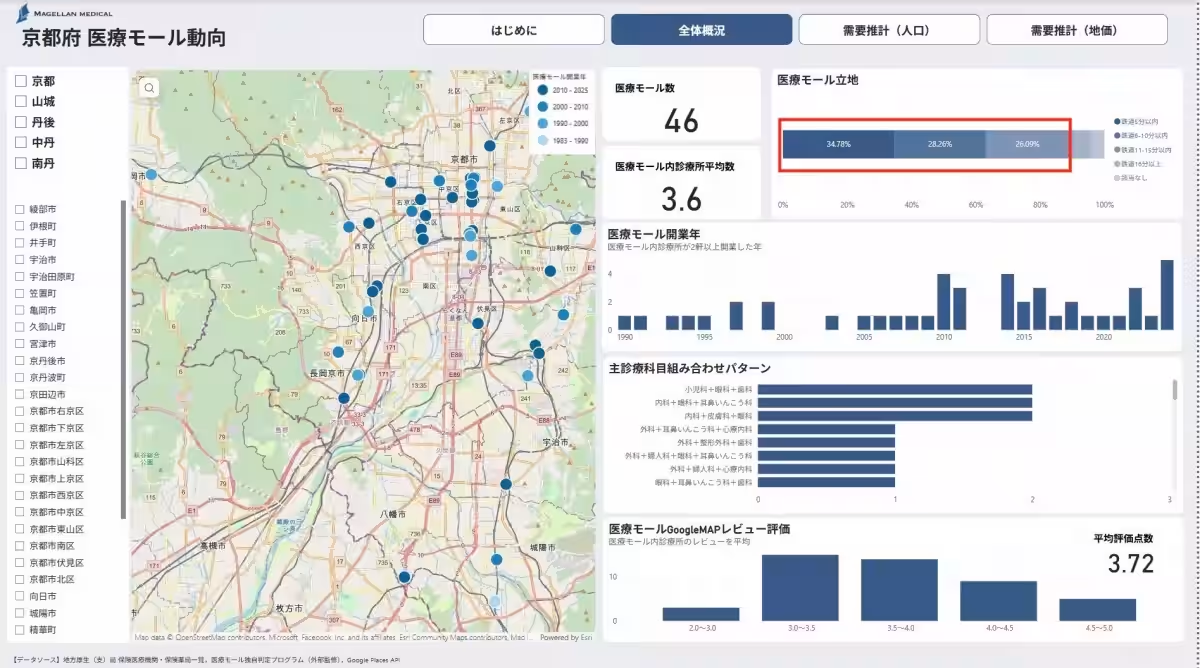
To enhance usability, the new dashboard allows users to interactively analyze market characteristics through maps, graphs, and time-series data. Previously available only in PDF reports, insights can now be accessed interactively, making it easier to spot trends and actionable information.
How to Access the Dashboard
Users can access the dashboard by filling out a short form on the dedicated page available at Magellan Medical Dashboard. Upon submission, a link to view the dashboard will be sent via email.
Categories Analyzed
The dashboard includes analysis in two categories: "Overall Overview" and "Demand Estimation."
Overall Overview:
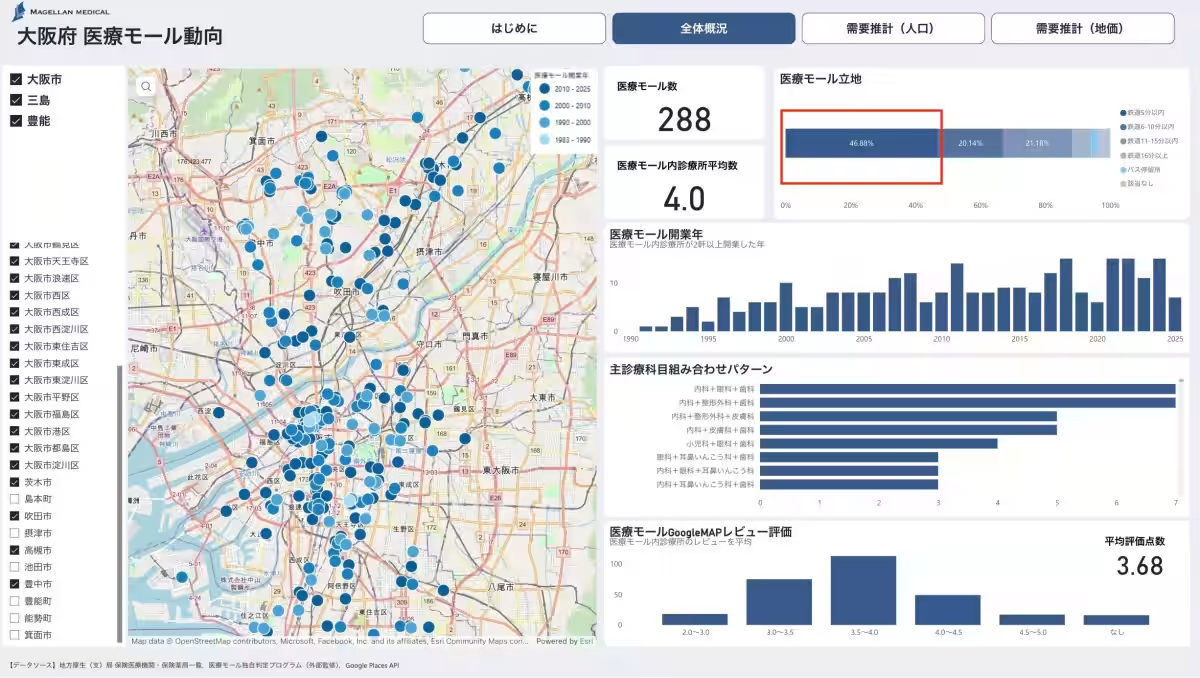
1. Detailed analysis by area (number of malls and clinics)
2. Visualization of location characteristics
3. Market maturity indicators through trends in opening years
4. Exploration of successful models by examining combinations of main medical subjects
5. Visualization of patient ratings through average Google review scores.
Demand Estimation:
1. Visualization of healthcare demand potential based on population data
2. Visualization of location risk and potential based on land price data
Key Findings by Prefecture
The analysis has revealed divergent trends among the different prefectures within the Kinki region:
Osaka Prefecture: Focus on Accessibility
Osaka has a significant concentration of medical malls with 433 establishments, resulting in a density of 4.94 malls per 100,000 population—almost double the national average of 2.42. The analysis indicates a stark strategic focus on accessibility, with a notable percentage of facilities located within a 5-minute walk from train stations.
Hyogo Prefecture: Family-Oriented Malls
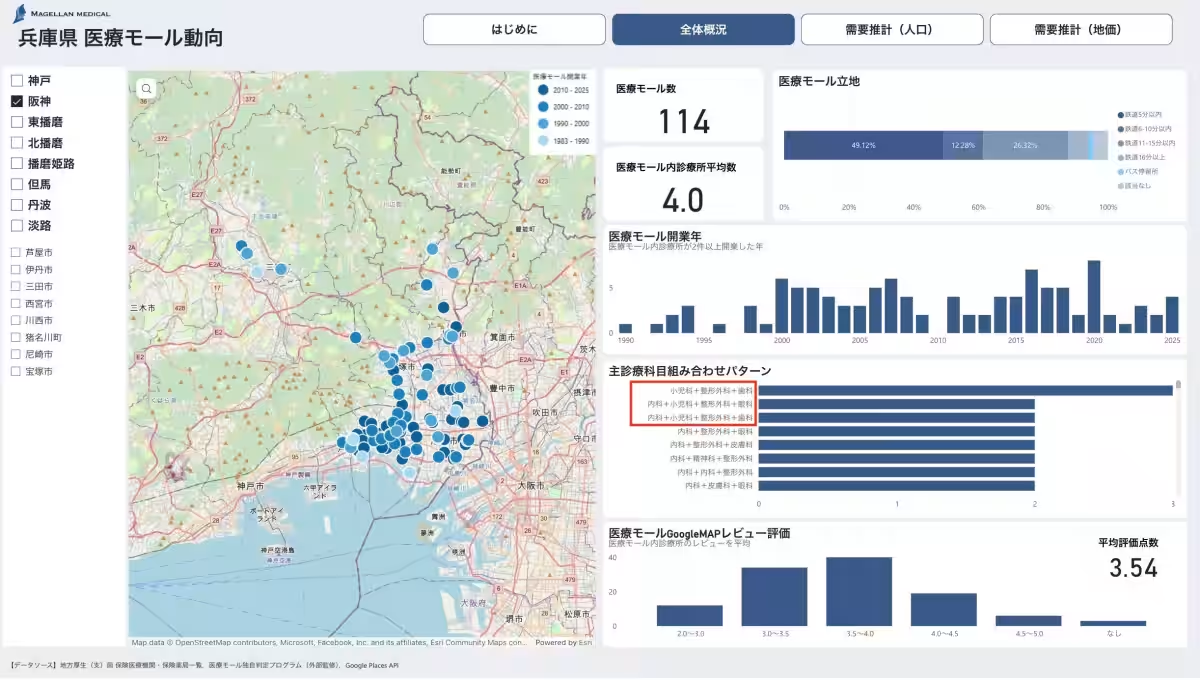
With 252 medical malls, Hyogo reflects an interesting trend, particularly in the Hanshin area, where the common combination of medical specialties includes pediatrics, orthopedics, and dentistry—catering to families and covering a wide range of medical needs, unlike the nationwide trend of internal medicine, ophthalmology, and dentistry.
Kyoto Prefecture: Diverse Location Distribution
Kyoto's 46 medical malls illustrate a more distributed approach to location, showing no significant concentration around train stations. Malls are spread across various distances from transportation hubs, contrasting sharply with the highly centralized model seen in Osaka and Hyogo.
30-Year Evolution of Medical Malls
Magellan Medical has a wealth of raw data from as far back as the 1990s regarding medical malls in the Kinki area. Their analysis of these developments provides some compelling insights:
- - The evolution from station-front redevelopment to specialized healthcare buildings demonstrates changing needs.
- - Major urban and suburban trends show a shift from large mixed-use facilities to independent medical malls optimized for car accessibility.
Future Developments at Magellan Medical
Looking ahead, Magellan Medical is set to release dashboards covering 13 prefectures with over 30 medical malls each by December 2026. Upcoming releases include detailed analyses for Hokkaido, nationwide trends, and specific regions like Tokyo, Chiba, and Saitama.
Magellan Medical will continue to produce regular reports and conduct interviews with medical mall operators to support operational strategies and policy recommendations in the sector.
For any inquiries or further information about the medical mall analysis dashboards, please reach out to Magellan Medical at [email protected].
Topics Health)

【About Using Articles】
You can freely use the title and article content by linking to the page where the article is posted.
※ Images cannot be used.
【About Links】
Links are free to use.