



Revealing Aluminum Resistance Mechanism in Barley through Citrate Transporter AACT1's Structural Insights
Understanding the Role of Citrate Transporter AACT1 in Barley
In a groundbreaking discovery, researchers at Okayama University have revealed the intricate structure of the citrate transporter protein known as AACT1. This protein plays a crucial role in the defense mechanisms of barley against aluminum toxicity, particularly in acidic soils. The findings were published on August 5, 2025, in the prestigious journal Proceedings of the National Academy of Sciences.
Aluminum toxicity is a significant challenge for plant growth, especially in soils with low pH. Typically, aluminum can leach into the soil, adversely affecting the roots of plants and leading to stunted growth. However, some plant species have evolved mechanisms to combat this toxicity. Among these is barley, known to be particularly susceptible to the challenges posed by acidic soil conditions compared to other crops like rice and wheat.
The research team, led by Professor Michihiro Suga and comprising experts from various fields, including colleagues Professor Jianfeng Ma and Associate Professor Namiki Mitani-Ueno, uncovered the molecular basis for how AACT1 facilitates the release of citric acid by the roots of barley. This is significant because citric acid helps bind aluminum ions, thereby alleviating their toxic effects.
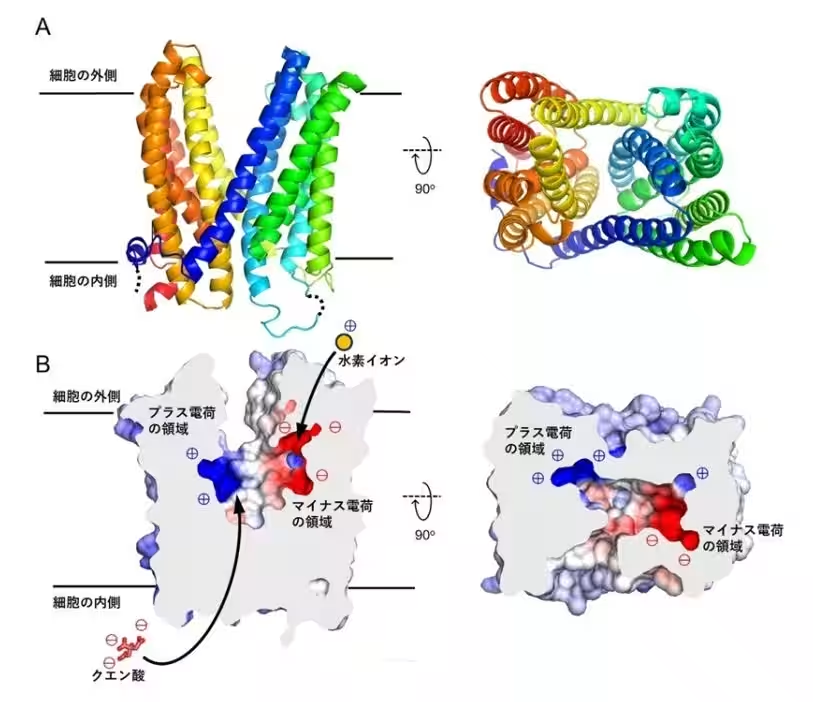
The structure of AACT1 was studied in detail, revealing a specific cavity in the protein that is critical for its function. This insight into its structural design is expected to pave the way for developing barley variants that can thrive even in conditions where aluminum stress is prevalent.
Professor Suga emphasized the effort that went into this research, particularly praising the contributions of graduate student Tran Nguyen Thao from Vietnam, who dedicated five years to deciphering this protein’s structure. Her persistence, combined with the support of her research colleagues, culminated in these significant findings.
The collaborative nature of this research highlights the importance of interdisciplinary work between scientists in advancing our understanding of plant biology and improving agricultural practices. By fine-tuning the functionality of the AACT1 transporter protein, it could become feasible to breed barley varieties that are both resilient and able to produce stable yields in challenging environmental conditions.
In addition to enhancing our grasp of plant resilience, these findings could expand into practical applications—potentially benefiting agriculture globally by allowing for crops that can sustain growth where they traditionally could not due to soil acidity. Such advancements align with global goals for food security and sustainable agriculture.
These research outcomes are not only a testament to innovative scientific work but also reflect a growing awareness of the need for sustainable farming practices that take into account environmental stresses. Continued support from organizations like the Japan Society for the Promotion of Science and various grants has been pivotal in realizing this research, emphasizing the collective effort required to tackle complex agricultural challenges.
For further insights into this remarkable research, including the specifics of the AACT1 transporter structure, you can access the published study at the link below:
Read the Full Study
This discovery potentially marks a significant advancement in our strategies for developing crops capable of withstanding extreme soil conditions, furthering the mission of research institutions like Okayama University in addressing real-world issues in agriculture. As we look toward the future, such developments will be crucial in ensuring the stability and growth of key crops worldwide.


Topics Consumer Products & Retail)
【About Using Articles】
You can freely use the title and article content by linking to the page where the article is posted.
※ Images cannot be used.
【About Links】
Links are free to use.