




Consumer Preferences in Fashion Sustainability: SHEIN's Global Circularity Study Insights
SHEIN's 2025 Global Circularity Insights
SHEIN, the globally recognized fashion and lifestyle online brand, recently conducted a massive survey named the "2025 Global Circularity Study" that encompassed 15,461 consumers across 21 regions, including Japan. The aim was to understand the emerging consumer preferences regarding clothing sustainability and the significance placed on practical aspects in online purchases.
The survey results revealed that when shopping for clothing online, SHEIN users demonstrated a notable emphasis on practicality, with a focus on factors like price and size. A staggering 71.6% of respondents confirmed that finding items at appropriate prices is a priority for them. Additional important aspects included ensuring that the items fit well (66.7%) and aligning with personal styles (58.1%).
Among Japanese consumers specifically, practicality remained a primary concern, where the top three factors influencing purchases were proper size (90.5%), optimal pricing (87.9%), and alignment with daily lifestyle needs (80.9%). This trend indicates that Japanese shoppers exhibit slightly lesser purchasing volumes when compared to global averages, with 85.0% purchasing less than 30 items in the past year.
Commitment to Sustainability
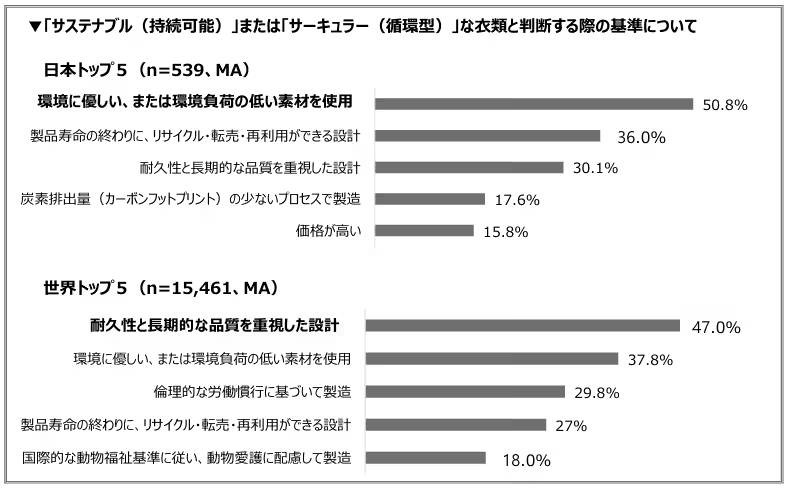
The study also aimed to define what sustainability means to consumers, showing a divide between global perceptions and those specific to Japan. While globally, durability in quality ranked highest (47%), in Japan, environmentally friendly materials led with 50.8% of respondents recognizing this as key to sustainable fashion. Following that, the design conducive to recycling, resale, and reuse (36%) and durability (30.1%) were also highlighted as significant traits by Japanese consumers.
When discussing clothing repair rates, Japan showed substantially lower engagement compared to global figures, with only 24.7% engaging in repairs as opposed to 61.8% worldwide. The low participation level in Japan suggests a lack of skills and access to convenient repair services, thereby acting as barriers to more sustainable clothing practices.
The Recycling Challenge in Japan
The survey further highlighted challenges in recycling participation in Japan, where only 17.1% of consumers used recycling systems compared to 37.2% globally. Respondents expressed a strong desire for increased convenience and incentives, with 45.9% indicating that better recycling facilities and rewards would promote greater participation.
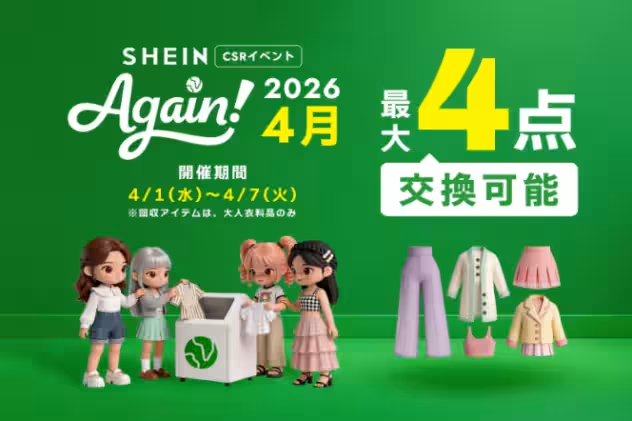
To respond to this demand, SHEIN is launching the 21st edition of its #SHEIN Again campaign, which promotes clothing swaps and donations, aligning with consumer desires for convenience and rewards. This initiative will run from April 1 to April 7, 2026, at the SHEIN showroom in Harajuku, Tokyo. Participants can bring in used SHEIN clothing for an exchange, seamlessly integrating recycling into their daily lives while receiving new items in the process.
Since its inception in July 2024, the #SHEIN Again program has garnered significant support, with a total of 9,343 participants and approximately 8,900 kg of clothing collected. This effort benefits both the community and the environment; collected items are resold through local partners, with proceeds allocated to support initiatives in Myanmar and Vietnam.
In conclusion, SHEIN's ongoing commitment to sustainability and consumer engagement through practicality alongside their #SHEIN Again campaign signals a growing trend towards responsible fashion practices in Japan and beyond. The brand aims to continue developing easy and advantageous systems that facilitate effective clothing reuse and sustainability practices among consumers, signaling a promising shift towards a circular economy in the fashion industry.
For more details on #SHEIN Again, visit SHEIN Japan.


Topics Consumer Products & Retail)
【About Using Articles】
You can freely use the title and article content by linking to the page where the article is posted.
※ Images cannot be used.
【About Links】
Links are free to use.