



The Psychological Impact of Trump's Tariff Shock on Individual Investors in 2025
The Psychological Impact of Trump's Tariff Shock on Individual Investors in 2025
In June 2025, the online stock school "Kabunogakkou.com," operated by Treasure Promote Co., Ltd., conducted a survey involving 800 individual investors across Japan to assess their stress levels regarding stock investments in light of the Trump tariff shock. This survey sought to understand how significant political and economic events can affect the mental well-being of investors.
Overview of Investor Stress Levels
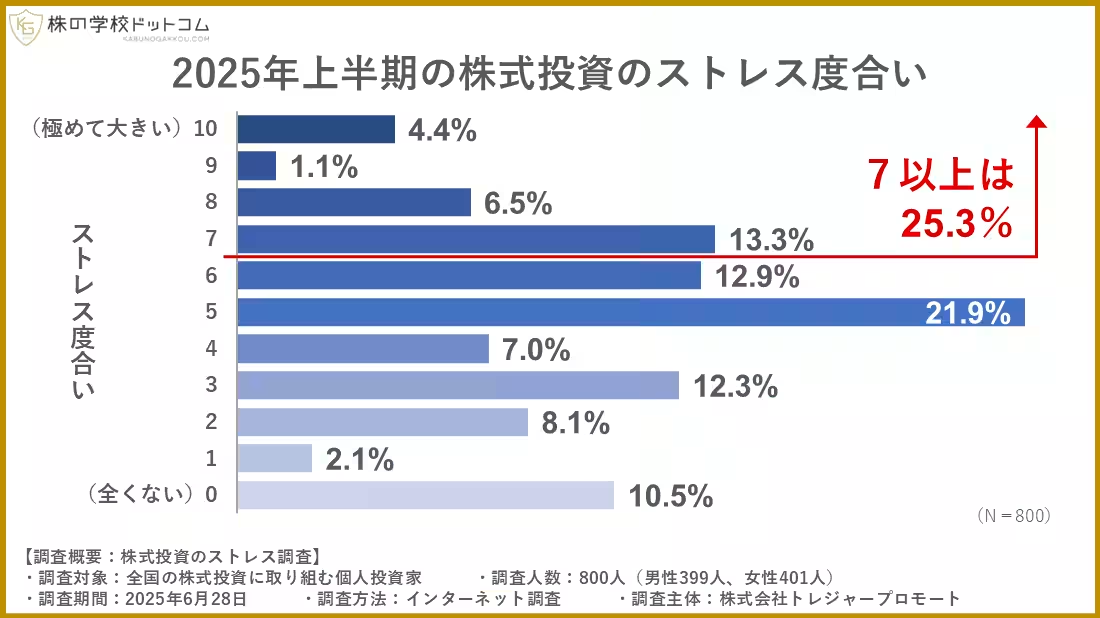
Among the participants, 21.9% reported a stress level of 5 on a scale from 0 (no stress) to 10 (extreme stress), while a surprising 25.3% rated their stress level as 7 or higher. This suggests that nearly one in four investors are feeling considerable anxiety about their investments amid volatile market conditions induced by the ongoing tariff issues. Notably, 10.5% of respondents indicated they felt no stress at all, attributing their calmness to factors like dividend pursuits and long-term investment strategies.
Stress Level Distribution
The survey revealed a varied perception of stress among investors:
- - Stress Level 0: 10.5%
- - Stress Level 5: 21.9%
- - Stress Level 7 or above: 25.3%
Interestingly, while some participants expressed high stress, others maintained a composed outlook, highlighting the diverse approaches and mindsets within the investing community. For instance, only 4.4% rated their stress as a maximum of 10, while only 1.1% chose 9. This contrast reflects the individual differences in how stress manifests among investors, shaped by their experiences and mental frameworks.
Changes Over Two Years
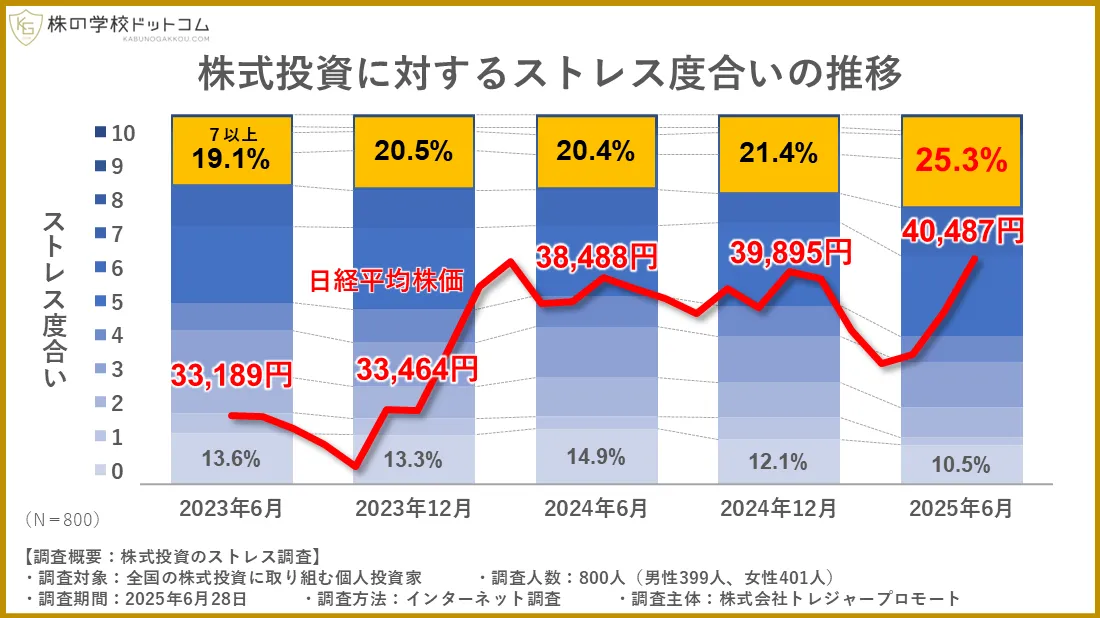
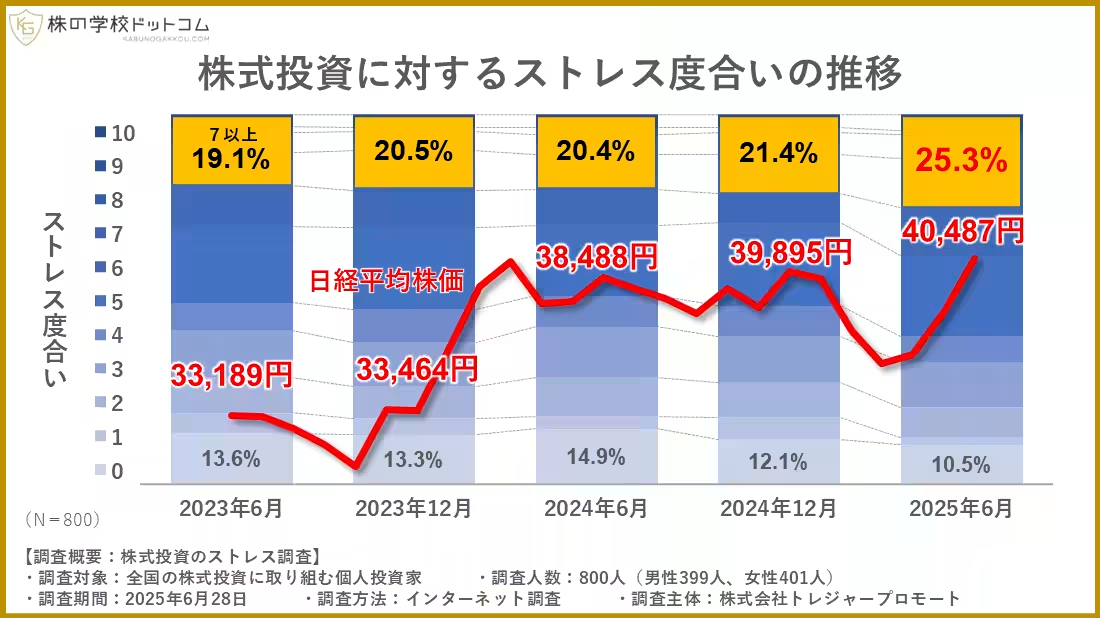
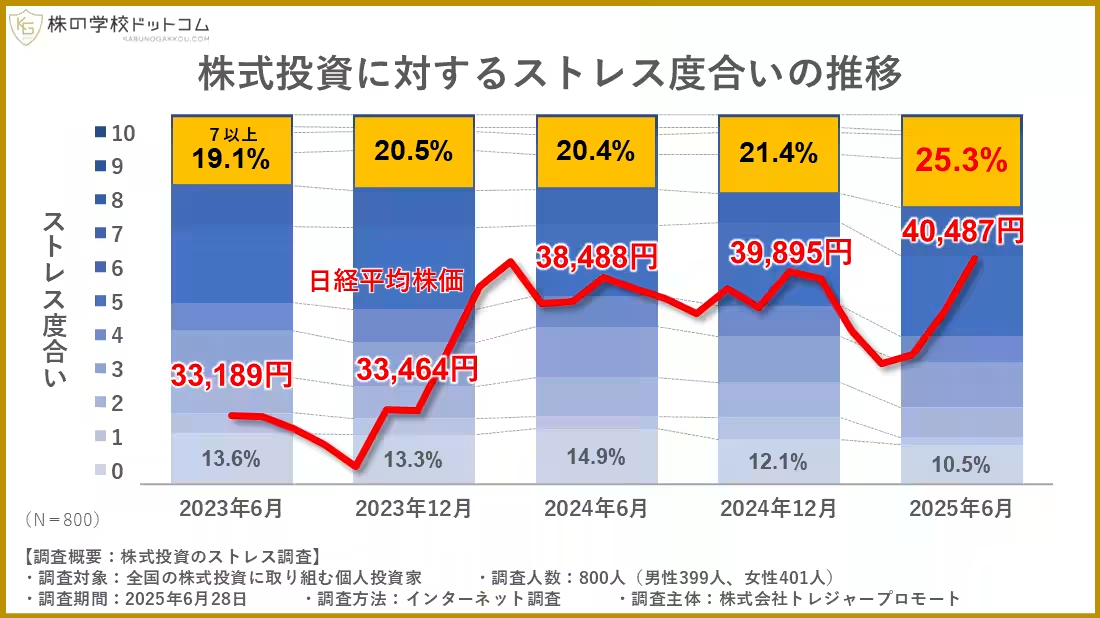
Comparing current results with those from the same time two years prior reveals an increase in investor stress. In 2023, only 19.1% reported stress levels of 7 or higher; this has risen to 25.3%, an increment of 6.2 percentage points. It also marks the lowest percentage (10.5%) of respondents who feel absolutely no stress in the previous two years, indicating a rising trend in investment anxiety.
Experience and Stress Correlation
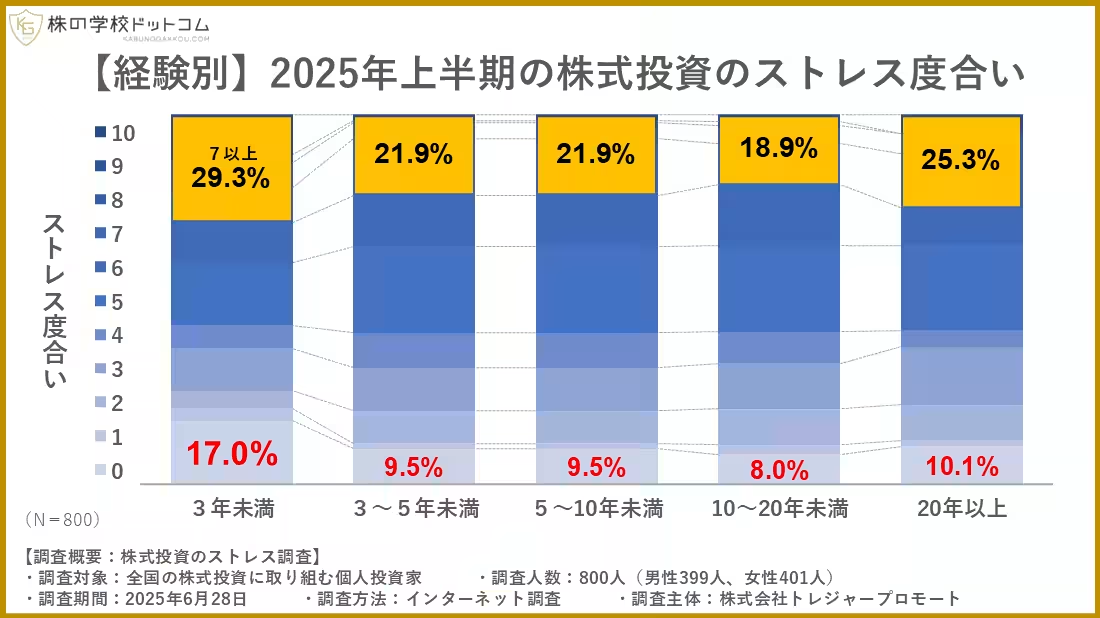
Examining the correlation between investment experience and stress levels provides insightful observations. For those with less than three years of investment experience, the highest percentage (29.3%) of individuals reported stress levels of 7 or above. Ironically, even among seasoned investors with over 20 years of experience, 25.3% still felt considerable stress. This suggests that regardless of experience, the unpredictability of the market can induce anxiety.
Surprisingly, for investors with less than three years of experience, 17% reported no stress at all, compared to only about 10% among more experienced investors, suggesting that newer investors may adopt less emotional attachment to short-term fluctuations. It appears that personal investment approaches greatly influence stress levels, showcasing differing perspectives on risk and reward.
Insights into Investor Mentality
The survey also included qualitative responses exploring why some individuals experience stress while others do not. Here are some insights from investors:
Reasons for Zero Stress:
- - "I view it in the long term, so temporary fluctuations don’t bother me." (23 years old, Male, less than 3 years)
- - "I invest passively, so as long as I hold long-term, I am not worried about short-term movements." (37 years old, Male, 3-5 years)
- - "I use surplus funds for long-term accumulation." (55 years old, Female, 5-10 years)
Reasons for High Stress (7 or above):
- - "One day my investment is up, and the next it’s down, and the rapid shifts shock me." (35 years old, Female, less than 3 years)
- - "Dramatic price drops make me feel like it's a matter of life and death." (48 years old, Male, less than 3 years)
- - "Thinking about potential massive losses keeps me awake at night." (63 years old, Male, less than 3 years)
Conclusion: Maintaining Calm Amidst Market Turbulence
The survey results highlight a noteworthy concern: individual investors are under unprecedented stress in the first half of 2025, particularly due to the psychological impacts of the Trump tariff shock. Yet, a segment of investors remains unaffected, focusing instead on dividends, long-term strategies, or the utilization of surplus funds in their investment approaches. These findings suggest that investor mindset plays a crucial role in how stress levels fluctuate.
To sustain a calm investment journey, it’s essential for individuals to assess their risk tolerance and clearly define their investment goals. Understanding the purpose behind investing can help navigate and manage potential stressors effectively.
At Kabunogakkou.com, we are committed to helping investors find strategies that suit their unique needs, encouraging calm and informed participation in stock investments moving forward.
Topics Financial Services & Investing)
【About Using Articles】
You can freely use the title and article content by linking to the page where the article is posted.
※ Images cannot be used.
【About Links】
Links are free to use.