




Future Choices: The First Private Population Issues White Paper and Urgent Proposals Released
The Forum for the Future We Choose: A Significant Step in Addressing Japan's Population Issues
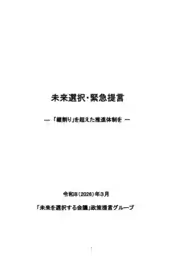
On March 25, 2023, the Forum for the Future We Choose (Mirai o Sentaku Suru Kaigi), spearheaded by the Japan Productivity Center in Chiyoda, Tokyo, made headlines by submitting urgent proposals aimed at addressing population concerns to Japan's government. This move highlights a growing awareness and proactive stance on the population decline issue, a critical challenge facing Japanese society today.
The proposals were built around three foundational principles: promoting policy linkages at the regional level, establishing a stable public-private partnership for long-term efforts, and ensuring clear communication with the public about the population crisis. This approach aims to foster a societal understanding of the issues at hand, particularly engaging younger generations and integrating gender perspectives for wider acceptance and ownership of the initiatives.
Groundbreaking Accomplishments
In a historic first for private sector involvement, the Forum also released the Population Issues White Paper 2025 on March 27, 2023. This document serves not only as a comprehensive analysis of the situation but as a call to action for both the government and citizens. The white paper meticulously outlines significant trends in demographics, the social landscape, and various community challenges that arise in a society grappling with declining birthrates.
Key Proposals from the Urgent Recommendations
The urgent proposals introduced by the Forum cover five critical areas:
1. Transition to a New Stage in Addressing Low Birthrates:
- This suggests a paradigm shift in policy post-2029 to confront and alleviate issues such as the “L-shaped curve” phenomenon affecting demographic dynamics and to activate youth policy initiatives.
2. Addressing the 'Scarcity of Human Resources':
- The emergence of a 'human resource scarcity' demands improved participation in the workforce, supplemented by adopting AI technologies to enhance productivity, with a focus on investments in human capital.
3. Establishing a Comprehensive Social Security System:
- Building a society that supports all generations through mechanisms like income-contingent tax credits is crucial in light of Japan's aging population.
4. Implementation of Regional Industry Clusters and Living Circles:
- To counteract the population decrease, the initiative proposes developing local industry clusters, aimed at stimulating continuous local development and strengthening Japan's economic capabilities.
5. Project Initiatives for Policy Linkages:
- It calls for the government to provide support in launching projects that establish regionally-driven policy linkages, enabling local entities to take the initiative in policy formation.
Insights from the White Paper 2025
The Population Issues White Paper 2025 comprises several core sections:
- - Demographic Trends: A deep dive into the current population dynamics, including changes in birth rates, marriage and child-rearing attitudes, and labor market statistics.
- - Policy Perspectives: Examining government policies since the 1990s and highlighting recent initiatives and programs.
- - Public Awareness Surveys: For the first time, the white paper includes comprehensive survey results from various generations, reflecting public consciousness about population matters.
- - Expert Opinions: Contributions from 87 specialists across diverse fields providing their insights on how to tackle the population decline effectively.
Conclusion
The initiatives undertaken by the Forum for the Future We Choose signify a meaningful shift towards tackling Japan's population challenges. By establishing private-public partnerships and driving grassroots conversations, these proposals aim to catalyze a unified response to ensure a sustainable future for all generations in Japan.
For more information, detailed summaries are available in the white paper and recommendations through the official links provided by the forum. It stands as a testament to the growing urgency of addressing demographic issues and the necessity of holistic, inclusive strategies in public policy.

Topics Policy & Public Interest)

【About Using Articles】
You can freely use the title and article content by linking to the page where the article is posted.
※ Images cannot be used.
【About Links】
Links are free to use.