




CarbonNest Achieves 200 Hours of Continuous CO₂ Capture in Hokkaido's Harsh Winter
Introduction
CarbonNest, a Tokyo-based energy startup, has made a significant breakthrough in direct air capture (DAC) technology by successfully operating its system continuously for over 200 hours during the harsh winter of Hokkaido, even in sub-zero temperatures. This achievement is a testament to their superior operational control, which has been validated through rigorous data collection during real-world trials.
CarbonNest’s Vision
CarbonNest focuses on developing and operating DAC systems that directly capture CO₂ from the atmosphere. Unlike traditional views that see DAC as merely a costly option in climate change mitigation, CarbonNest redefines CO₂ not as a pollutant but as a valuable local energy resource. The recovered CO₂ can contribute to a circular economy by being reused in synthetic fuels, agricultural applications, and chemical manufacturing. This represents a shift in mindset towards viewing carbon not as an enemy but as an asset.
Addressing Regional Energy Issues
Japan faces structural problems despite the increasing adoption of renewable energy sources like offshore wind and solar. The three primary issues identified include:
1. Wasted Excess Electricity: There are periods when electricity generation outpaces consumption, leading to energy waste.
2. Urban Leakage of Value: Most renewable energy companies are based in urban areas, leaving little economic benefit for local communities.
3. Lack of Benefits for Residents: The local communities are not seeing tangible benefits from renewable energy projects.
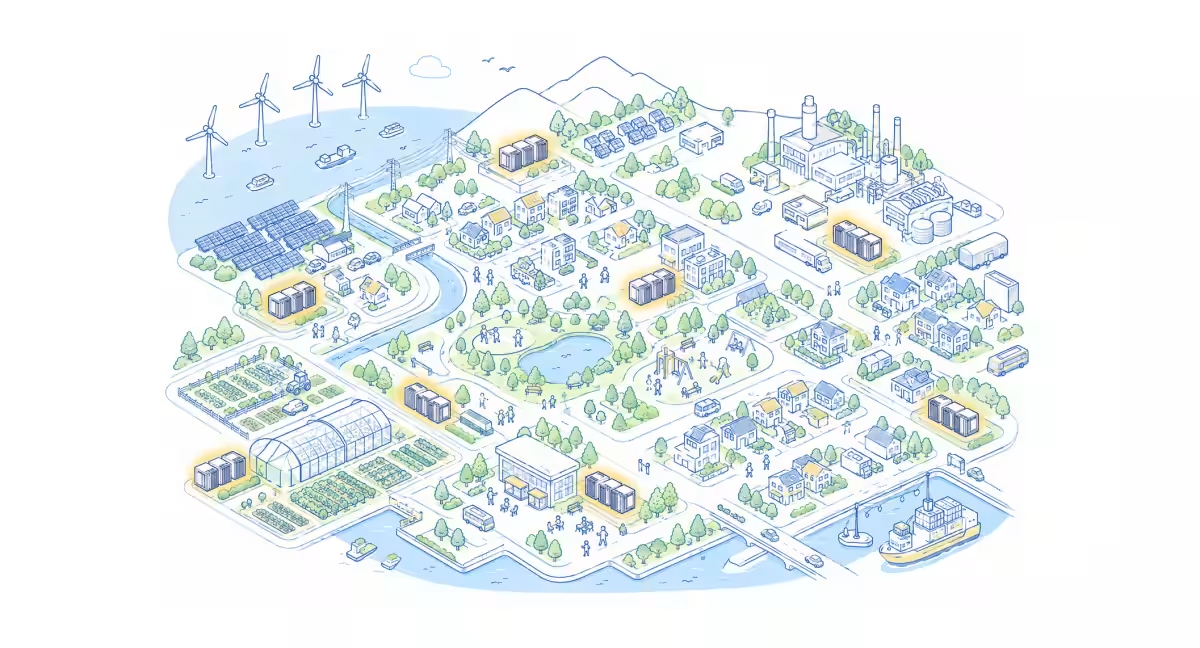
CarbonNest aims to tackle these issues by utilizing excess electricity to operate DAC systems, effectively converting CO₂ into a locally utilized resource. This approach not only addresses carbon emissions but also secures renewable energy’s value within communities.
Real-World Testing in Extreme Conditions
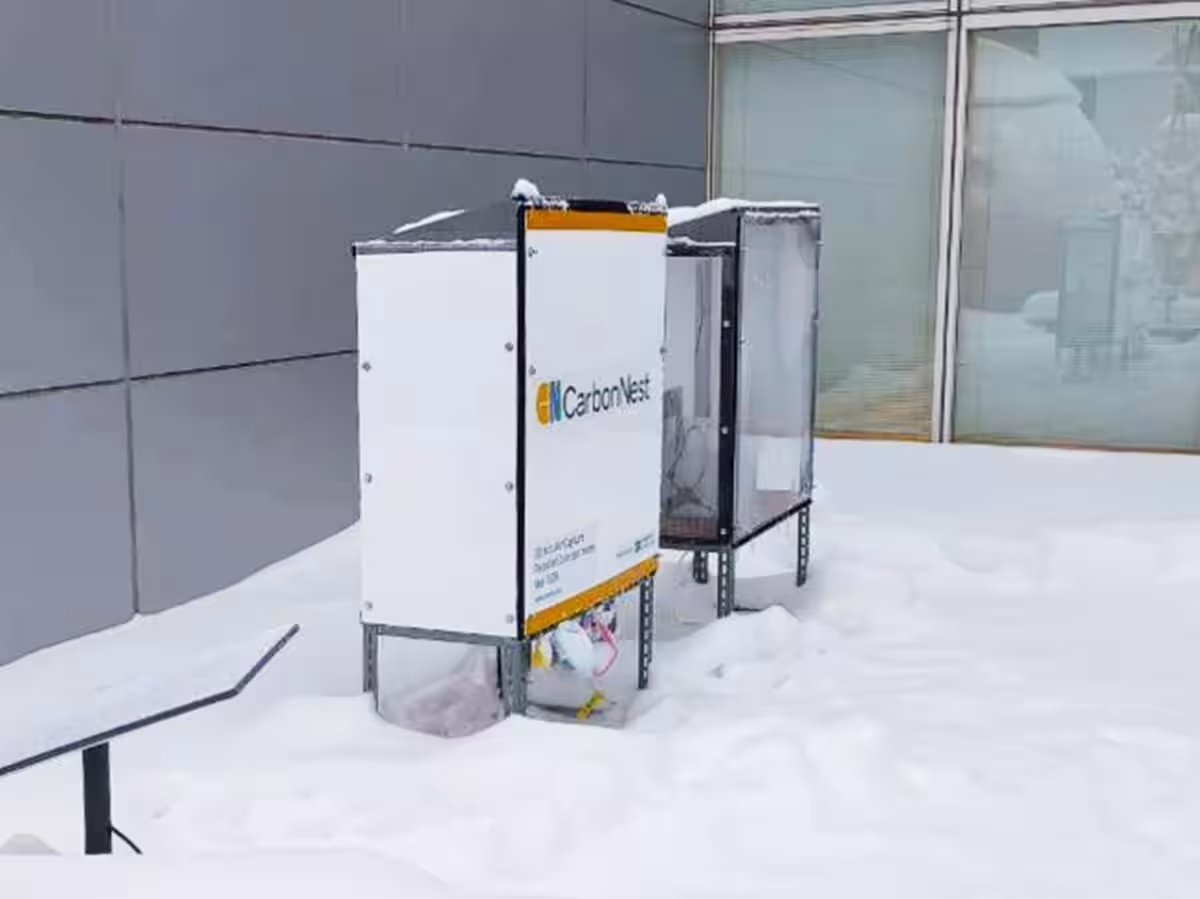
From November to December 2025, CarbonNest conducted rigorous testing of its DAC system in Ishikari, Hokkaido, where they faced several challenges unique to the cold climate, such as sensor malfunctions caused by frigid temperatures. Nevertheless, they successfully overcame these issues, achieving over 200 hours of stable operation. Throughout this period, they optimized control parameters to gather data essential for proving the feasibility of DAC in extreme conditions.
Ishikari is rich in renewable energy and is home to one of Japan's most significant data center clusters. Here, CarbonNest is advancing energy control technologies that integrate renewable energy, heat from data centers, and DAC operations.
Envisioning CO₂ as Energy
CarbonNest believes that CO₂ can be an integral part of renewable energy solutions. The term 'energy' at CarbonNest encompasses not just electricity but also fuels, raw materials for chemicals, agricultural assets, job creation, and the local economy's revitalization. By placing distributed DAC systems in areas with abundant renewable energy, CarbonNest aims to capture CO₂ using excess power, facilitating its circulation back into local industries.
For example:
- - Increasing Crop Yields: CO₂ concentration control in agricultural greenhouses can enhance productivity.
- - Production of Synthetic Fuels: Transforming captured CO₂ into e-fuels.
- - Raw Material Supply for Construction: Contributing to both the chemical and building supply chains.
A New Industrial Model for Regions
CarbonNest is not merely positioning itself as a power generation entity but as a pioneer in creating next-generation industrial locations. The company's vision includes launching commercial operations by 2027, driven by actively building partnerships with energy companies, local governments, and investors.
Leadership Insight
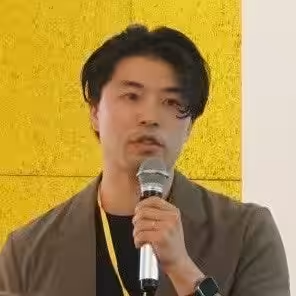
Kawasaki Takashi, the CEO of CarbonNest, shared their mission, stating, "We want to create a new industrial model with DAC technology. Contrary to its previous perception as just a cost for reducing CO₂, we believe capturing atmospheric CO₂ can be the gateway to ushering in new industries, jobs, and vitality for local communities. Using surplus renewable energy allows us to overcome the primary barrier of electricity costs, turning waste into valuable resources for local economies. Our goal is to deliver this new model from Japanese regions to the world."
Engaging with Partners and Investors
CarbonNest is actively seeking collaborations with:
- - Renewable energy providers looking for ways to utilize excess electricity.
- - Local governments and businesses seeking field testing and expansion partnerships.
- - Agriculture, chemical, and energy-related businesses aiming to utilize CO₂.
- - Startup support organizations, VCs, and investors interested in growth collaboration.
For inquiries, please visit CarbonNest's website.
Conclusion
Through innovative technology and a commitment to redefining the energy landscape, CarbonNest is positioning itself at the forefront of the energy transition, demonstrating a practical and sustainable way to capture CO₂ while benefiting local economies.

Topics Energy)
【About Using Articles】
You can freely use the title and article content by linking to the page where the article is posted.
※ Images cannot be used.
【About Links】
Links are free to use.