



Enhancing Tax Accountant Productivity Through Digital Twin Technology and High-Precision AI
Tax Technology Revolution: Enhancing Accountant Productivity with Digital Twins
In an era where efficiency and precision are paramount, Takumane is stepping up to the plate by leveraging digital twin technology to support tax accountants—a profession characterized by strict regulations and experiential judgments. In a groundbreaking move, they are commencing a proof of concept (PoC) focused on mitigating hallucinations and complex inference errors commonly associated with generative AI.
The Promise and Challenge of Generative AI
Generative AI is making strides, with applications emerging that can solve extremely complex mathematical problems. This has fostered high expectations that similar technologies could be applied to intricate tax regulations. However, the reality is that tax practice often transcends mere textual rules and statutes. Concepts like “business expense eligibility” or “social appropriateness” rely heavily on context and professional experience, making it crucial to have an understanding beyond algorithms.
The Dual Approach by Takumane
To capitalize on generative AI's capabilities while ensuring reliability, Takumane is implementing a two-step approach. The first step is formal logical consistency checks, which will serve as a foundation for validating tax laws and operational procedures within a digital twin framework. The next step involves establishing checkpoints for experiential validation. By integrating AI into this dual system—formal logic and experiential validation—Takumane aims to support proper tax declaration processes effectively.
Hallucination in Generative AI
While generative AI demonstrates utility, it can output plausible-sounding legal information that is entirely fabricated. This propensity is akin to human biases, stressing the necessity for a robust confirmation framework. AI operates by statistically predicting follow-up words, which can lead to plausible yet inaccurate outputs. The structural characteristics of the learning process in these AI systems make them prone to erroneous deductions, especially in complex and nuanced domains like tax law.
Enhancing Reliability: Structured Approaches
Recognizing the limitations of AI, Takumane’s strategy is to introduce constraints, structures, and rules to guide the generative process. The digital twin model used by Takumane transforms tax law into a clear operational framework that AI can interact with constructively. For instance:
1. Formal Logic Check: Utilizing tools like AlphaProof, it ensures systematic validation of statutes, calculation methods, and application sequences.
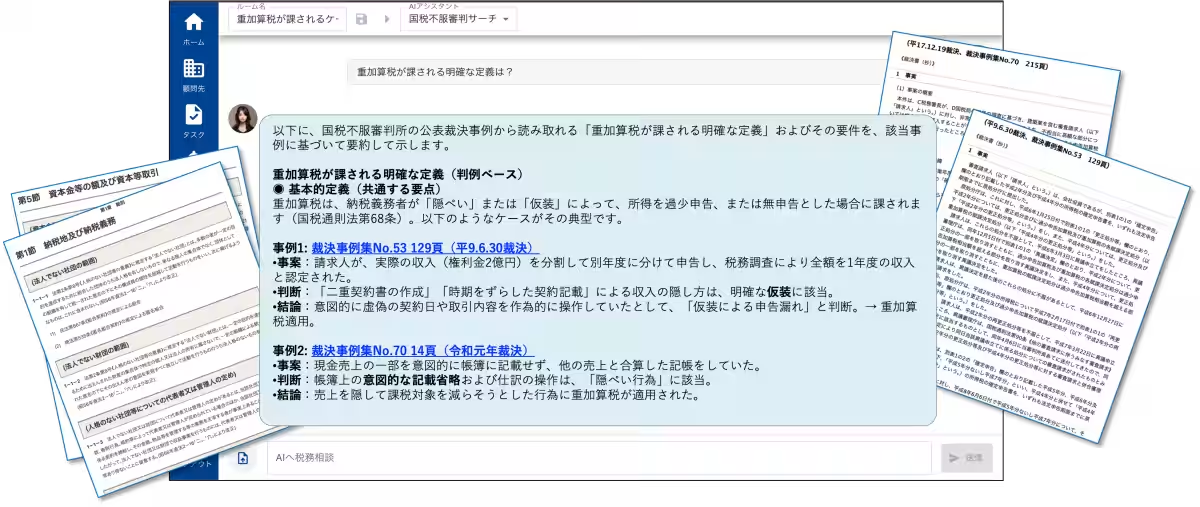
2. Experiential Validity Check: This step looks into case law, national tax bureau interpretations, and adjudicative precedents, necessitating the use of high-precision AI and tailored checklists for tax professionals and users.
This structured dual approach seeks to both curtail hallucinations and augment practical applicability—positioning AI as a supportive tool rather than a replacement for professional judgment.
Practical Implementation: Two-Stage Checks in Digital Twins
Preparatory Steps: Constructing a Digital Twin
Initially, Takumane meticulously constructs the tax law landscape into a format that can be engaged with virtually, akin to creating a replica of tax regulations that AI can utilize to support the procedural aspects of tax operations. This preparation divides into three categories:
1. Rigorous Rule Structuring: Using theorem proving support tools like Lean4, formal rules around statutes, calculations, and applicable sequences are established. However, ambiguities remain that pure logic can’t encompass fully.
2. Common Logic for Tax Professionals: A standard operational logic for various tax fields is developed, allowing practitioners to integrate personal expertise into the digital twin framework as plugins— fostering an environment that not only encapsulates stringent regulation but also enables knowledge-sharing.
3. Reflecting Case Law for Practical Validity: By cataloging important points such as economic substance denials and principles of taxation, they prepare for real-world validity checks commonly encountered in practice.
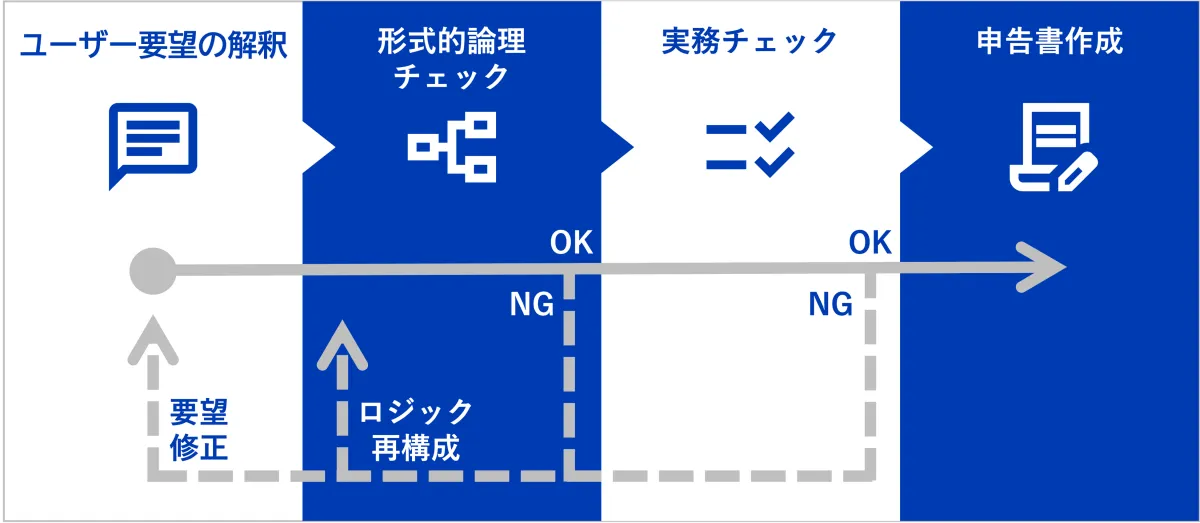
Workflow: From User Requests to Stringent Checks
1. Translating User Requirements: The AI assists in converting vague user inquiries into clearly defined frameworks for tax-validation processes, ensuring both parties understand the intended inquiry.
2. Formal Consistency Verification: AI-friendly checks are employed to validate these frameworks mechanically.
3. Practical Validity Checks: Even structured outputs necessitate scrutiny from tax professionals who assess underlying economic rationality and the integrity of transactions, ensuring that substantive risks do not go unnoticed.
4. Trial & Error and Proper Decision-Making: This dynamic process allows for constant feedback and corrective actions based on acquired insights, empowering tax professionals to make well-informed choices.
Future Prospects: Continuous Evolution
Takumane continually refines this framework, enhancing the reliability of both the formal logic checks and experiential validations. In collaboration with tax professionals, they leverage practical know-how to bolster AI's capabilities, ensuring the system evolves in response to changes in regulations.
By establishing ongoing updates to the foundational layers of their digital twins, they aim for a system where tax agents can independently maintain their projects with optimal ease and safety. Ultimately, Takumane envisions a sophisticated AI-supported tax assistance system that streamlines tasks ranging from tax return preparation to risk detection. The ultimate goal is to transform PoC initiatives into integral components of a cohesive operational system that enhances overall productivity and user assurance.
Topics Consumer Technology)
【About Using Articles】
You can freely use the title and article content by linking to the page where the article is posted.
※ Images cannot be used.
【About Links】
Links are free to use.