



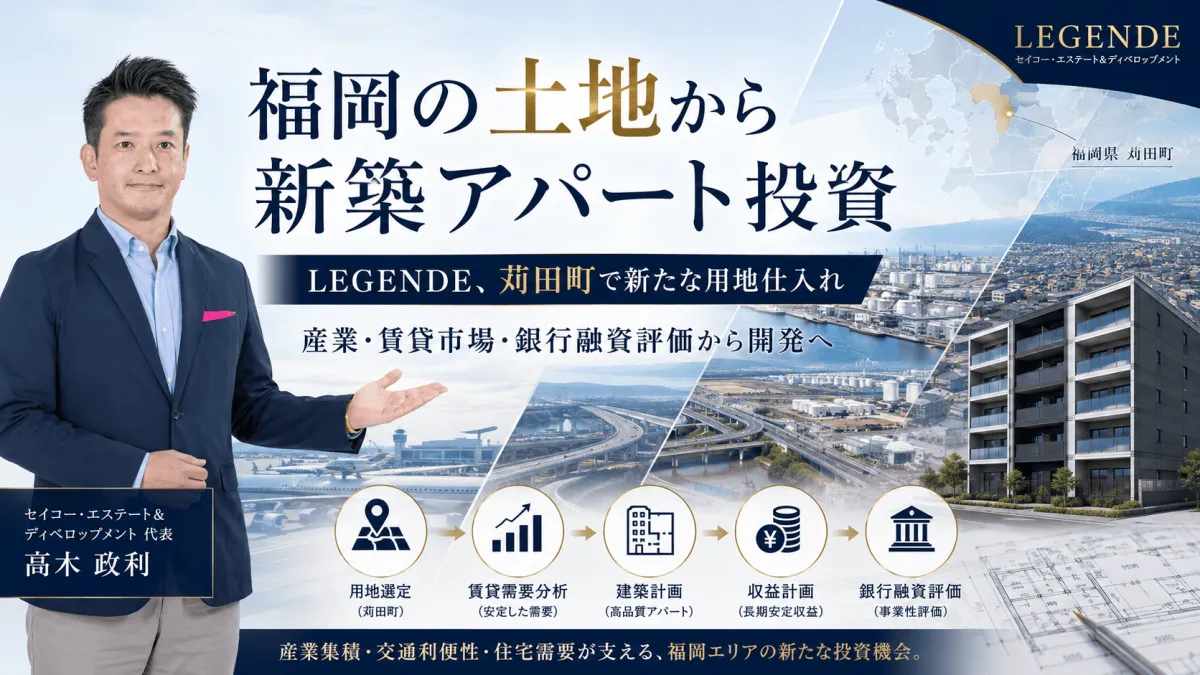
New Investment Opportunities with LEGENDE: A Fresh Development in Kanda Town, Fukuoka
New Investment Opportunities with LEGENDE: A Fresh Development in Kanda Town, Fukuoka
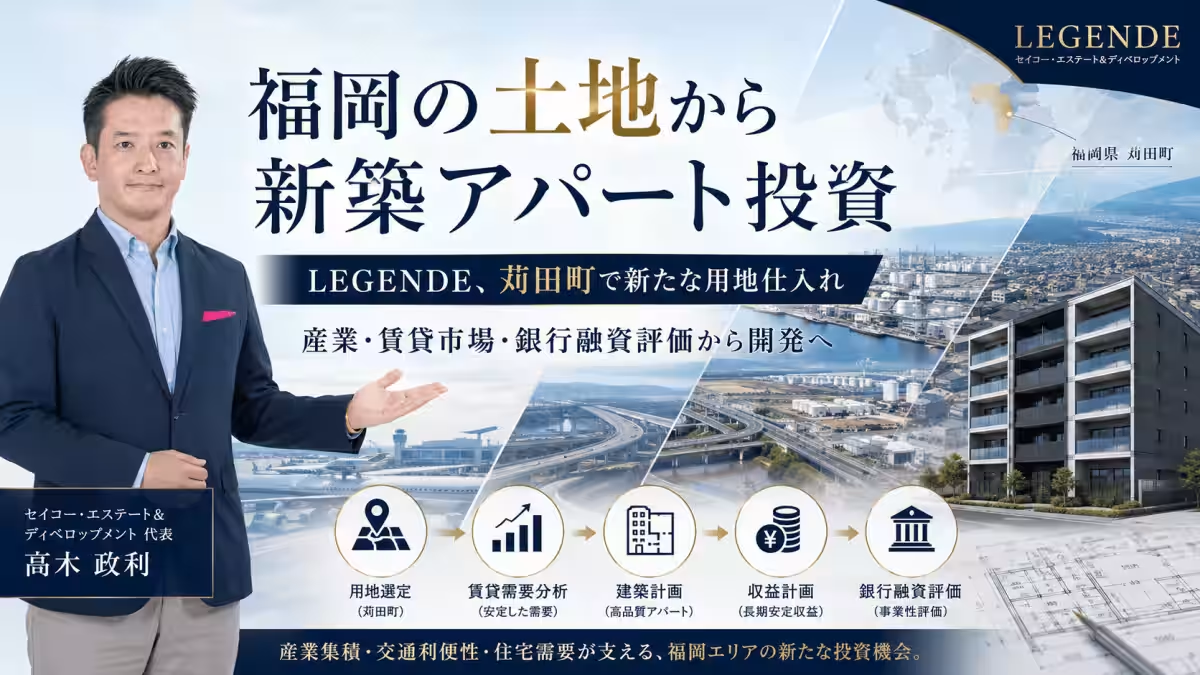
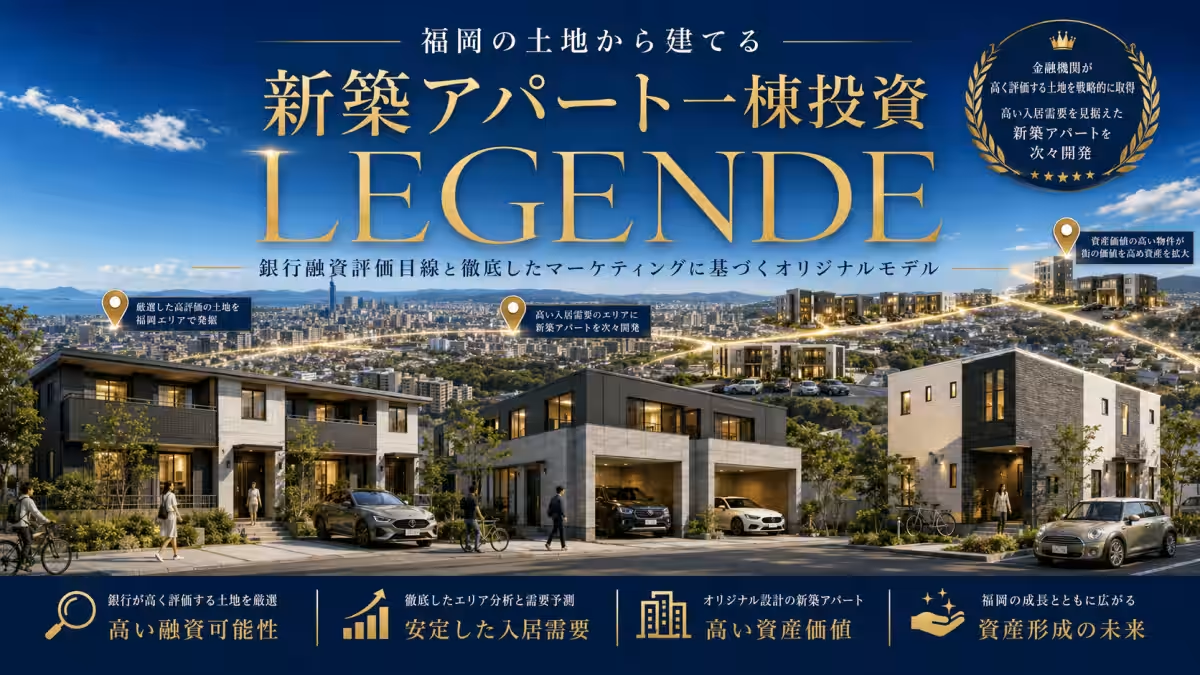
Seiko Estate & Development, headquartered in Fukuoka and led by President Masatoshi Takagi, has announced a strategic move in the real estate market. The company is excited to unveil the acquisition of new land for its LEGENDE series of investment apartments in Kanda Town, part of Fukuoka Prefecture. This initiative marks a significant expansion in their focus on real estate investment, providing a comprehensive approach ranging from land procurement to new apartment development.
As investors look to develop new housing solutions, the criteria for assessing potential land in Fukuoka go beyond mere availability or surface-level yield percentages. Key factors such as local employment opportunities, the demand for housing in surrounding areas, and an analysis of existing rental housing conditions are vital components in the decision-making process. Furthermore, evaluating land prices, construction costs, business feasibility, and bank financing assessments is crucial before committing to any development project.
Understanding Kanda Town’s Investment Potential
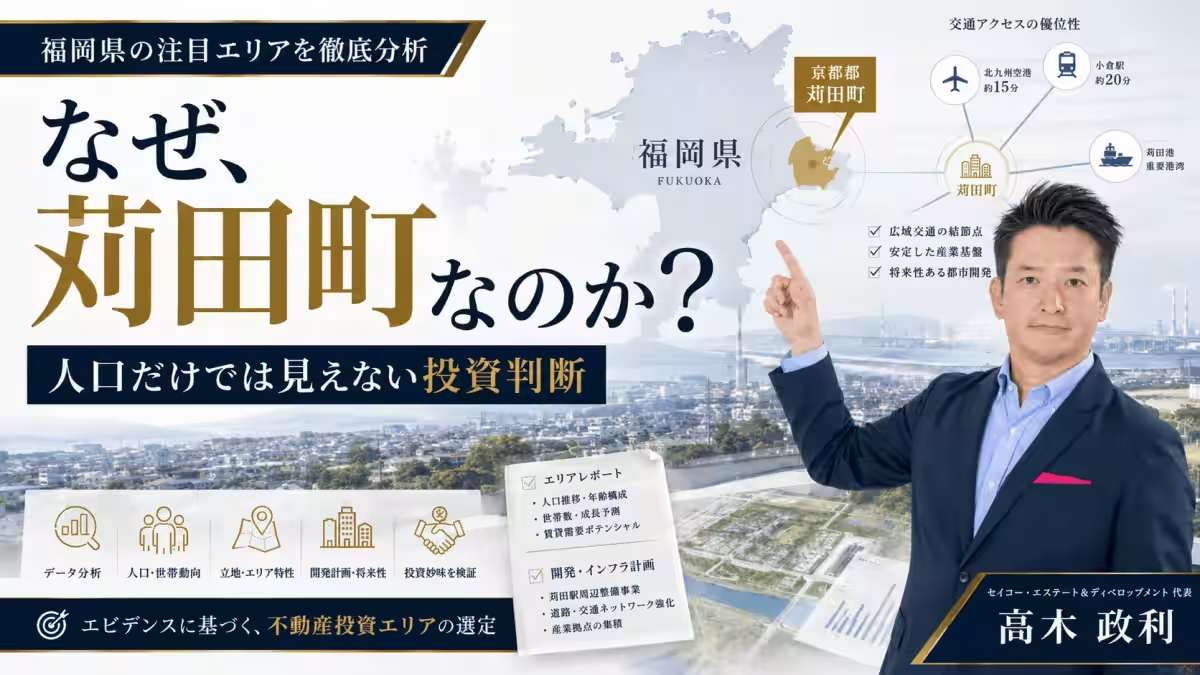
Kanda Town, with a current population of approximately 37,439 residents and 19,294 households as of July 2026, presents a unique challenge and opportunity. On the surface, it may not appear as densely populated or bustling as major cities like Fukuoka or Kitakyushu, especially as data forecasts show expected declines in population dynamics. However, Seiko Estate & Development operates with a mindset that prioritizes comprehensive evaluation over simple demographic metrics.
In looking at Kanda, the town's identity as an industrial city becomes apparent. It boasts a workforce of around 15,504 engaged in manufacturing sectors, thanks to its favorable geographical positioning that includes top-tier transportation networks – land, sea, and air routes. This setting is critical to any investment, as the proximity to these logistical hubs enhances the local employment landscape and boosts rental housing viability.
The Automotive Industry’s Role in Development
Another critical aspect of Kanda is its strong automobile industry presence. For instance, Nissan Motor’s Kyushu plant operates over a sprawling 2.36 million m² facility employing approximately 4,500 people and has an annual production capacity of about 500,000 units. Additionally, the local Nissan Body Kyushu adds to the economic fabric, with a workforce of about 1,220. While substantial employers may appear attractive to investors, Seiko Estate is meticulous in confirming actual housing demand reflected in local rental listings.
Analyzing Rental Markets for Viability
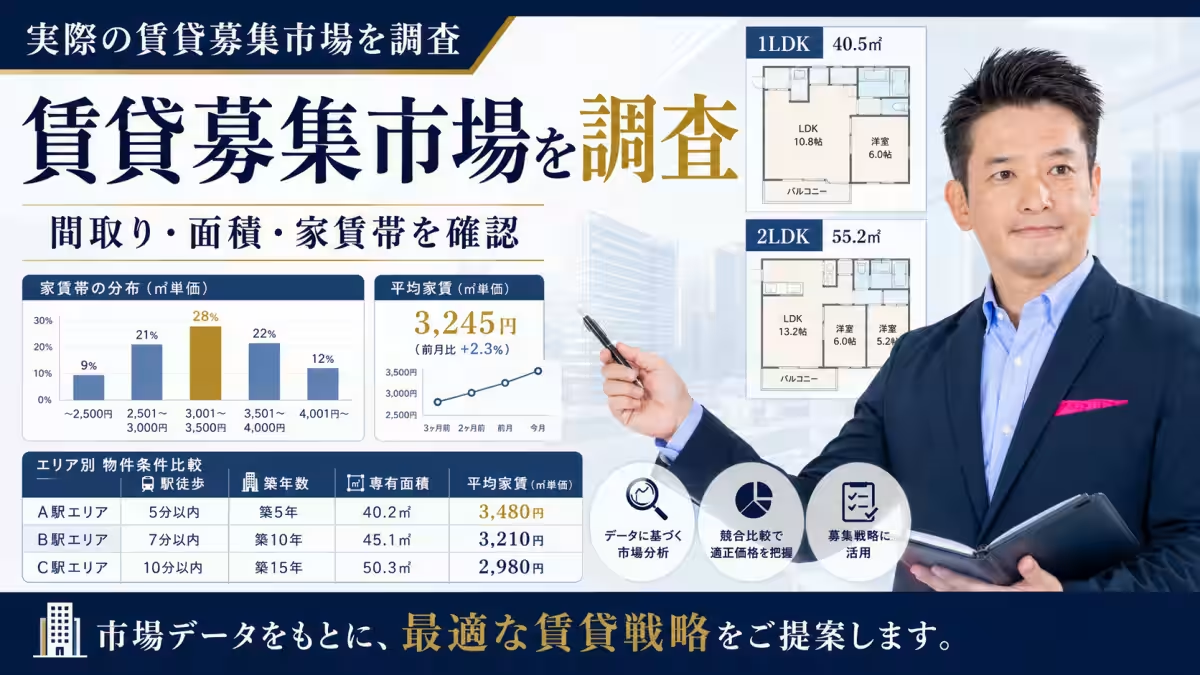
With the overall objective of establishing robust investment grounds, thorough research into the current rental market is non-negotiable. A review of listings on SUUMO reveals a total of 1,023 rental properties in Kanda Town. However, it is crucial to differentiate between mere volume and actual demand. Seiko Estate focuses on understanding the nuances of rental pricing dynamics, particularly how new and existing property offerings compare.
For example, in Kanda Town's Yoshihara area, new apartments include:
- - 1LDK, 26.58 m²: Monthly rent of ¥51,500-
- - 1LDK, 34.04 m²: Monthly rent of ¥54,000-¥54,500
A careful examination of these properties alongside existing structures helps shape a clear picture of market trends, pricing discrepancies, and the implications for new developments.
Strategic Investment Framework
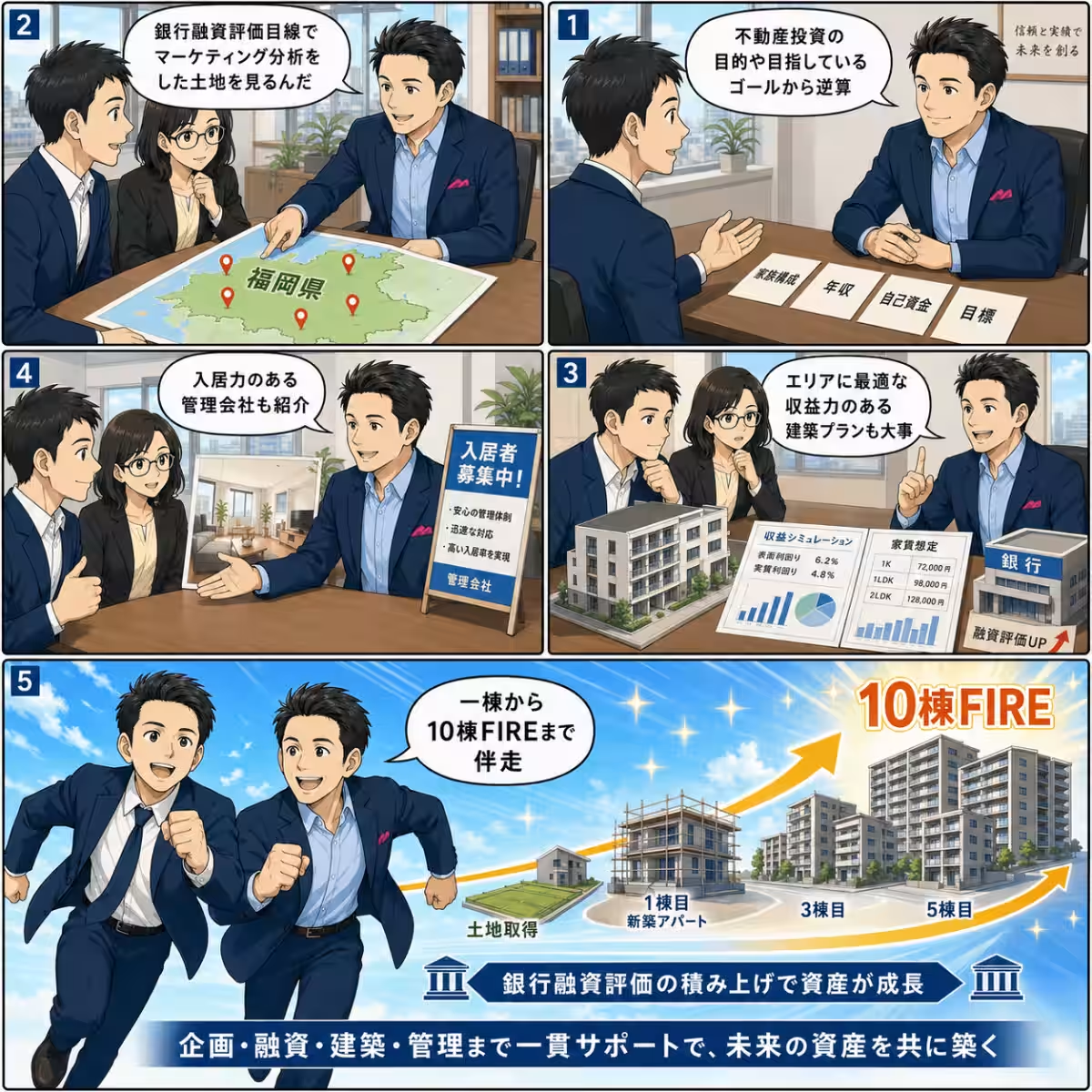
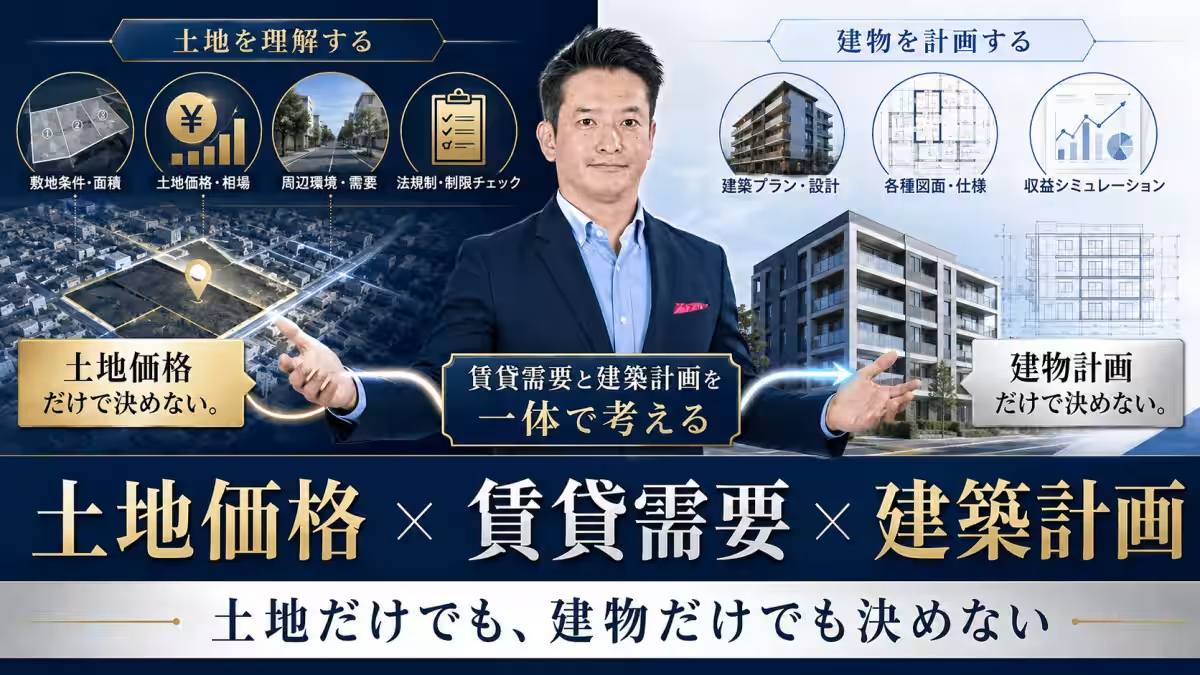
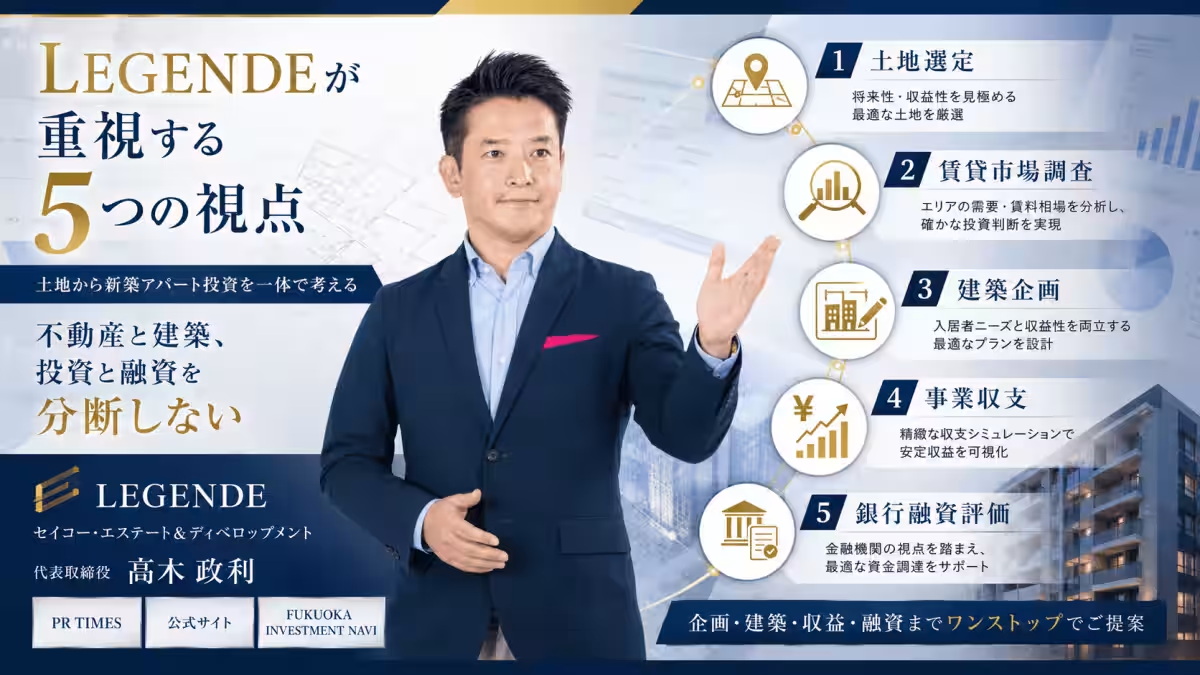
At the core of Seiko Estate’s operations is a strategic investment framework that incorporates insights gathered from various stages:
1. Land Selection: Assessing local rental demand, pricing, environmental factors, and job creation initiatives.
2. Rental Market Research: Thoroughly investigating current listings based on layout, size, rental rates, and amenities.
3. Building Plans: Designing tailored proposals based on land characteristics and anticipated tenants.
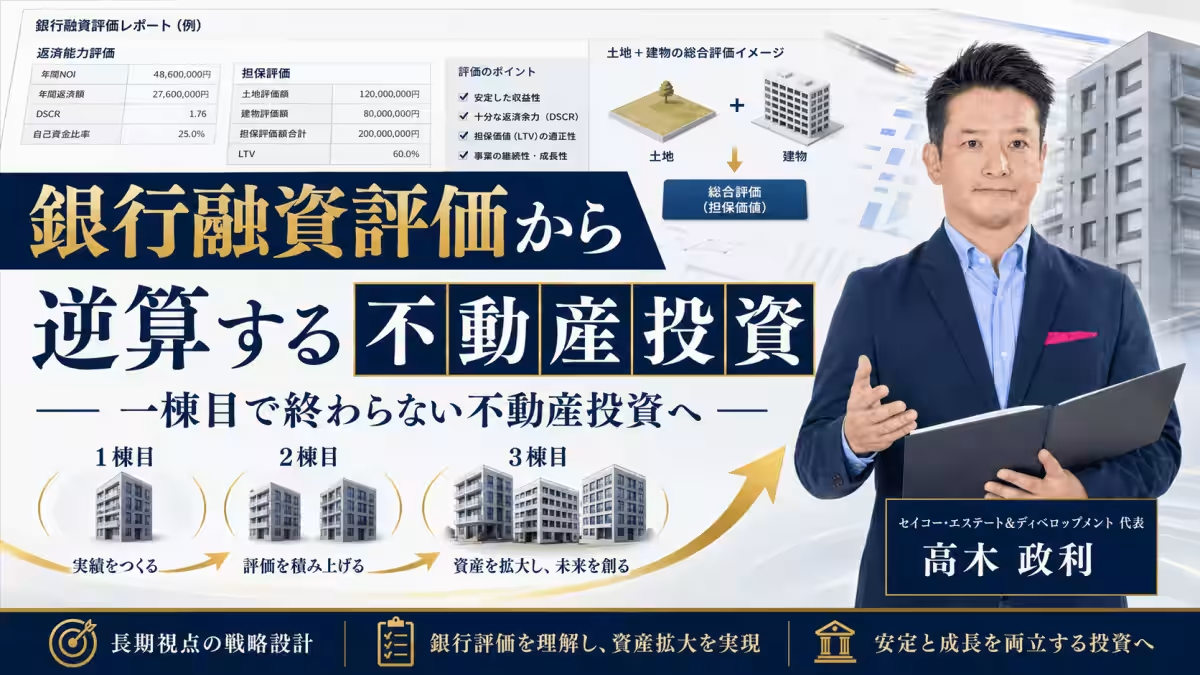
4. Financial Assessments: Scrutinizing real estate economics – including costs, anticipated rental income, and operational expenses.
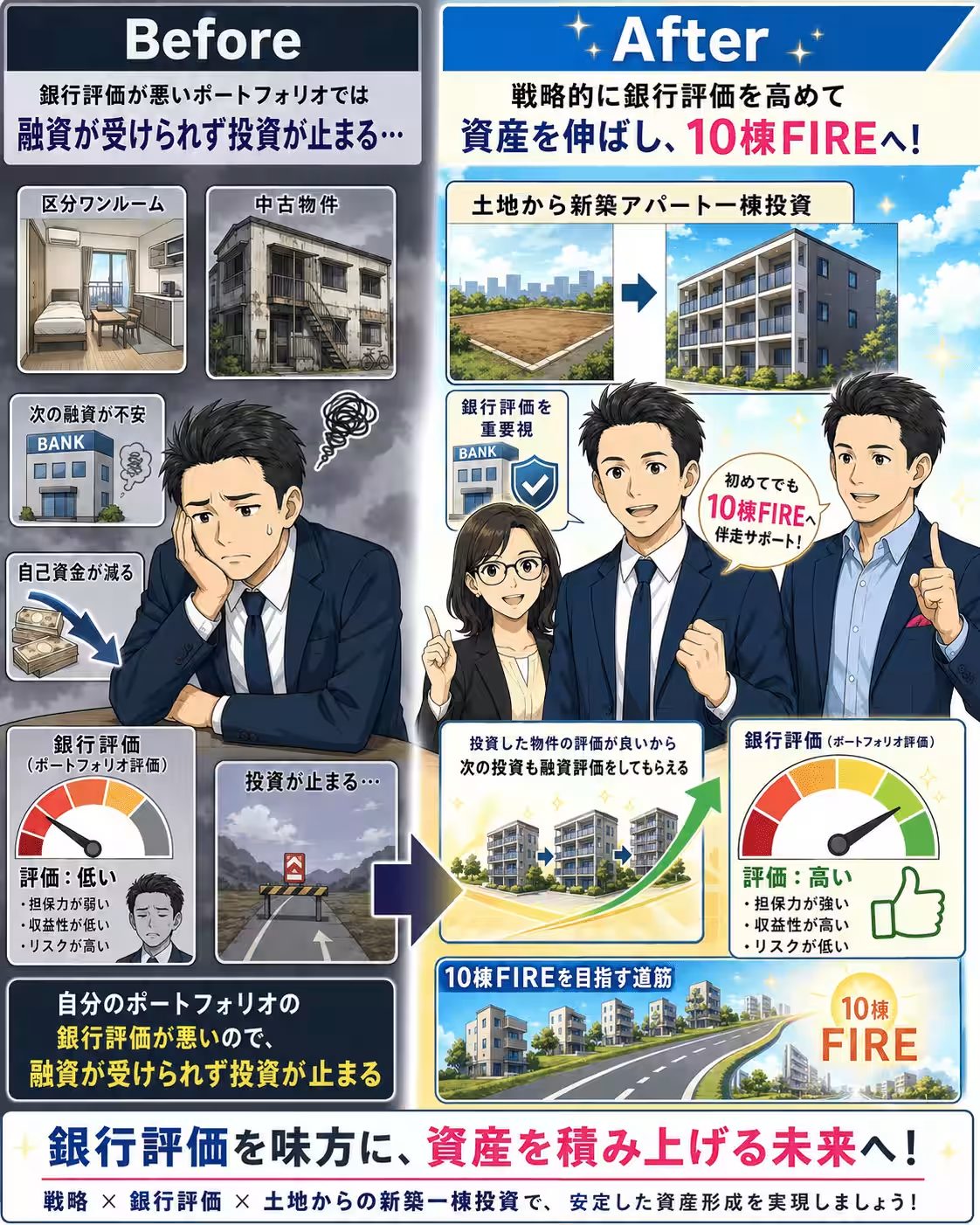
5. Bank Financing Evaluation: Aligning investment momentum with future borrowing capabilities to scale the portfolio.
Conclusion: A Vision for Sustainable Investment
Seiko Estate & Development champions a thoughtful, analytical approach to real estate investing. Rather than defining success as merely acquiring a property, they consider long-term implications for portfolio growth and sustainability. As projects like Kanda Town's LEGENDE series unfold, the importance of land, building quality, and understanding the financial lifecycle will guide their strategies.
Masatoshi Takagi stresses: “Our mission is not restricted to simply recognizing a 'good' area for real estate; we delve deeper to understand which industries thrive locally, require residential spaces, and how to meet the accompanying needs at viable price points.”
With Kanda Town as their new canvas for development, Seiko Estate aims to create not just apartments, but integrated communities that elevate both investor success and tenant experiences, setting a benchmark for what real estate investment can achieve in Japan.


Topics Consumer Products & Retail)
【About Using Articles】
You can freely use the title and article content by linking to the page where the article is posted.
※ Images cannot be used.
【About Links】
Links are free to use.