



Huawei Digital Finance's Pivotal Role at SFF 2025 in Advancing AI in Finance
Huawei Digital Finance's Transformative Role at SFF 2025
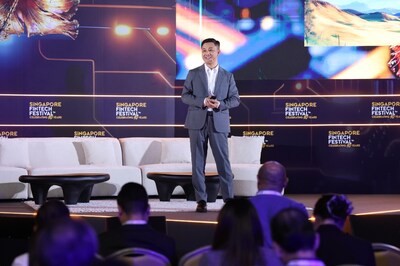
At the recent Singapore FinTech Festival 2025 (SFF 2025), Jason Cao, the CEO of Huawei Digital Finance, delivered an opening speech titled "Beyond Digital: Integrating AI into Financial Services." This significant event highlighted Huawei's commitment to pioneering AI solutions aimed at overcoming critical challenges within the finance sector. Cao emphasized the importance of integrating AI deeply into financial processes and business scenarios, suggesting that this integration could unlock substantial value for financial institutions.
Cao shared his insights on how the evolution towards an intelligent era is characterized by hyper-personalization driven by AI. He pointed out that the finance industry is at a critical juncture where AI can fundamentally alter customer interactions, turning a once one-size-fits-all approach into personalized experiences tailored to individual needs. This shift not only aims to improve customer satisfaction but also to provide financial institutions with the competitive edge necessary to thrive in the coming decade.
Over the last ten years, the digitalization of finance has revolutionized traditional barriers related to time and distance but was still largely governed by the 80/20 rule, where 80% of resources catered to only 20% of users. Looking ahead to the next decade, AI is set to transform this model towards a "one person, one team" approach. Cao envisions a future where AI attendants serve as personal super assistants, enhancing the capabilities of individual users to whole teams.
Furthermore, he indicated that those institutions that lead this shift towards hyper-personalized services will gain significant strategic advantages. The transformation facilitated by AI will permeate all facets, including financial service models, collaboration frameworks, risk assessment processes, and infrastructural developments.
Cao elaborated on Huawei's four-tier systematic solution designed to unlock intelligence across varied scenarios. He outlined two distinct paths that global financial institutions are currently pursuing in their AI application development. Large institutions are building agent matrices, where each role has an AI assistant, while smaller institutions prioritize high-value scenarios, such as lending, and swiftly deploy agents for smarter operations. To date, Huawei has aided global financial clients in implementing over 500 AI use cases that span office tasks, operational management, marketing, risk management, and customer service. This success enables clients to enhance internal efficiencies, deliver greater value to end-users, and catalyze a transition from isolated scenarios to holistic systematic solutions.
Huawei has positioned its intelligent computing platform as the centerpiece of its systematic solution, which encompasses computing power, platforms, engineering, and various scenarios. In response to demands for high concurrency and low latency in AI inference, Huawei has developed a state-of-the-art computing platform. This foundation underpins AI data governance across enterprises via a unified knowledge and data platform, integrated with financial agent platforms and data/model engineering processes—collectively foster an end-to-end (E2E) AI capability loop.
Working closely with global partners, Huawei aims to unleash the full potential of technology to accelerate AI deployment in high-value scenarios. As part of the intelligent mobile banking scenario, Huawei has partnered with a major Chinese bank to develop an innovative architecture for next-generation mobile services. This setup leverages intelligent computing infrastructure and AI platforms, employing hierarchical multi-agent collaboration, long-term memory storage, and holistic E2E performance optimization across hardware and software. As a result, they achieved intent recognition accuracy exceeding 90% with a latency of just 1.2 seconds, transitioning the bank from passive responses to proactive services.
Looking ahead, Huawei is committed to reinforcing its leading computing power platform, systematic AI knowledge, structured ecosystem development, and collaborative models with clients and partners. These efforts aim to enhance customer engagement, improve risk management frameworks, and support E2E business transformation, further entrenching value-based AI applications within the finance sector.
During the event, Huawei announced strategic partnerships with three members of the RongHai program—Neuxnet, Speakly AI, and TrustDecision—as they signed cooperation agreements with a leading Saudi Arabian financial institution, Atmaal. The RongHai program is expanding its partner network to include three new members: CMA, which provides stable payment services for central banks globally; Instadesk, offering smart outbound calling and marketing functions; and MagicEngine, delivering model development, inference, and services tailored for financial institutions. The growing roster of esteemed partners in financial solutions accelerates Huawei's global collaborative efforts.
Through the RongHai program, Huawei aims to collaboratively craft a "cluster of six capabilities" aimed at systematically building an AI ecosystem within financial production workflows. This endeavor includes model development, agent engineering, industry knowledge bases, and scenario-based applications while optimizing AI deployment efficiency through hardware-software E2E synergies.
As the financial sector transitions from digitalization to intelligent transformation, Huawei will continue to bolster innovation collaboration with its customers and partners, focusing on redefining financial workflows and fostering ecosystem development. These initiatives will enable AI to surpass technological boundaries and lead to significant productivity improvements, setting the stage for a new era in intelligent finance.
Topics Financial Services & Investing)
【About Using Articles】
You can freely use the title and article content by linking to the page where the article is posted.
※ Images cannot be used.
【About Links】
Links are free to use.