



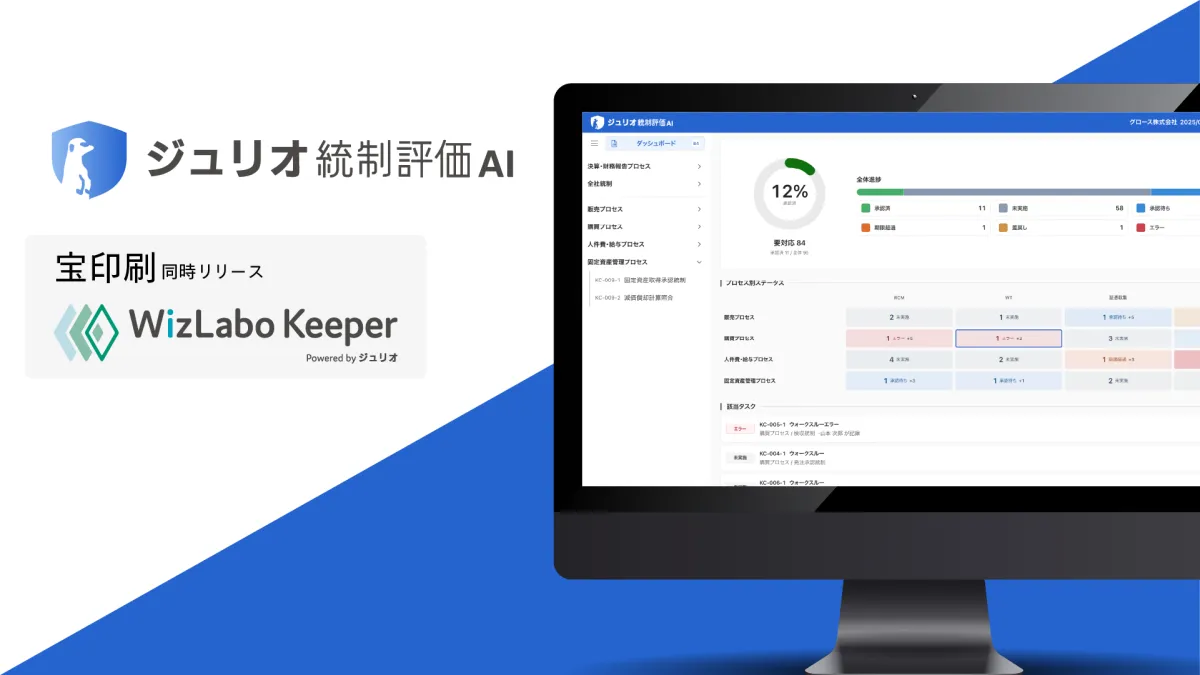
Julio and Takara Printing Collaborate on AI for Corporate Governance
Introduction
In a bold move aimed at bolstering corporate governance, Julio Inc. and Takara Printing Co., leaders in the disclosure support industry, have announced a collaborative service that leverages AI technology to assist in evaluating internal controls (J-SOX) for corporate executives. This initiative signifies a critical step towards enhancing trust in capital markets, a commitment that Takara Printing has upheld for years through its support for corporate disclosures.
Background
As the complexities and subtleties of fraud risks increase, the effectiveness of internal control evaluations comes under scrutiny. The Internal Control Reporting System (J-SOX) is set to undergo revisions starting from April 2024, making it imperative for companies to integrate fraud risk considerations into their evaluations. However, an uptick in transaction complexities and data volume, compounded by a shortage of personnel equipped to carry out these evaluations, necessitates a shift from manual assessments to AI-supported processes. Takara Printing recognizes that the integrity of both disclosure and governance are vital to maintaining trust in capital markets, making this new service just the first step in addressing these intertwined domains.
What is Julio Control Evaluation AI?
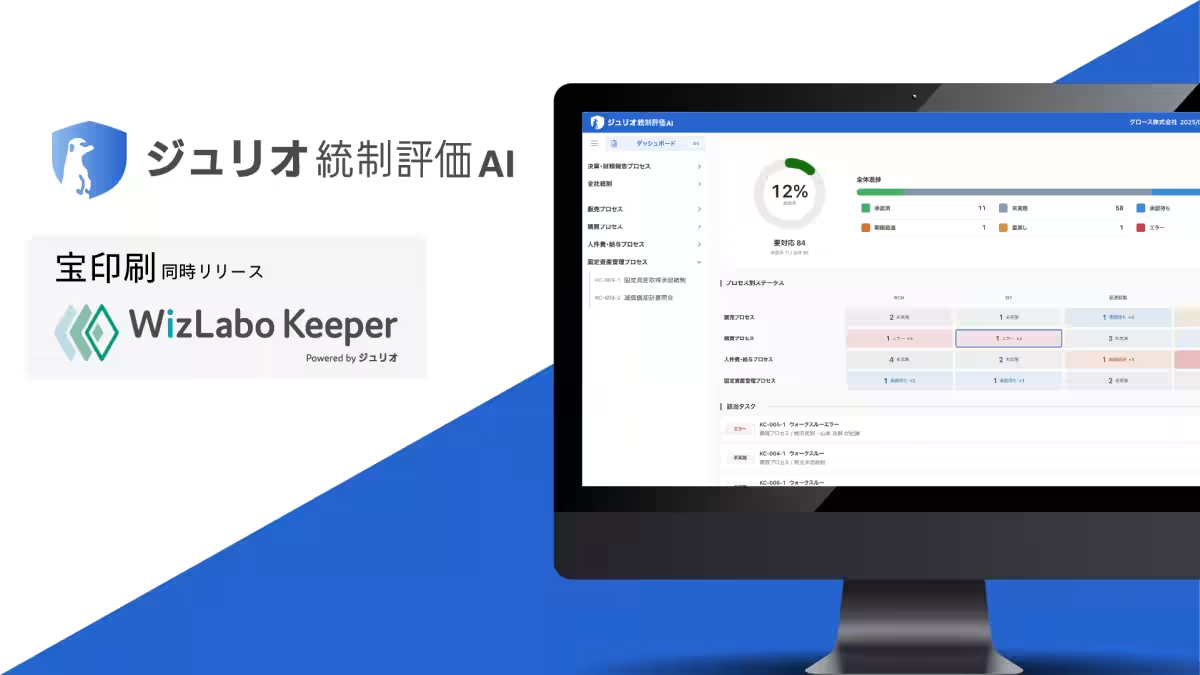
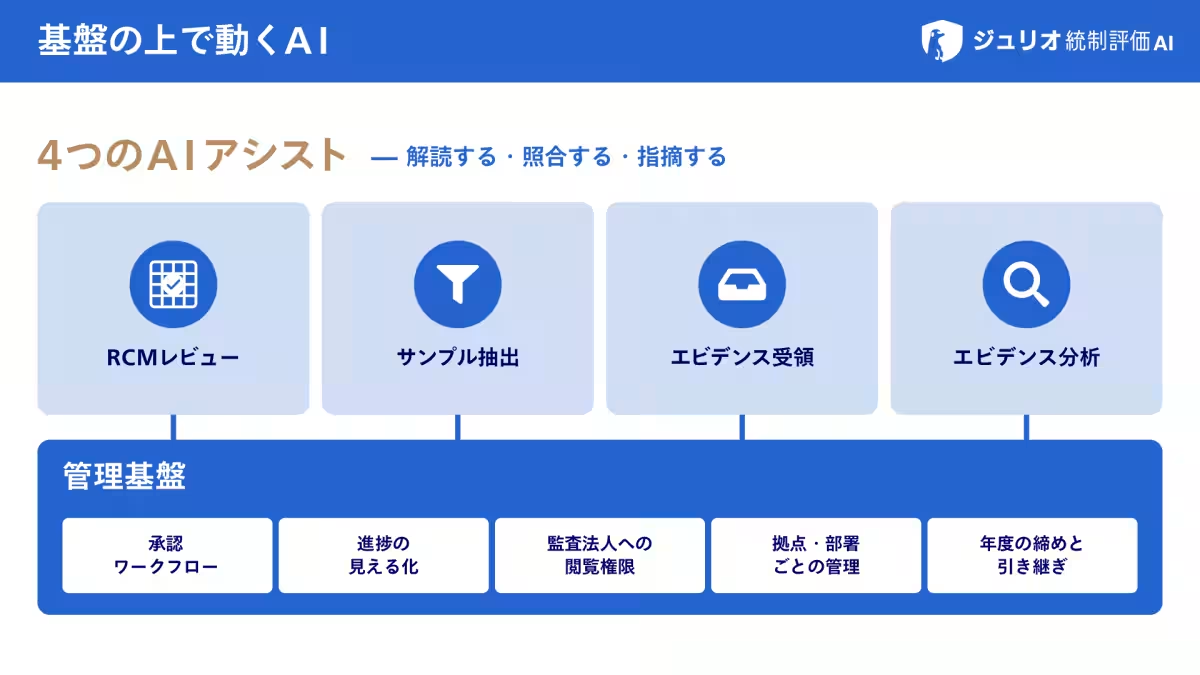
Julio's Control Evaluation AI is a specialized service designed specifically for the nuances of internal control assessments. Unlike generic AI chat tools, this AI captures not only the format but also the substance of evidence and evaluation documents. It cross-references data and highlights areas that require attention—a task previously reliant solely on the trained eyes of personnel. The evaluation follows a two-stage process: the “maintenance status evaluation,” which assesses whether controls are designed appropriately, and the “operational status evaluation,” which checks if these controls are functioning as intended. In both phases, AI plays a crucial role in supporting the evaluations.
Evaluation Phases and AI Support
1. Maintenance Status Evaluation: The AI reads across key documents (RCM, business descriptions, flowcharts), identifying inconsistencies and suggesting revisions based on evaluation results.
2. Operational Status Evaluation: The AI examines evidence documents against evaluation procedures, checking specifics like dates and amounts, and flagging items that require verification.
Despite the advanced capabilities of the AI, a human must always make the final judgments based on the AI's findings. This ensures that the process retains accountability and can be traced back to company-specific reasoning.
Comprehensive Management Features
In addition to evaluation support, the service includes features for managing approval workflows, audit rights for audit firms, departmental oversight, and processes for year-end closing and transitions to the next fiscal period. This integrated management approach ensures a streamlined internal control assessment process while retaining human oversight.
Market Leadership and Reliable Launch
By launching the Julio Control Evaluation AI as “WizLabo Keeper,” Takara Printing reaffirms its position as a market leader. This introduction not only enhances its existing disclosure support platform but also embodies the trustworthiness associated with Takara Printing’s established brand.
Technological Backbone: Accounting Insights and Innovations
The Julio Control Evaluation AI stands apart from conventional, generic AI due to its inclusion of procedures and judgement processes unique to the domain of internal control evaluations. Built by certified public accountants who incorporated their expertise into the AI's design, this innovative technology effectively addresses fraud risks while documenting the underpinning rationales of these evaluations. Julio has several patents pending related to the technology driving this service.
Leadership Commentary
Kenji Ubakai, representative director of Julio, remarked, “The era where internal control evaluations can solely rely on human input is over, especially given the rising fraud risks. This service exemplifies a rigorous division of labor where AI assures consistency, and humans make the final decisions. Together with Takara Printing, we are taking the first step to uphold trust in Japan's capital markets.”
Jō Ikekasu, executive officer and head of ICT Sales at Takara Printing, added, “Our focus has long been aligned with enhancing market trust. Expanding into the governance domain with Julio's advanced technology through ‘WizLabo Keeper’ is a significant evolution toward fulfilling this mission. We aim to guide financial stakeholders toward truly essential tasks.”
Service Overview and Future Plans
Service Name: Julio Control Evaluation AI (labeled as WizLabo Keeper by Takara Printing)
Launch Date: Scheduled for September 2026 (for both services)
Pre-launch Information: Starting today, requests for demos and consultations on early feature integration are being accepted.
Delivery Method: Cloud service (SaaS)
Target Audience: Internal control and audit departments of listed companies (supporting self-evaluations by executives)
Pricing: To be communicated individually.
Overall, the official launch is set for September 2026, but companies experiencing challenges in internal control evaluations are encouraged to reach out for preliminary discussions.
Company Backgrounds
Julio Inc.: Headquartered in Minato, Tokyo, specializing in AI services for accounting, auditing, and internal controls. Visit their website here.
Takara Printing Co.: As a leader in disclosure and IR document support for nearly 70 years, the company continues to enhance its expertise, contributing significantly to clients' corporate value. More information can be found here.
Contact Information
For inquiries regarding this announcement, please contact Julio Inc. at E-mail: [email protected].
Topics Business Technology)
【About Using Articles】
You can freely use the title and article content by linking to the page where the article is posted.
※ Images cannot be used.
【About Links】
Links are free to use.