



Katori City and Market Enterprise Collaborate on Reuse Initiative to Promote a Circular Economy
In a significant step toward sustainable development, Katori City, located in Chiba Prefecture, has established a collaboration with Market Enterprise, a company based in Chuo, Tokyo. This strategic partnership is designed to tackle pressing local issues through a new reuse initiative, with their collaboration officially commencing on July 29, 2026. The program utilizes Market Enterprise's reuse platform, 'Oikura', aiming not only to reduce waste in Katori City but also to foster a circular economy within the community.
Over the past years, Katori City has been proactive in pursuing SDGs-related initiatives, previously implementing various projects including the reuse of children's clothing and providing platforms for residents to offer unwanted items. However, they faced significant challenges such as rising waste disposal costs and an increasing number of elderly residents who struggle to transport their waste. Additionally, a considerable portion of discarded items in the community is still reusable. Thus, Katori City sought to introduce new measures to raise awareness and encourage reuse activities among its citizens.
Conversely, Market Enterprise has focused on developing internet-based reuse solutions. Upholding a vision of establishing a sustainable society, they have actively engaged in public-private partnerships that contribute to SDGs, such as participating in the 'Local Revitalization SDGs Public-Private Partnership Platform'. Their ongoing mission aligned with Katori City's intention to promote the establishment of a circular economy through reuse activities led to the implementation of this promising initiative with 'Oikura'.
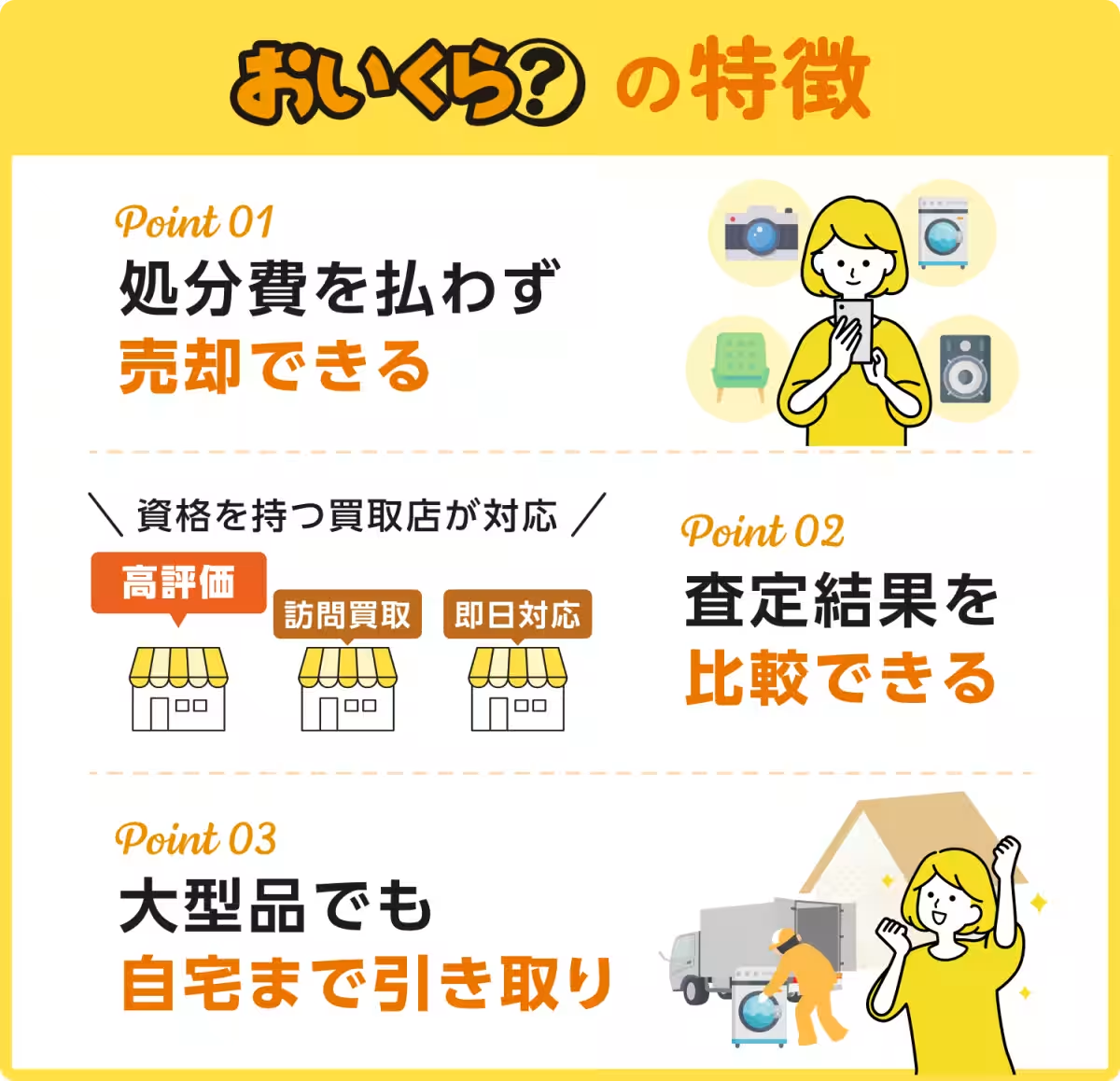
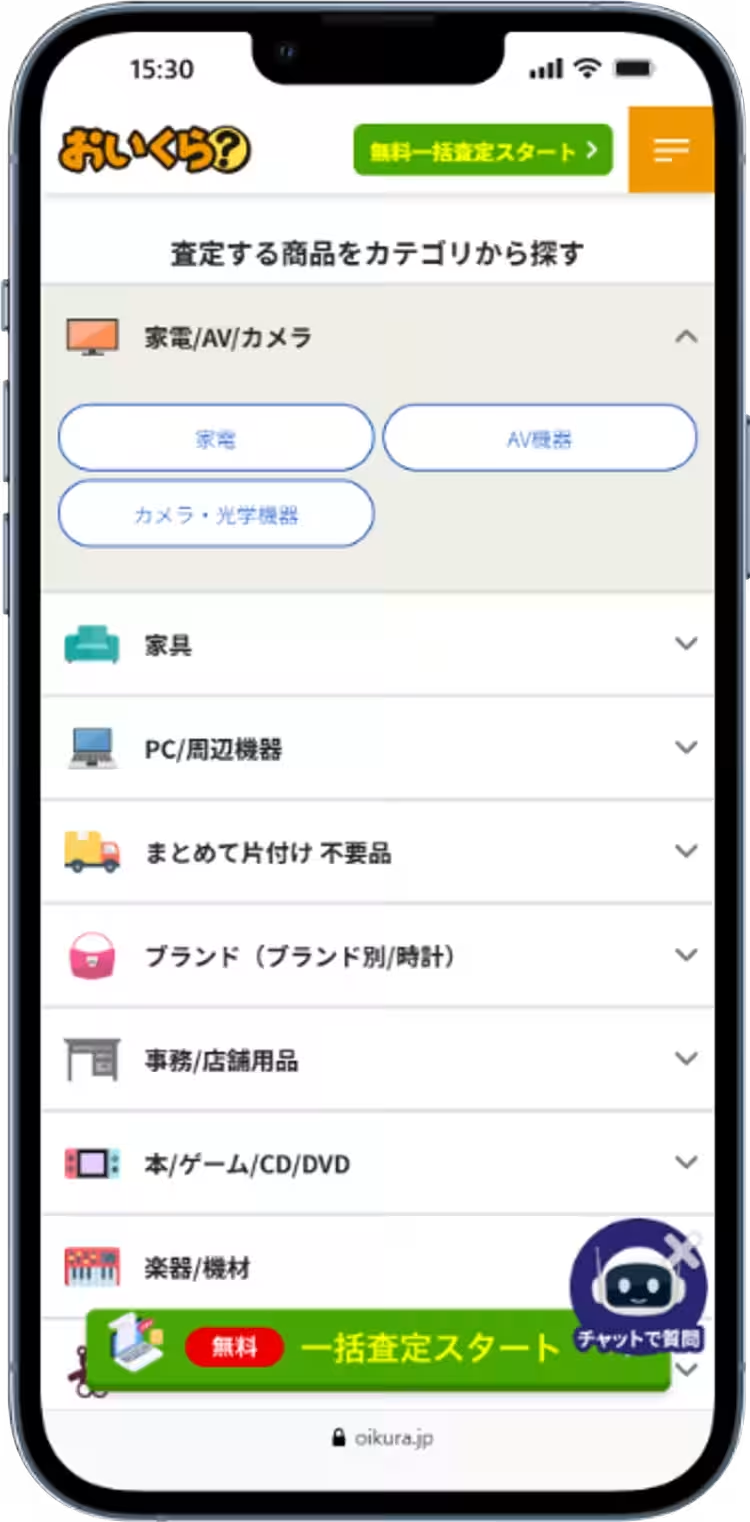
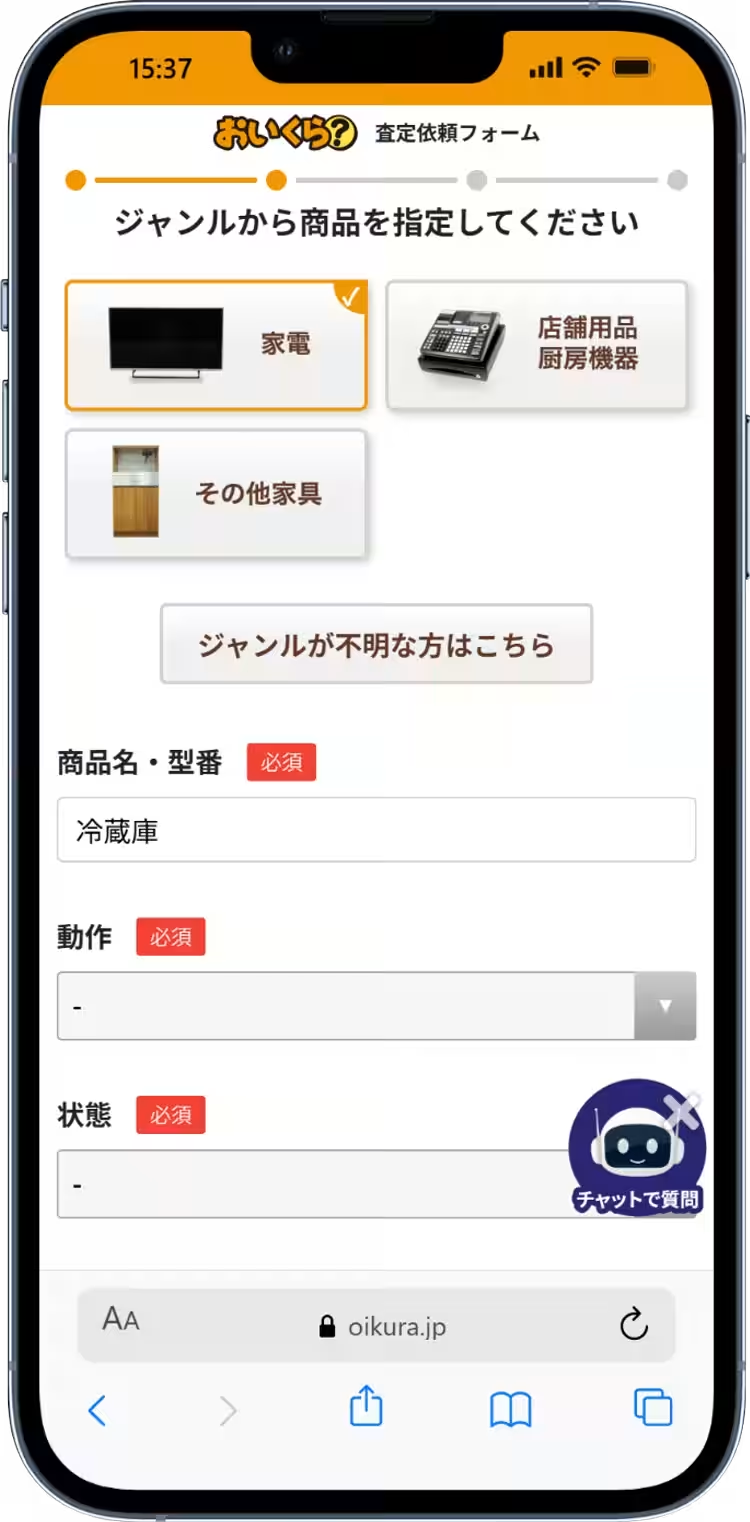
'Oikura' is Market Enterprise’s dynamic reuse platform. Users looking to sell their unwanted items can request an assessment through Oikura, which then sends these requests to numerous affiliated reuse shops nationwide, allowing sellers to compare prices, times, methods, and reviews conveniently. This one-stop evaluation process has attracted around 1.68 million users by February 2026, who appreciate the simplicity and efficiency of the platform.
In Katori City, bulky waste collection is performed through designated waste stations. Residents are generally required to transport large or heavy items outside their homes, often resulting in voices of concern about their inability to carry such items to the waste stations. Furthermore, the free collection policy has made it difficult to reduce the amount of bulky waste generated.
The Oikura platform addresses these challenges. If desired, it offers on-site assessments and pickups, making it possible for residents to sell bulky or heavy items easily. Furthermore, Oikura can potentially purchase appliances covered under the Home Appliance Recycling Act, provided that they are still functional. Through Oikura, users can arrange for quick assessments and transactions, sometimes within the same day, without any burden on the city's budget.
Starting from July 29, 2026, at approximately 15:30 (timing may vary), information about Oikura will be posted on Katori City's official website. This launch will enable citizens to apply for a consolidated assessment of their unwanted items directly. The partnership between Katori City and Oikura is anticipated to invigorate secondary distribution channels, aiming at reducing waste generation across the municipality while also decreasing the city's waste processing costs. By promoting the understanding of reuse as an easy alternative to disposal, citizens will have greater options for managing their unwanted goods, catering to the diverse needs for item disposal. Furthermore, this initiative is expected to stimulate a change in citizens’ attitudes toward reuse and contribute substantially to the development of a circular economy.
Katori City is committed to addressing both the social and economic aspects of creating a circular society through this private-public collaboration, aiming for comprehensive solutions.
Katori City lies in the northeastern part of Chiba Prefecture, sharing a border with Ibaraki to the north. The city is conveniently located about 70 kilometers from Tokyo and 15 kilometers from Narita Airport, boasting a robust transportation network supported by the Narita Line and the Higashi-Kanto Expressway. The northern region features the Tone River flowing east and west, surrounded by scenic rice paddies, while the southern part consists of flatlands dominated by forests and fields.
Rich in natural beauty, history, and culture, Katori City is home to traditional landscapes and sites such as the Katori Shrine, one of the three shrines in the eastern region. It also hosts the former residence of Inō Tadataka, who created Japan’s first accurate map, along with well-preserved historic buildings from the Edo to early Showa periods in the town of Sawara, designated as an Important Traditional Building Preservation District by the country.
As of July 1, 2026, Katori City has a population of 68,084 residents across 31,894 households, covering an area of 262.35 square kilometers.
Website: Katori City
Founded in 2006, Market Enterprise is a versatile company that primarily focuses on internet-based reuse ventures, alongside mobile communications and media operations. Envisioning itself as an optimization trading company fostering a sustainable society, Market Enterprise went public in June 2015 on the Tokyo Stock Exchange's Mothers market and currently operates within the Standard market. By expanding its internet-based reuse offerings, including 'Takaku Ureru Dotcom' and exporting used agricultural machinery to over 80 countries, Market Enterprise has grown to serve approximately 9.7 million users in its reuse services. With the introduction of the 'Oikura' service in Katori City, the total number of implementing municipalities reached 338 nationwide.
Website: Market Enterprise
In conclusion, the collaboration between Katori City and Market Enterprise through the Oikura platform heralds a promising initiative that addresses local environmental challenges by promoting reuse. Together, they are paving the way toward a sustainable, circular society while inspiring other municipalities to follow suit.
Background and Context
Over the past years, Katori City has been proactive in pursuing SDGs-related initiatives, previously implementing various projects including the reuse of children's clothing and providing platforms for residents to offer unwanted items. However, they faced significant challenges such as rising waste disposal costs and an increasing number of elderly residents who struggle to transport their waste. Additionally, a considerable portion of discarded items in the community is still reusable. Thus, Katori City sought to introduce new measures to raise awareness and encourage reuse activities among its citizens.
Conversely, Market Enterprise has focused on developing internet-based reuse solutions. Upholding a vision of establishing a sustainable society, they have actively engaged in public-private partnerships that contribute to SDGs, such as participating in the 'Local Revitalization SDGs Public-Private Partnership Platform'. Their ongoing mission aligned with Katori City's intention to promote the establishment of a circular economy through reuse activities led to the implementation of this promising initiative with 'Oikura'.
What is Oikura?
'Oikura' is Market Enterprise’s dynamic reuse platform. Users looking to sell their unwanted items can request an assessment through Oikura, which then sends these requests to numerous affiliated reuse shops nationwide, allowing sellers to compare prices, times, methods, and reviews conveniently. This one-stop evaluation process has attracted around 1.68 million users by February 2026, who appreciate the simplicity and efficiency of the platform.
Katori City's Challenges and Solutions Through Oikura
In Katori City, bulky waste collection is performed through designated waste stations. Residents are generally required to transport large or heavy items outside their homes, often resulting in voices of concern about their inability to carry such items to the waste stations. Furthermore, the free collection policy has made it difficult to reduce the amount of bulky waste generated.
The Oikura platform addresses these challenges. If desired, it offers on-site assessments and pickups, making it possible for residents to sell bulky or heavy items easily. Furthermore, Oikura can potentially purchase appliances covered under the Home Appliance Recycling Act, provided that they are still functional. Through Oikura, users can arrange for quick assessments and transactions, sometimes within the same day, without any burden on the city's budget.
What’s Next?
Starting from July 29, 2026, at approximately 15:30 (timing may vary), information about Oikura will be posted on Katori City's official website. This launch will enable citizens to apply for a consolidated assessment of their unwanted items directly. The partnership between Katori City and Oikura is anticipated to invigorate secondary distribution channels, aiming at reducing waste generation across the municipality while also decreasing the city's waste processing costs. By promoting the understanding of reuse as an easy alternative to disposal, citizens will have greater options for managing their unwanted goods, catering to the diverse needs for item disposal. Furthermore, this initiative is expected to stimulate a change in citizens’ attitudes toward reuse and contribute substantially to the development of a circular economy.
Katori City is committed to addressing both the social and economic aspects of creating a circular society through this private-public collaboration, aiming for comprehensive solutions.
About Katori City
Katori City lies in the northeastern part of Chiba Prefecture, sharing a border with Ibaraki to the north. The city is conveniently located about 70 kilometers from Tokyo and 15 kilometers from Narita Airport, boasting a robust transportation network supported by the Narita Line and the Higashi-Kanto Expressway. The northern region features the Tone River flowing east and west, surrounded by scenic rice paddies, while the southern part consists of flatlands dominated by forests and fields.
Rich in natural beauty, history, and culture, Katori City is home to traditional landscapes and sites such as the Katori Shrine, one of the three shrines in the eastern region. It also hosts the former residence of Inō Tadataka, who created Japan’s first accurate map, along with well-preserved historic buildings from the Edo to early Showa periods in the town of Sawara, designated as an Important Traditional Building Preservation District by the country.
As of July 1, 2026, Katori City has a population of 68,084 residents across 31,894 households, covering an area of 262.35 square kilometers.
Website: Katori City
About Market Enterprise
Founded in 2006, Market Enterprise is a versatile company that primarily focuses on internet-based reuse ventures, alongside mobile communications and media operations. Envisioning itself as an optimization trading company fostering a sustainable society, Market Enterprise went public in June 2015 on the Tokyo Stock Exchange's Mothers market and currently operates within the Standard market. By expanding its internet-based reuse offerings, including 'Takaku Ureru Dotcom' and exporting used agricultural machinery to over 80 countries, Market Enterprise has grown to serve approximately 9.7 million users in its reuse services. With the introduction of the 'Oikura' service in Katori City, the total number of implementing municipalities reached 338 nationwide.
Website: Market Enterprise
Conclusion
In conclusion, the collaboration between Katori City and Market Enterprise through the Oikura platform heralds a promising initiative that addresses local environmental challenges by promoting reuse. Together, they are paving the way toward a sustainable, circular society while inspiring other municipalities to follow suit.
Topics Environment)
【About Using Articles】
You can freely use the title and article content by linking to the page where the article is posted.
※ Images cannot be used.
【About Links】
Links are free to use.