



Hitachi City and Hitachi Corporation Collaborate on Innovative Health Measures
Collaborative Health Initiatives in Hitachi City
In a remarkable collaboration, Hitachi City and Hitachi Corporation launched a pioneering project aimed at enhancing public health using data analytics and digital health applications. The initiative focuses on analyzing health data collected from around 70,000 residents, paving the way for innovative health policies and practices to improve the well-being of the community.
Overview of the Project
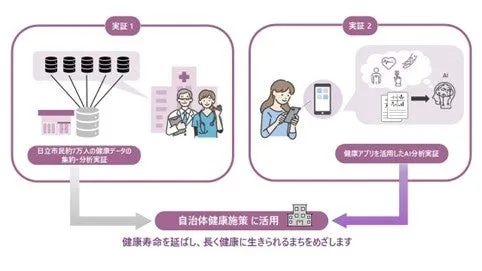
Led by Mayor Haruki Ogawa and CEO Toshitaka Tokunaga of Hitachi Corporation, the project seeks to make Hitachi a model smart city under the concept of a “healthy living environment.” This project involves gathering and analyzing health data from various insurance holders within the city, including the National Health Insurance and the late-stage elderly medical system. The endeavor encompasses two primary demonstrations slated for completion in 2025:
1. Data Collection and Analysis: Focusing on the health profiles of citizens aged 40 to 79, the first study aims to aggregate and analyze statistics from insurance providers. This comprehensive data approach targets approximately 75% of the relevant population, revealing trends and prevalent health issues such as hypertension.
2. Health Awareness and Behavior Improvement through AI: The second study involves the implementation of SaluDi, a health management application designed to enhance citizens’ health literacy and encourage proactive health behaviors. The project commenced with a group of 305 citizens who contributed their health data, with the application providing AI-driven insights on potential health risks.
Initial Achievements and Findings
Results from the first demonstration revealed that hypertension poses a significant health risk within the community, prompting plans for initiatives aimed at increasing awareness and preventive measures. For instance, the deployment of blood pressure monitors linked to the SaluDi app across key locations in the city is in consideration, along with coordinated health promotion activities with local insurance providers.
In the second demonstration, initial feedback suggests that the use of SaluDi has positively impacted participants’ health knowledge. A survey conducted before and after the participants’ engagement with the app indicated an improvement in health literacy among some users. Encouraged by these findings, the project plans to continue refining the app, aiming to introduce new AI features that cater to individual health needs and provide customized recommendations.
Future Directions
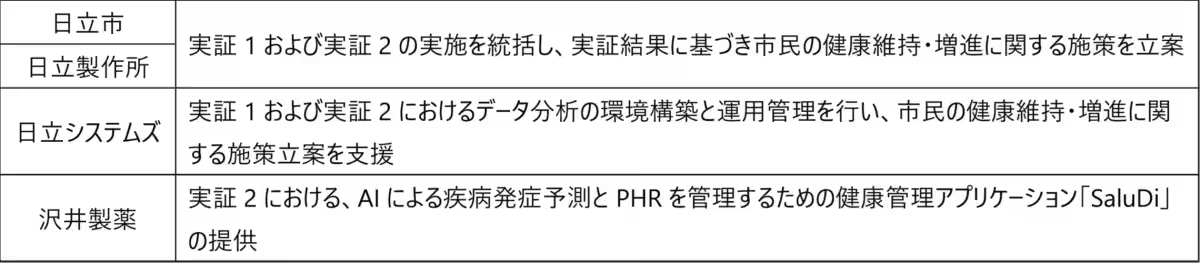
As the project progresses, the collaboration between Hitachi City, Hitachi Corporation, Hitachi Systems, and Sawai Pharmaceutical Corporation aims to build on the obtained results to formulate new health strategies targeted at specific population needs. For instance, initiatives specifically aimed at the hypertension-prone groups will be developed, alongside enhancements to the SaluDi app that will bolster its features and usability.
Additionally, the consortium intends to engage with local academia and government entities to further solidify the collaborative framework aimed at community health improvement. Through these efforts, Hitachi City endeavors not only to enhance the health span of its residents but also to contribute to a sustainable healthcare model that can set a precedent for other regions.
Conclusion
The partnership between Hitachi City and Hitachi Corporation exemplifies a forward-thinking approach to public health, merging technology with community wellness. By leveraging data-driven strategies and engaging citizens in their health management, the project aims to inspire a new ethos of health consciousness that could significantly optimize the healthcare landscape in Japan.
This collaboration stands as a beacon of innovation, illustrating how urban environments can evolve into hubs of health and well-being through strategic partnerships and advanced technological implementations.
Topics Health)
【About Using Articles】
You can freely use the title and article content by linking to the page where the article is posted.
※ Images cannot be used.
【About Links】
Links are free to use.