



The Shocking Truth About Corporate Information Security Training and Hidden Organizational Risks
Understanding Information Security Education in Corporations
At the onset of each spring, many companies in Japan kick off training sessions for new employees. Among these sessions, information security education stands out as one of the most crucial programs essential for protecting organizations in our increasingly digital landscape. Recently, NSS Smart Consulting Co., Ltd. conducted a survey focused on the penetration of information security training and the awareness of employees who handle PCs and IT systems in their daily work.
Current Landscape of Information Security Training
In response to several significant cyberattacks against large corporations reported around 2025, alongside the rise in business email compromise scams targeting executives, there has never been a more pressing time for companies to bolster their defenses. Protecting organizations today demands more than just technical measures; enhancing employee literacy on security protocols is vital.
Despite the importance of this education, the survey results hold some shocking findings. Approximately 60% of respondents acknowledged they only have a vague understanding of the training received, while about 20% reported they attempt to “self-resolve” incidents that arise, highlighting a latent organizational risk.
Survey Overview
- - Duration: March 18-19, 2026
- - Method: Internet survey by PRIZMA (https://www.prizma-link.com/press)
- - Sample Size: 1,025 employees handling PCs and IT systems
Key Findings
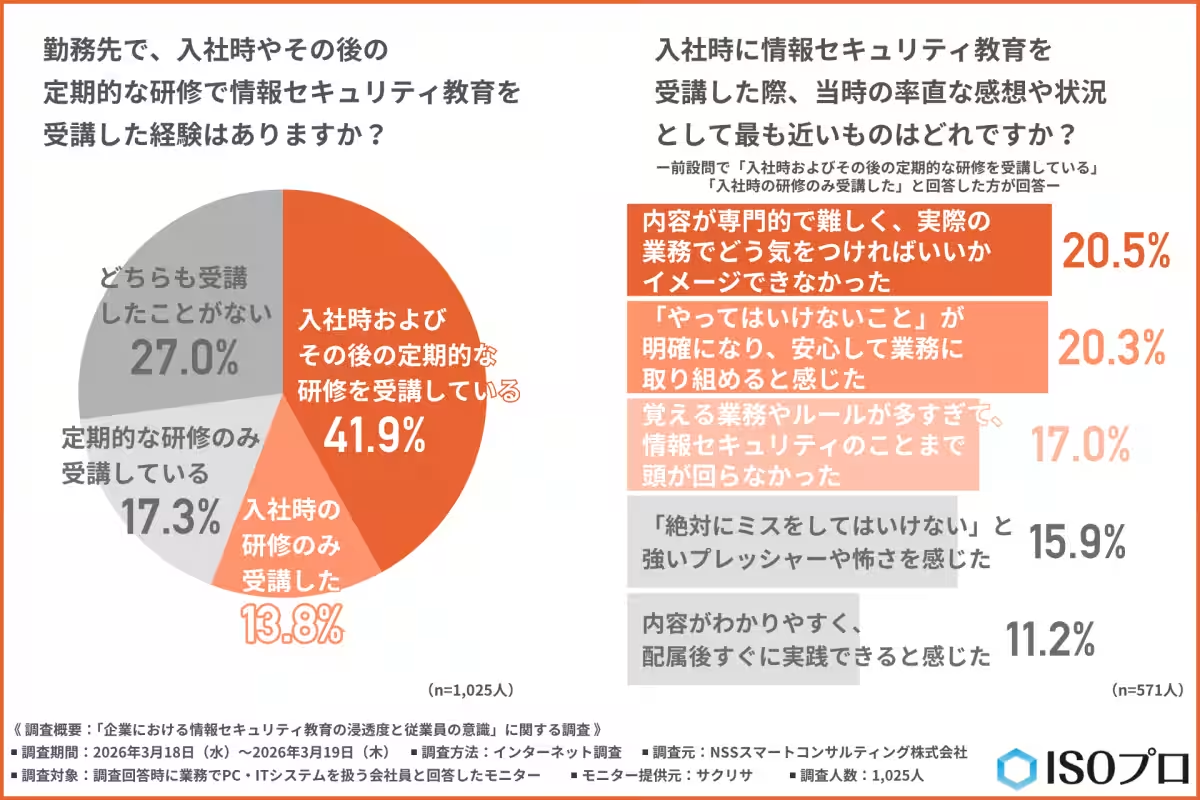
Among the respondents, about 41.9% stated they had undergone both initial and regular training, while 13.8% attended only the initial training. Conversely, 27% admitted they had never received any training. This variance across companies indicates disparities in the approach to information security education.
When asked how they felt about the training received, many reported finding the material complex, with over 20% stating that the training was difficult to relate to their actual job roles. Specifically, respondents remarked on either feeling reassured by clear do’s and don’ts or overwhelmed by the volume of information they needed to absorb initially.
The Depth of Understanding
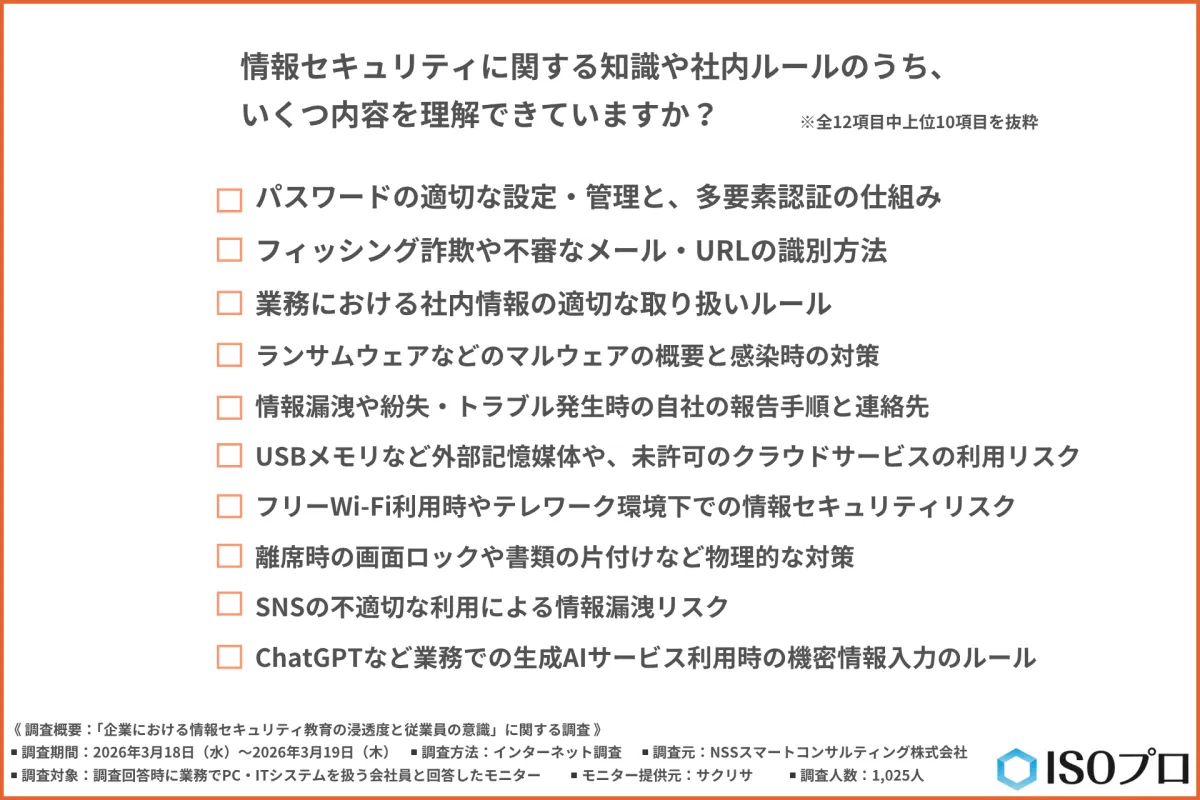
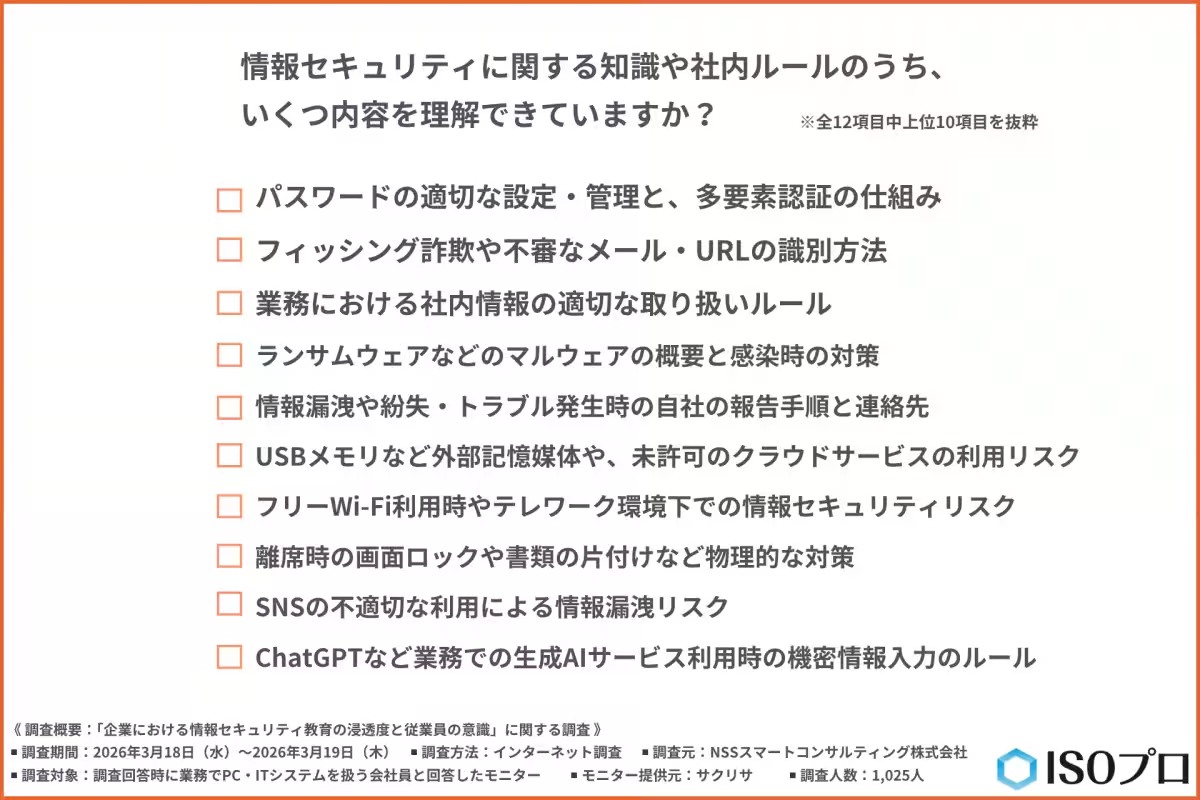
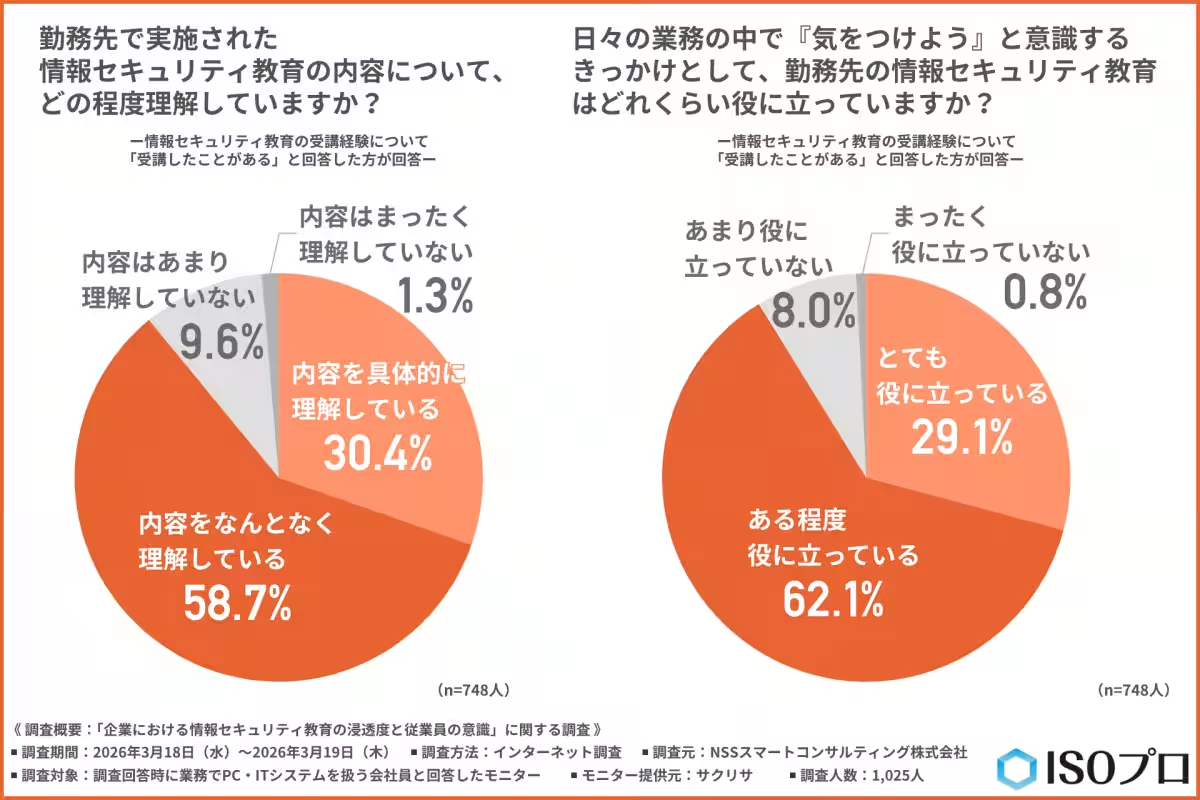
A notable 90% of employees claimed some level of understanding regarding the training topics, but 58.7% only grasp them conceptually. This indicates that while many are aware of key concepts, there still exists a significant gap in actual comprehension and practical application.
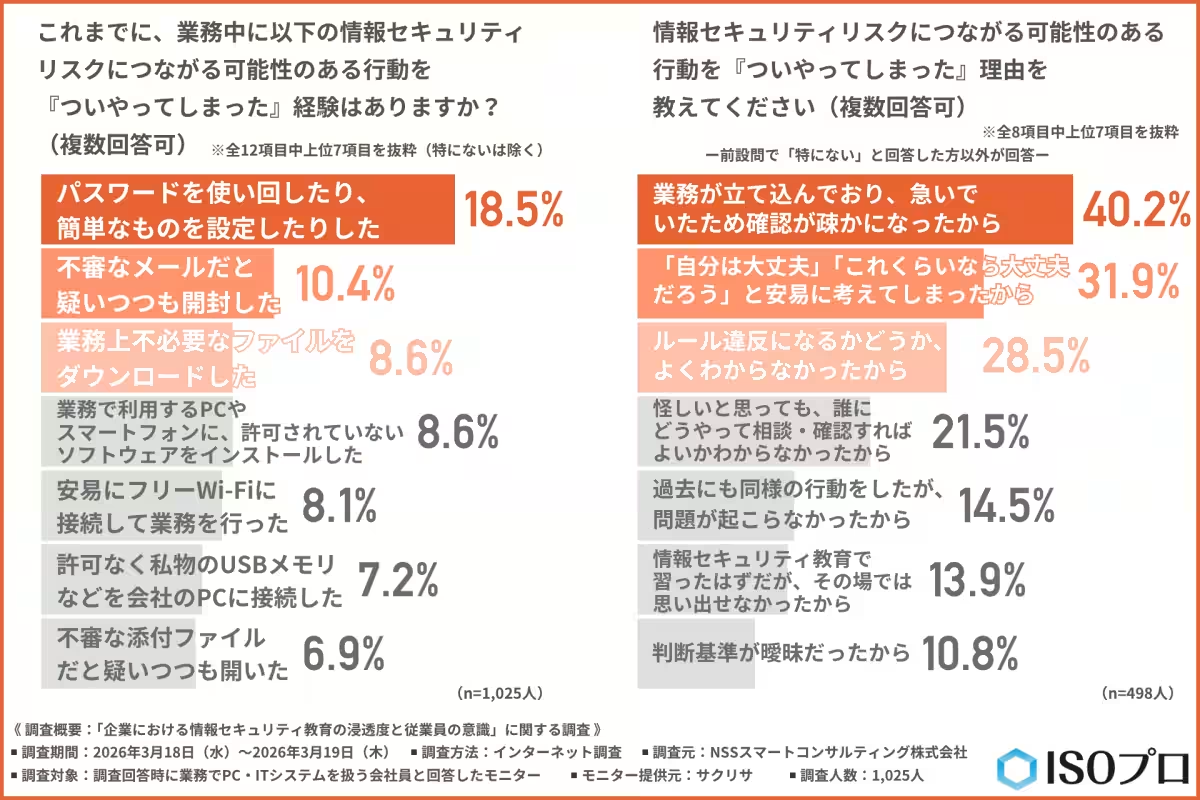
When evaluating the day-to-day impact of this education, the majority conveyed that it often served as a prompt for heightened awareness of security practices at work. However, when probed about security risks, almost 18.5% of employees admitted to using simple or duplicate passwords, while around 10% reported opening suspicious emails despite recognizing potential dangers.
The Gap Between Knowledge and Action
Interestingly, despite being educated about risks, many employees exhibited complacency. For example, some respondents who recognized risky behaviors cited being overwhelmed by workload as a reason for lapses in security protocols. Economic pressures within organizations are evidently contributing to such risky behaviors, creating a paradox where awareness does not necessarily lead to prudent action.
Moreover, when faced with a security breach, nearly 60% reported immediate reporting to the relevant departments as their first action. Yet, a worrying minority chose to attempt self-resolution instead. This behavior not only risks fastening potential damages but showcases systemic issues within organizational structures for managing security incidents.
Expectations from Companies
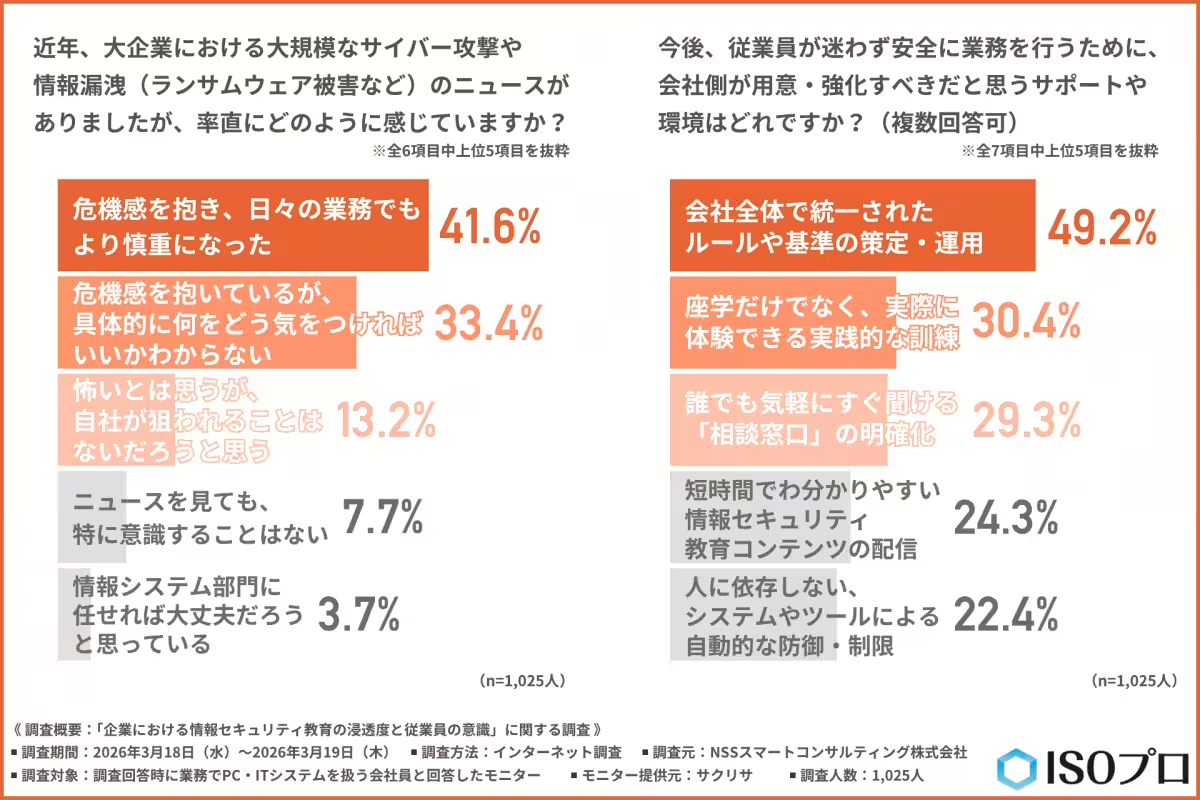
When questioned about their perceptions of recent large-scale cyberattacks, over 41.6% felt increased vigilance was necessary, while 33.4% expressed uncertainty about what measures to take. This highlights an opportunity for companies to enhance training by providing concrete action plans.
Furthermore, employees conveyed significant demand for uniformly established security guidelines and compassionate support systems that allow for straightforward inquiries about security concerns in a safe environment.
Conclusion
This survey reveals a critical insight into the state of corporate information security education. While many employees have foundational knowledge about security practices, it is clear that ongoing awareness cultivation and practical support systems are paramount to mitigate risks effectively. Organizations must aim to shift their culture towards transparent communication and establish structured protocols that employees find easy to understand and follow. Fortifying these frameworks can in turn strengthen overall organizational defenses against impending cyber threats.
For more detailed frameworks should companies find themselves in need of ISO compliance regarding security management, NSS Smart Consulting provides tailored support for organizations navigating through ISO certification processes.
Learn More About NSS Smart Consulting
To further explore how to enhance your organization’s security posture, visit ISO Pro, NSS Smart Consulting's dedicated platform for ISO acquisition and operational support.

Topics Consumer Technology)

【About Using Articles】
You can freely use the title and article content by linking to the page where the article is posted.
※ Images cannot be used.
【About Links】
Links are free to use.