



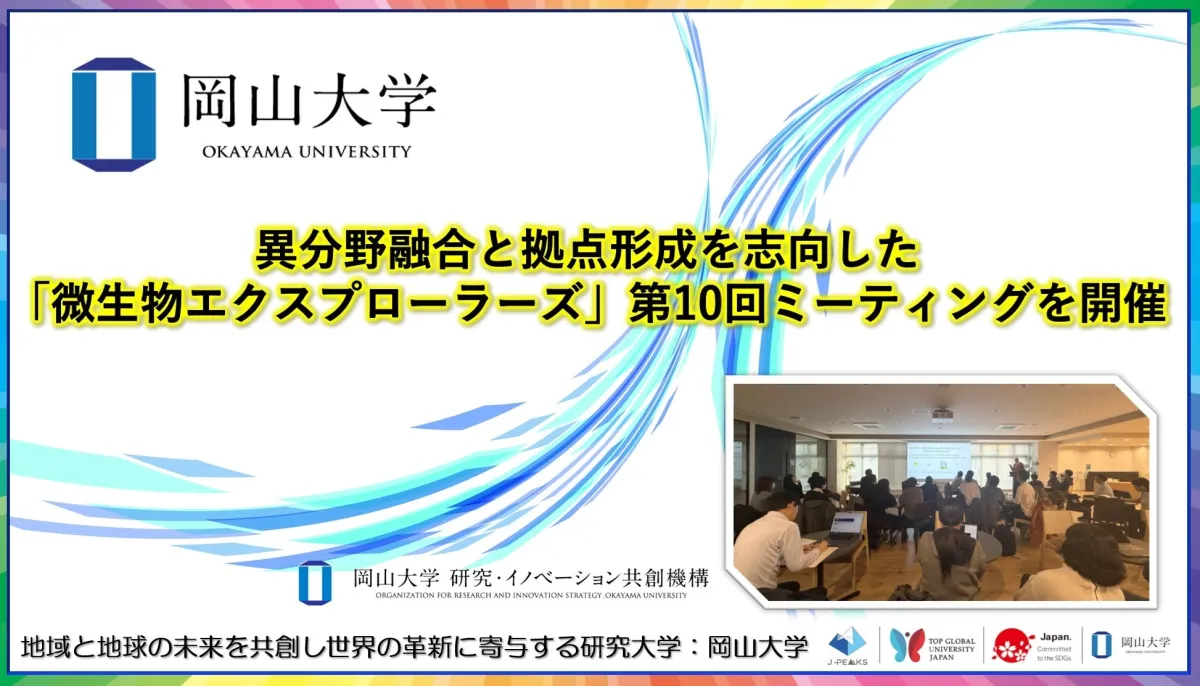
Okayama University's Microbial Explorers Meeting: A Cross-Disciplinary Approach to Research and Innovation
Okayama University's Microbial Explorers Meeting
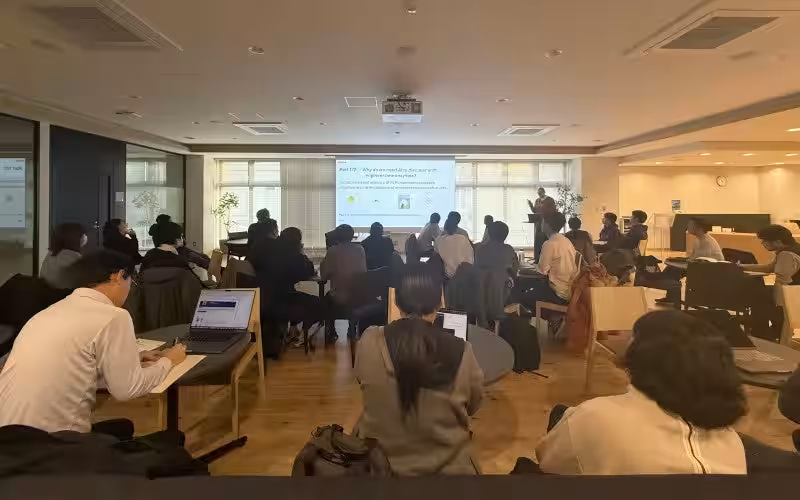
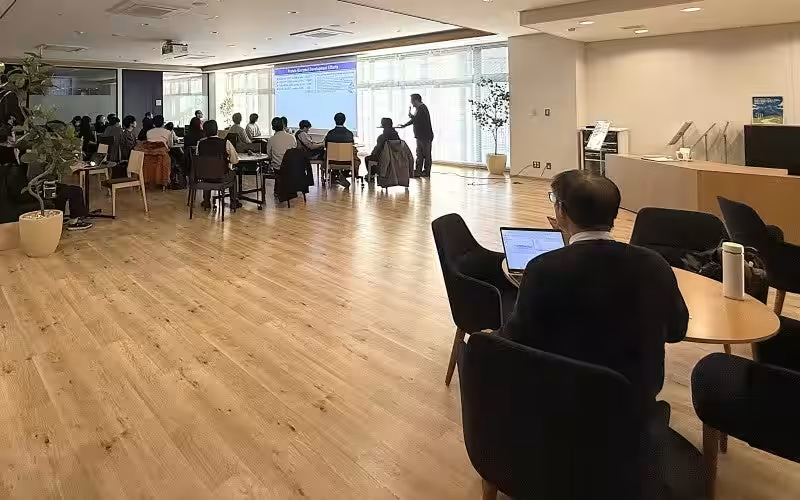
On January 16, 2026, Okayama University, located in Okayama City, Japan, held the tenth meeting of its innovative research group, "Microbial Explorers". This initiative was established to encourage interdisciplinary collaboration and the formation of research hubs. The meeting took place at the KIBINOVE co-innovation lab, part of the university's Tsushima campus.
The Microbial Explorers group aims to create an environment where researchers from various disciplines can exchange ideas and collaborate on new projects related to microbiology. This meeting built upon the discussions from previous gatherings, featuring contributions from both internal and external experts.
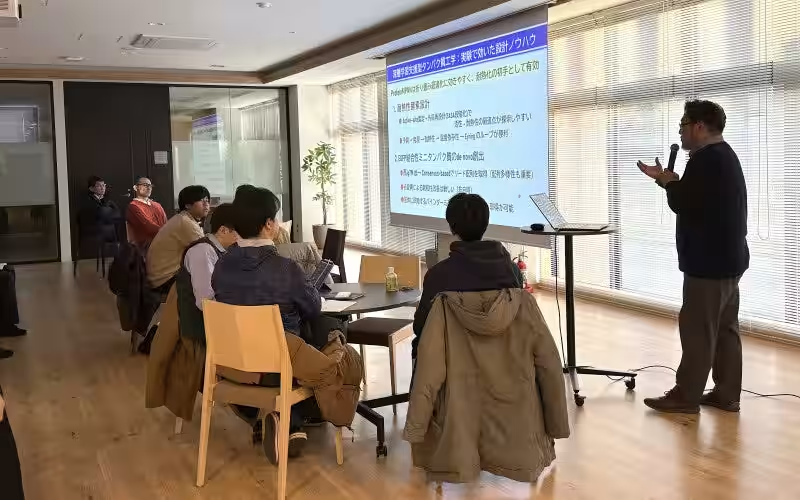
One highlight of the event was the presence of Dr. Christopher VAVRICKA from Tokyo University of Agriculture and Technology, who shared his expertise in microbiological research. Participants included about 40 faculty members, students, and industry-academia coordinators, all eager to engage in meaningful interactions and discussions.
The meeting commenced with opening remarks from Professor Takashi Tamura of the Graduate School of Environmental and Life Science at Okayama University. Following this, Assistant Professor Hiroyuki Imamura, also from the same school, presented on the experimental validation of deep-learning-based protein engineering, focusing on the design of heat-resistant enzymes and the de novo synthesis of EGFP-binding mini-proteins. In an engaging presentation, Dr. VAVRICKA discussed "Development of Structure-Based AI Methods for the Prediction and Engineering of Novel Enzymatic Reactions". These talks sparked lively Q&A sessions, fostering discussions that led to valuable insights and ideas for future research developments.
The primary goal of the Microbial Explorers initiative is to enhance the collaboration of researchers focusing on microbiology, with hopes of forging new multidisciplinary research avenues. By making microbiology a central theme, the group aims to create a welcoming forum for diverse researchers to participate and connect, ultimately collaborating to establish new fields of study. Moreover, this initiative seeks not only to share common methodologies and techniques related to microbial research but also to encourage innovative research through interdisciplinary exchanges.
Okayama University's commitment to advancing its research competencies is evident as it strives to secure funding for sophisticated shared equipment and establish research bases that reinforce its presence as a core research university recognized for its distinctive contributions. The university continues to encourage collaboration by supporting the region’s unique status as a center of research excellence, both locally and globally.
As we reflect on the success of this meeting, we anticipate further exciting developments and collaborations as the Microbial Explorers group continues its mission to advance microbiological research through interdisciplinary cooperation. Keep an eye on Okayama University's endeavors to strengthen its position as a dynamic research institution committed to contributing to innovative scientific solutions.
For more detailed information regarding the initiative and past meetings, please refer to the Okayama University official website.

Topics Other)
【About Using Articles】
You can freely use the title and article content by linking to the page where the article is posted.
※ Images cannot be used.
【About Links】
Links are free to use.