



Okayama University Hosts the 29th Okayama Regional Development Council Meeting
The 29th Meeting of the Okayama Regional Development Council
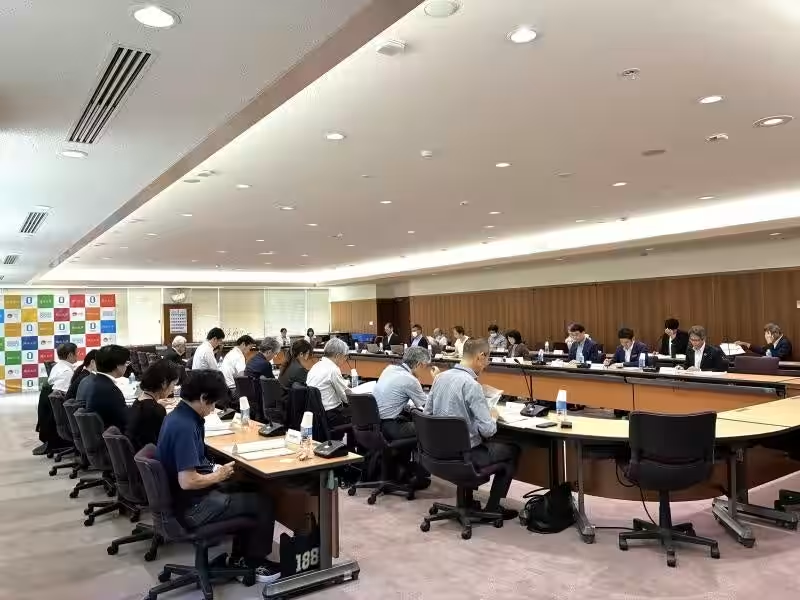
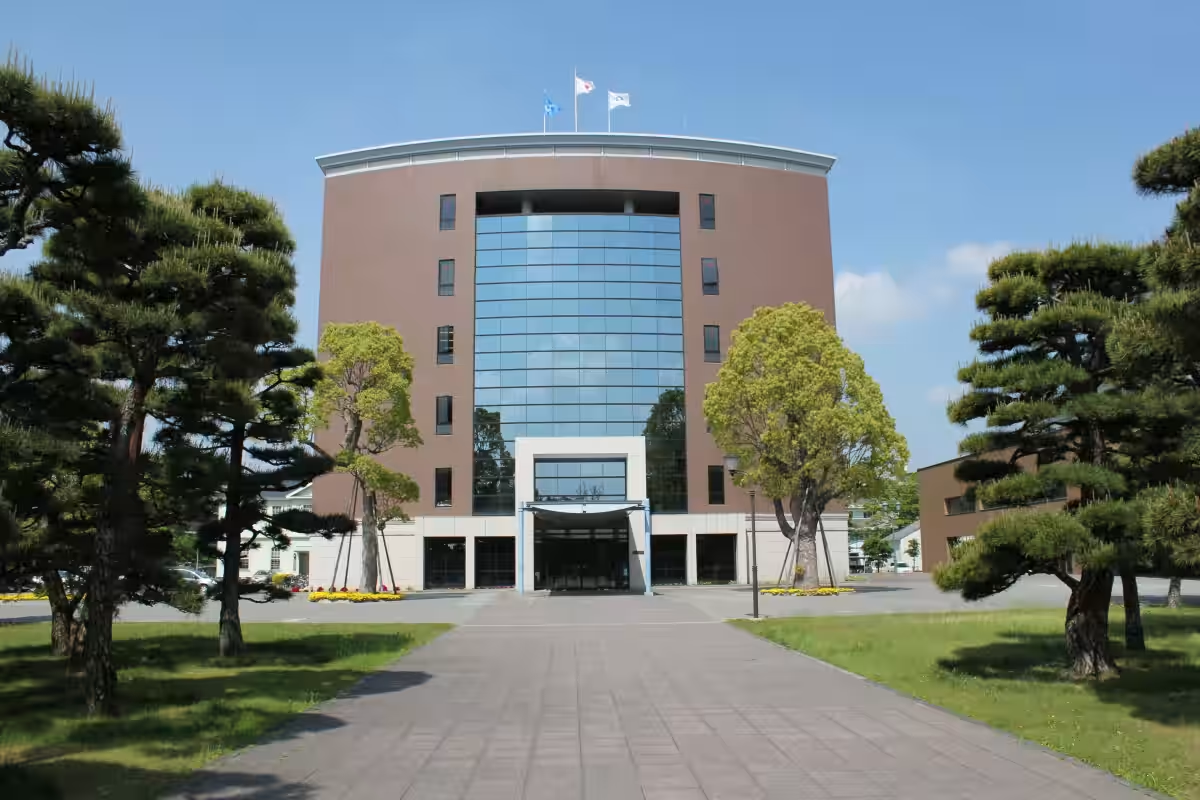
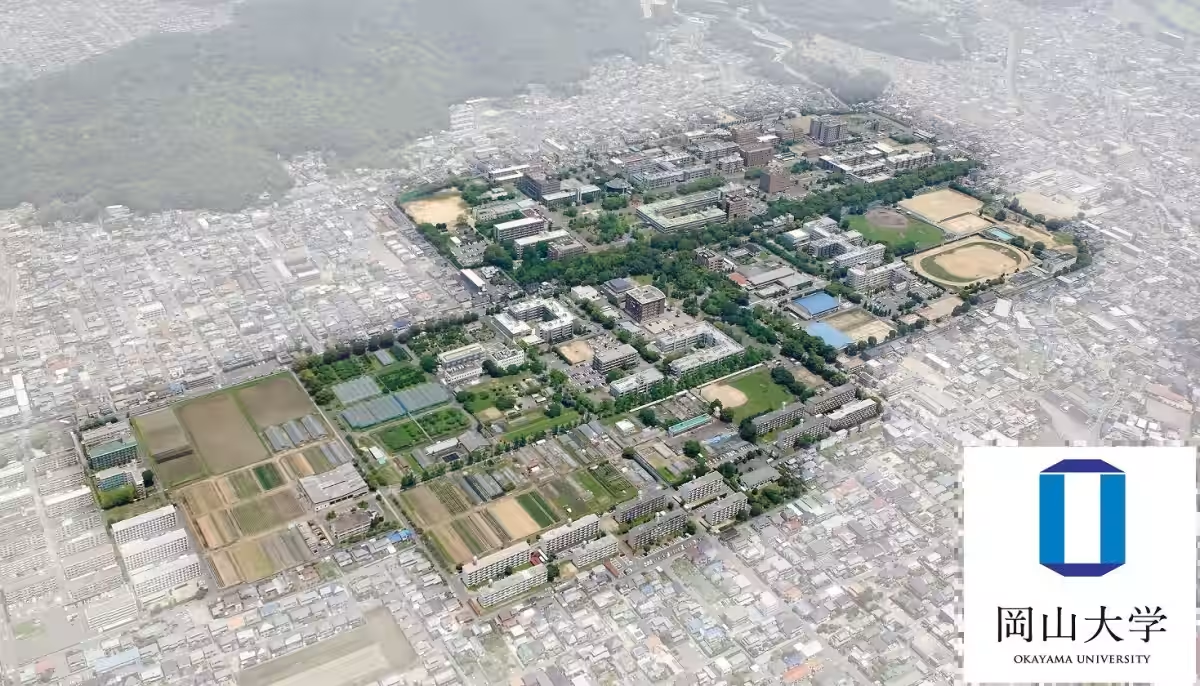
On August 12, 2026, the 29th meeting of the Okayama Regional Development Council took place at the headquarters of Okayama University, located in Tsushima Campus, Okayama City. Established on April 1, 2016, the council consists of various sectors, including industry, government, academia, finance, and advocacy groups, all aimed at supporting the sustainable development of Okayama Prefecture. Okayama University serves as the secretariat for this council.
During this latest meeting, participants reviewed aspects of the council's charter, approving proposals to clarify rules regarding written discussions. Following this, the focus shifted to deliberating the 'expansion and reconstruction of the Okayama Regional Development Council.' Representatives from the university presented an overview of the 'Regional Initiative Promotion Platform Project' approved by the Ministry of Education, Culture, Sports, Science and Technology on July 24. This initiative is designed to address regional issues such as population decline, workforce shortages, and youth outflow by outlining the concept of the 'Okayama Regional Future Co-Creation Platform.' This proposed framework aims to enhance collaborative efforts between the Okayama Regional Development Council and the Okayama Round Table Committee, proposing the establishment of a 'Youth Board' to facilitate the proactive participation of young individuals and the formation of the Okayama Regional Future Co-Creation Organization (OLIVE) to enhance implementation functions.
The discussions were lively, and participants provided general approval for the direction of the council’s expansion and reconstruction. Reports were also given on the status of the Okayama Round Table meetings, indicating plans for a re-launch under a new framework. Moreover, the university shared the results from its course 'Considering Regional Issues in Okayama,' which examines solutions to the population decline issue, focusing on integrating young people's insights and needs into local development strategies.
Additionally, the Okayama SDGs Research Committee reported on the progress of the 'Okayama Prefecture Hometown Future Co-Creation Board Game' as well as collaborations for regional innovation with the Västerbotten region in Sweden. A briefing from the COVID-19 response committee highlighted ongoing efforts to ensure rapid response capabilities during future outbreaks through sustained information sharing among industry, academia, and government.
Lastly, participants received information from Okayama Prefecture regarding initiatives addressing population decline alongside an update from Sanyo Shimbun on efforts related to the development of female students in science fields and SDGs-related events. The committee reaffirmed the importance of enhancing collaboration between involved parties in solving regional challenges.
In conclusion, attendees are encouraged to continue supporting Okayama University's endeavors as a core and unique research institution dedicated to community co-creation.
This information was made public by Okayama University on July 31, 2026.
Topics Other)
【About Using Articles】
You can freely use the title and article content by linking to the page where the article is posted.
※ Images cannot be used.
【About Links】
Links are free to use.