




Tokyo University of Technology Partners with Kureha for Advanced Ceramic Matrix Composite Research
Innovative Research Partnership
Tokyo University of Technology, located in Hachioji, Tokyo, has officially entered into a collaborative research agreement with Kureha Corporation. This partnership focuses on developing and evaluating ceramic matrix composites (CMCs) utilizing silicon carbide (SiC) fibers, with notable applications in high-temperature structural components such as aircraft engines scheduled to begin in August 2026.
The Importance of CMCs
Ceramic matrix composites represent a cutting-edge material with significant benefits over traditional metals, displaying both lightweight properties and exceptional heat resistance and strength. These qualities make CMCs ideal for high-temperature components within aerospace engines and gas turbines used for power generation. Of particular interest is the SiC/SiC composite material, which employs SiC fibers as a reinforcement. This advanced composite has garnered attention due to its potential to enhance efficiency in next-generation aircraft engines while contributing to CO₂ emission reduction.
Evaluation for Practical Application
The joint research initiative will focus on fabricating SiC/SiC composite materials using Kureha's proprietary SiC fibers. Researchers will undertake a thorough evaluation to assess the feasibility of these materials for high-temperature applications in aerospace engines, examining critical factors such as mechanical properties and durability in high-temperature oxidative environments. Through these evaluations, the partnership aims to strengthen the technological foundation necessary for Kureha's commercialization efforts and explore market opportunities for high-temperature structural materials.
Establishing a Leading Research Base
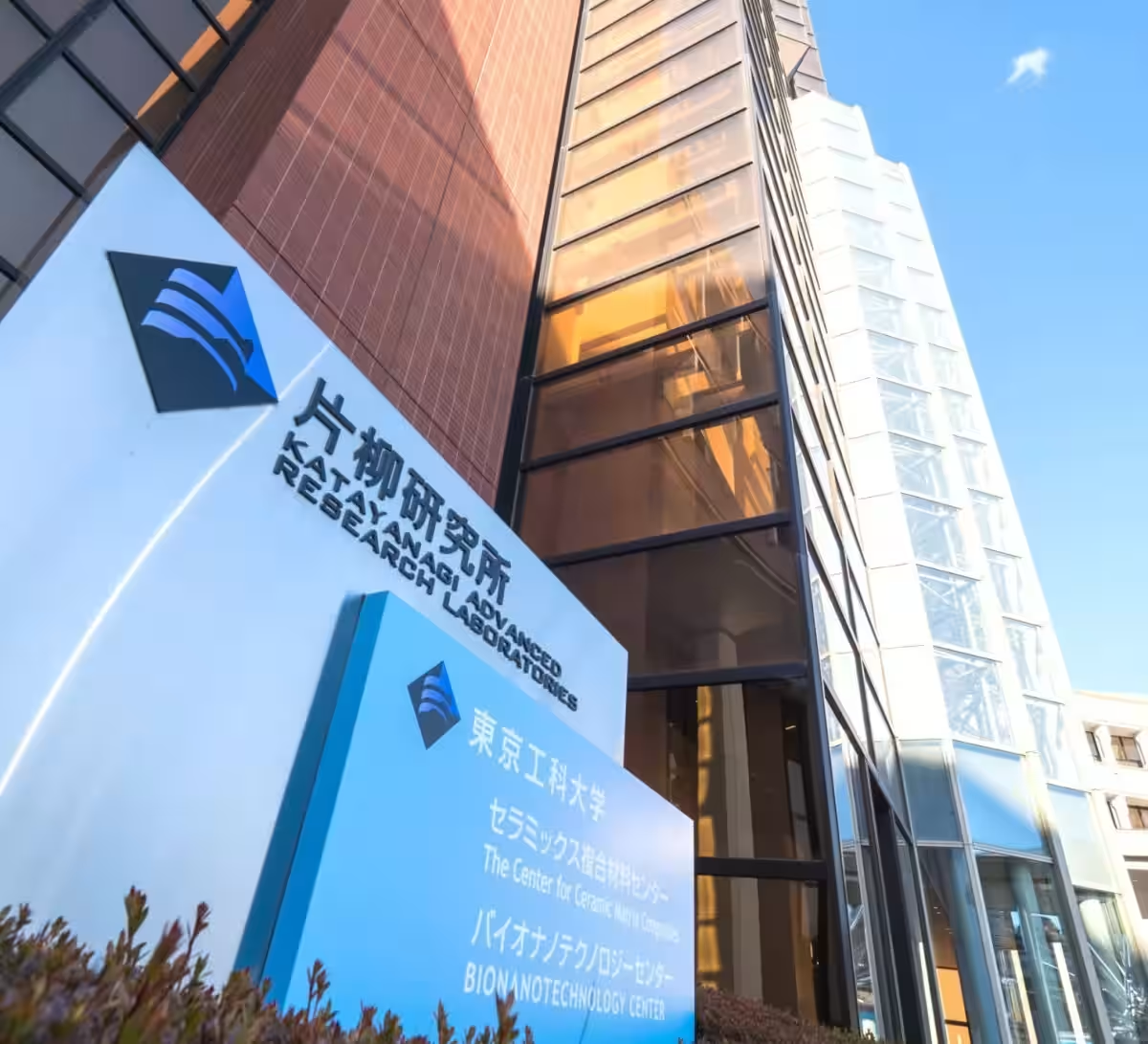
The CMC Center at Tokyo University of Technology was established in 2017, intending to serve as the world's first dedicated research and development hub for ceramic matrix composites. It has quickly gained recognition as a premier collaboration platform among academia, industry, and government, driving numerous joint research projects and leveraging its expertise in materials fabrication, evaluation techniques, and reliability assessments. As Kureha pushes forward with its SiC fiber development as part of a new business initiative, the company is committed to achieving high quality and cost competitiveness through an innovative manufacturing process.
The CMC Center’s Vision
Historically, ceramics have faced constraints as structural materials due to their inherent brittleness. However, the transformation into ceramic composites has mitigated these limitations, promoting the use of SiC reinforced materials. Due to their lightweight nature and high heat resistance, CMCs are anticipated to find broad application across various sectors, including aerospace, energy generation, and automotive components. The CMC Center at Tokyo University plays a pivotal role in enhancing Japan's industrial competitiveness by pioneering research that meets the demands of advanced industrial materials.
Collaboration with the Ministry of Economy, Trade, and Industry, as well as related companies, has allowed the CMC Center to undertake comprehensive research covering production, evaluation, and analysis of CMCs. These research endeavors not only contribute to the practical application of CMCs both domestically and internationally but also emphasize the importance of academic publications and research dissemination.
Beginning in 2024, the CMC Center will also enter into a collaborative research effort with Pratt & Whitney, a leading global aerospace engine manufacturer, further underscoring its commitment to advancing innovations in aerospace technology.
For more information, visit the CMC Center website.
Conclusion
With the initiation of this partnership, both Tokyo University of Technology and Kureha Corporation are set to make significant strides in the development of advanced materials that promise to revolutionize the aerospace industry. The collaborative spirit shown here is a testament to Japan's commitment to leading the field of high-performance materials.

Topics Consumer Products & Retail)
【About Using Articles】
You can freely use the title and article content by linking to the page where the article is posted.
※ Images cannot be used.
【About Links】
Links are free to use.