




EY Strategy and Consulting Reveals Economic Impact of Transportation Gaps
EY Strategy and Consulting's Findings on Transportation Gaps
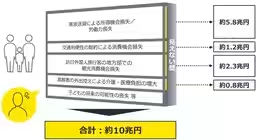
In a recent analysis, EY Strategy and Consulting (EYSC) has unveiled alarming insights regarding the economic and social repercussions of transportation gaps in Japan. These gaps refer to situations where local residents and visitors lack adequate means of mobility for their daily activities. According to their findings, this issue could lead to an astonishing annual economic and social loss of approximately 10 trillion yen.
Understanding Transportation Gaps
Transportation gaps generally indicate a deficiency in available transport options for essential activities like commuting to work, shopping, and participating in community life. Factors such as Japan's declining population, an aging society, and a shortage of workforce in public transport services are contributing to the urgency of this issue.
On July 9, 2026, EYSC presented these findings to Japan's Minister of Land, Infrastructure, Transport and Tourism, Kōsuke Kaneko, emphasizing the need for action to mitigate these losses.
Key Findings of the Study
EYSC's rigorous analysis focused on aligning its results with public statistics and existing research. The study highlights how the lack of transportation affects various aspects of life, including:
- - Employment
- - Consumer spending
- - Tourism
- - Health and well-being
One of the most significant consequences identified was the

Topics Consumer Products & Retail)









【About Using Articles】
You can freely use the title and article content by linking to the page where the article is posted.
※ Images cannot be used.
【About Links】
Links are free to use.