



Despite NEVI Uncertainties, U.S. EV Public Charging Industry Improves Reliability and Customer Experience
Enhancements in the U.S. EV Public Charging Sector
The 2025 U.S. Electric Vehicle Experience (EVX) Public Charging Study conducted by J.D. Power has shed light on the public charging landscape in the U.S., showcasing improvements amid ongoing uncertainties surrounding the National Electric Vehicle Infrastructure (NEVI) funding. On August 13, J.D. Power shared insights into customer satisfaction related to AC Level 2 and DC Fast Charging services based on their feedback from electric vehicle (EV) owners.
Despite challenges linked to NEVI funding, the EV public charging sector in the United States is displaying significant resilience and progress. The proportion of EV owners who visited public charging stations but decided against charging their vehicles—referred to as non-charging visits—has reached its lowest point in four years, indicating a steady enhancement in reliability and customer experience. This achievement underlines the industry’s commitment to advancing public charging infrastructure despite delays in federal funding and shifting political landscapes.
Key Findings from the 2025 Study
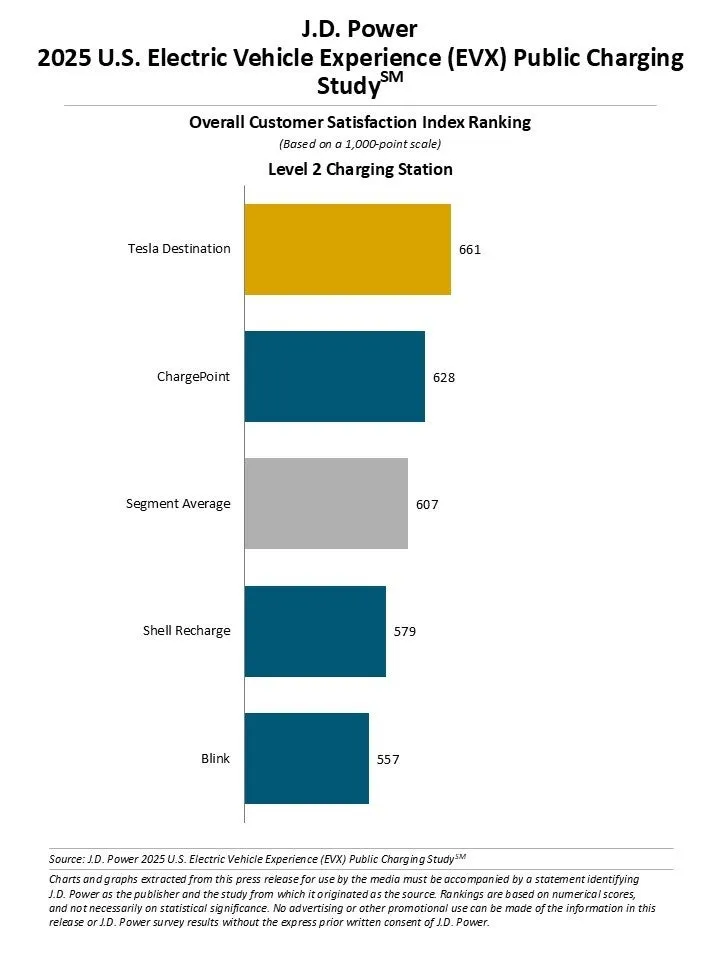
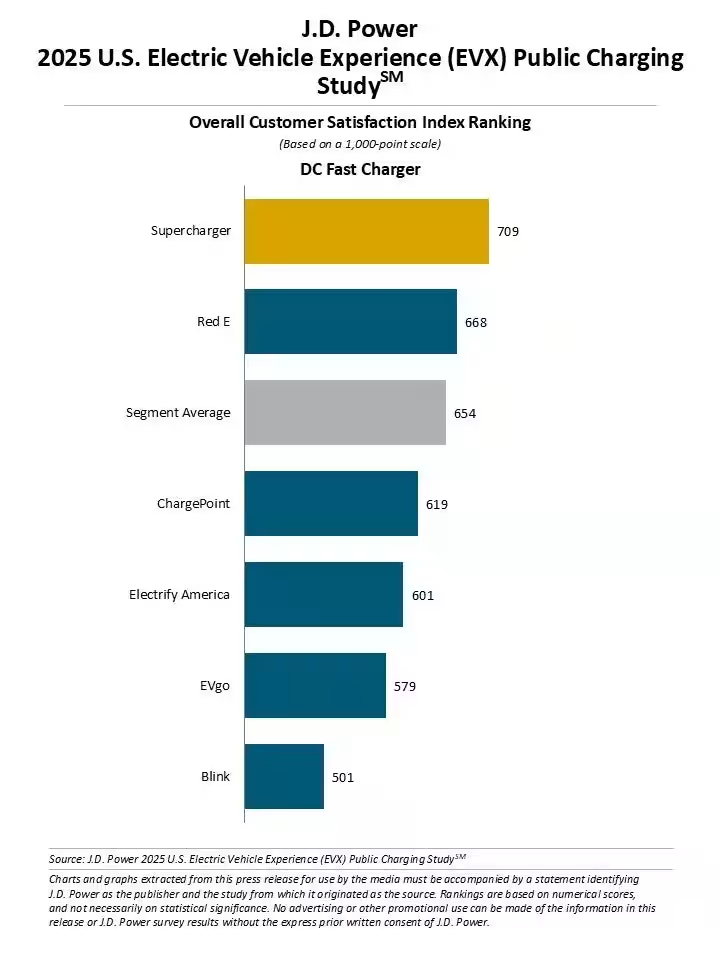
While overall satisfaction scores declined, notable improvements in charging reliability were identified. The customer satisfaction score for DC fast chargers dropped to 654 points (out of 1,000), reflecting a 10-point decrease from the previous year. The satisfaction with AC Level 2 charging also fell by 7 points, resulting in a score of 607. Encouragingly, just 14% of respondents reported non-charging visits, indicating a 5-point decrease from 2024, showcasing improved reliability.
The study revealed that EV owners express dissatisfaction with charging costs. AC Level 2 charging satisfaction decreased to 459 points, while DC fast charging saw a drop to 430 points. Among all factors, the charging cost for DC fast chargers scored the lowest, leading to concerns, especially for non-Tesla owners who opted for Tesla's Supercharger network. Traditional discounts introduced by many DC fast charging networks to increase market share could be counteracted by rising electricity prices affecting overall EV ownership experience.
Performance Insights on DC Fast Charging Networks
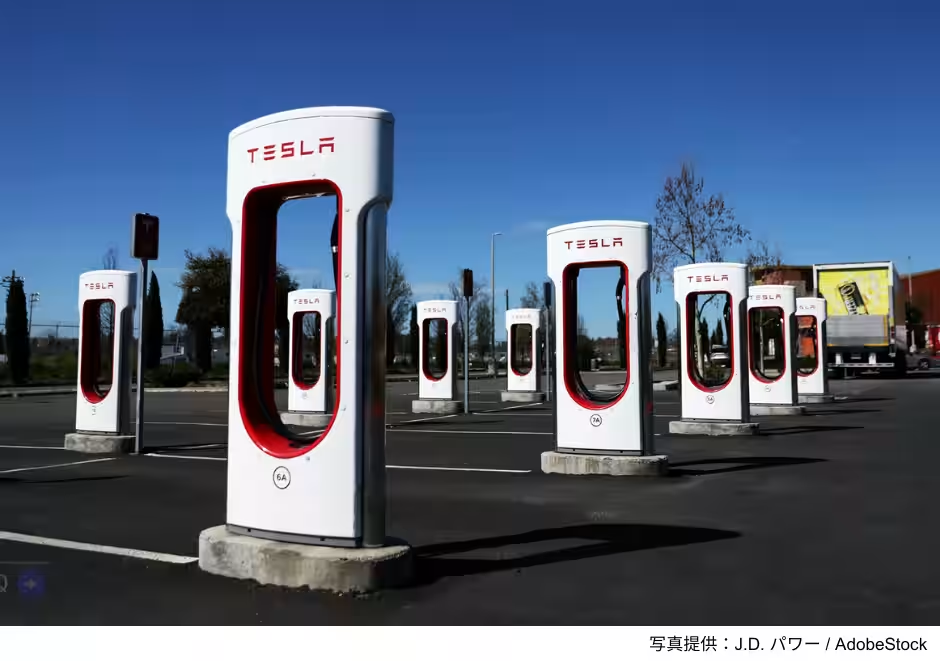
Tesla's Supercharger network still leads the rankings with a score of 709 points; however, this is a 22-point decline from the previous year. Other automotive manufacturers, such as Mercedes-Benz, Rivian, and Ford, scored 709 points on their respective charging networks, suggesting that they are effectively learning from Tesla's experience. Despite limited expandability appearing in the current rankings, their initial performance implies that these manufacturers are successfully translating Tesla's ecosystem advantages into their offerings. Meanwhile, third-party DC Fast Charge providers scored lower, at an average of 591 points, facing challenges targeting a broader customer base.
Regional Variances in Charging Experiences
To gain a deeper understanding of EV charging experiences, J.D. Power monitored non-charging visits and charger availability across the U.S. The Pacific region exhibited the highest non-charging visit percentage at 21%, while only 5% of users in the Southeast Central region reported similar issues. Moreover, Seattle (25%) and Los Angeles (24%) ranked highest in non-charging visits, due primarily to malfunctioning chargers, which accounted for 60% of the non-charging experiences.
Interestingly, new EV owners report higher satisfaction levels compared to seasoned owners across both charging segments. First-time owners rated AC Level 2 charging satisfaction at 610 points, while veteran owners rated it at 592 points. On the DC charging side, first-timers scored 654 points and veterans scored 648 points. This disparity is linked to the heightened expectations of veteran owners regarding the evolving technology, which they feel current solutions inadequately meet.
Executive Insights from J.D. Power
Brent Gruber, Executive Director of J.D. Power’s EV division, noted the collaborative endeavor within the industry to enhance customer experiences at charging stations without the support of NEVI program funding. Both manufacturers and charging networks are focused on improving the public charging landscape, aligned with NEVI guidelines aimed at guiding industry success.
Gruber stated, “While the overall satisfaction score has diminished, the data reflects a clear improvement in charging reliability and success rates, marking a positive sign for the industry moving forward. It's critical to expand DC fast charging infrastructure, but we must recognize that enhanced charging speeds alone will not resolve public charging issues. Other factors, including reliability, ease of use, and addressing cost concerns, require attention for comprehensive improvement.”
J.D. Power continually monitors public charging station performance metrics, identifying areas of improvement in the customer experience alongside remaining challenges. The detailed metrics collected from the study emphasize the evolving dynamics of the EV landscape, calling for actionable strategies to uplift consumer satisfaction and overall infrastructure effectiveness.
The 2025 U.S. EV Experience (EVX) Public Charging Study marks its fifth annual survey iteration, conducted in partnership with PlugShare, and welcomes insights from 7,428 EV owners participating between January and June 2025. The findings substantiate the critical need for continued evolution and cooperation within the electrical vehicle ecosystem to enhance public charging experiences across the United States.

Topics Consumer Technology)
【About Using Articles】
You can freely use the title and article content by linking to the page where the article is posted.
※ Images cannot be used.
【About Links】
Links are free to use.