



The Deceptive Gap Between Patients’ Final Wishes and Emergency Medical Practice
In Japan, there exists a profound disconnect between individuals' end-of-life wishes and the practices of emergency medical services (EMS). A recent study by Okayama University has shed light on this critical issue, revealing that approximately 70% of patients who express a wish not to receive cardiopulmonary resuscitation (CPR) are still subjected to it during transport to hospitals. This raises serious ethical and practical questions in the realm of emergency medicine and patient rights.
The research conducted by a team led by Ryo Tanabe from the Okayama University Medical School investigated protocols regarding CPR among emergency responders across the nation. Out of the 791 fire departments surveyed, nearly half lacked clear procedures that would allow them to respect the patients' do-not-resuscitate (DNR) wishes. Additionally, even among those departments that do have protocols in place, 52% reported that they had never utilized these procedures within a year. This alarming statistic underscores the significant gap between theoretical rules and their application in real-life situations.
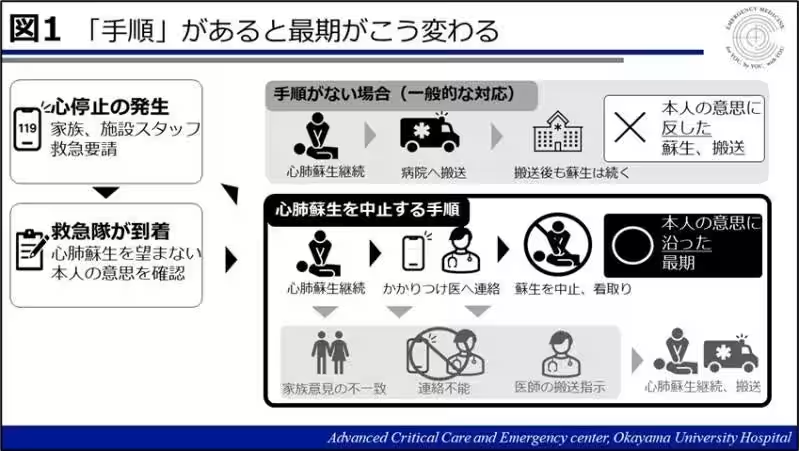
For many individuals facing end-of-life circumstances—such as terminal cancer or advanced age—the desire to forgo CPR is a heartfelt wish, often communicated by both the patient and their family. However, when emergencies occur and 119 is dialed, protocols dictate that responders generally proceed with resuscitation, largely because there is currently no standardized method for verifying a patient’s wishes at the scene.
The research team emphasizes that simply creating rules is not enough; these protocols must also be actionable in the field. Emergency personnel, medical staff, care institutions, and families must be educated on how to effectively honor a patient's last desires. Inadequate attention to these processes can lead to detrimental outcomes, where a patient’s desire for a serene final moment is overshadowed by aggressive medical interventions.
Tanabe states, "CPR can indeed be life-saving, but for elderly patients whose health is fragile, the procedure can lead to significant physical distress or complications. It is vital to honor the wishes of patients who express a desire not to undergo CPR. Instead of applying universal resuscitation, we should focus on facilitating peaceful endings for individuals. Open discussions with family about end-of-life decisions should take place well before any medical emergencies."
The findings of this research highlight a pressing need for a systematic approach to integrate patients' wishes into emergency medical practices. There are clear implications for policy makers, who need to ensure that responders across Japan are equipped with both the protocols and the training necessary to respect individual patient wishes consistently.
Published online in the international medical journal 'Resuscitation Plus' on September 1, 2026, this study aims not only to raise awareness about this critical gap but also to inspire effective changes in how emergency medical services operate regarding patient rights at the end of life. As the conversation around patient autonomy and dignity at the end of life continues to evolve, it is imperative that the healthcare system adapts accordingly to respect those final wishes.
As the public becomes more aware and engaged in discussions about their end-of-life care preferences, it is incumbent upon the healthcare system to ensure that their voices are heard and honored in the most significant moments of life. The call to action is clear: we must bridge the gap between regulations and practice, allowing patients to have the final say in their healthcare decisions.





The research conducted by a team led by Ryo Tanabe from the Okayama University Medical School investigated protocols regarding CPR among emergency responders across the nation. Out of the 791 fire departments surveyed, nearly half lacked clear procedures that would allow them to respect the patients' do-not-resuscitate (DNR) wishes. Additionally, even among those departments that do have protocols in place, 52% reported that they had never utilized these procedures within a year. This alarming statistic underscores the significant gap between theoretical rules and their application in real-life situations.
For many individuals facing end-of-life circumstances—such as terminal cancer or advanced age—the desire to forgo CPR is a heartfelt wish, often communicated by both the patient and their family. However, when emergencies occur and 119 is dialed, protocols dictate that responders generally proceed with resuscitation, largely because there is currently no standardized method for verifying a patient’s wishes at the scene.
The research team emphasizes that simply creating rules is not enough; these protocols must also be actionable in the field. Emergency personnel, medical staff, care institutions, and families must be educated on how to effectively honor a patient's last desires. Inadequate attention to these processes can lead to detrimental outcomes, where a patient’s desire for a serene final moment is overshadowed by aggressive medical interventions.
Tanabe states, "CPR can indeed be life-saving, but for elderly patients whose health is fragile, the procedure can lead to significant physical distress or complications. It is vital to honor the wishes of patients who express a desire not to undergo CPR. Instead of applying universal resuscitation, we should focus on facilitating peaceful endings for individuals. Open discussions with family about end-of-life decisions should take place well before any medical emergencies."
The findings of this research highlight a pressing need for a systematic approach to integrate patients' wishes into emergency medical practices. There are clear implications for policy makers, who need to ensure that responders across Japan are equipped with both the protocols and the training necessary to respect individual patient wishes consistently.
Published online in the international medical journal 'Resuscitation Plus' on September 1, 2026, this study aims not only to raise awareness about this critical gap but also to inspire effective changes in how emergency medical services operate regarding patient rights at the end of life. As the conversation around patient autonomy and dignity at the end of life continues to evolve, it is imperative that the healthcare system adapts accordingly to respect those final wishes.
As the public becomes more aware and engaged in discussions about their end-of-life care preferences, it is incumbent upon the healthcare system to ensure that their voices are heard and honored in the most significant moments of life. The call to action is clear: we must bridge the gap between regulations and practice, allowing patients to have the final say in their healthcare decisions.
Topics Health)



【About Using Articles】
You can freely use the title and article content by linking to the page where the article is posted.
※ Images cannot be used.
【About Links】
Links are free to use.