



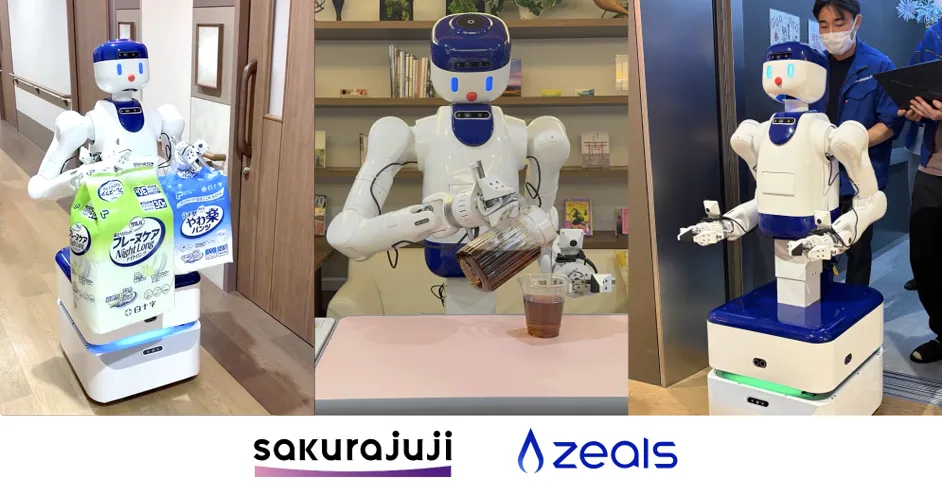
Companion Robot ‘D1’ Tested in Nursing Care Facility by ZEALS
Introduction
In an era where healthcare and aging demographics are paramount concerns, the deployment of technology in nursing care facilities has become increasingly crucial. The Tokyo-based company ZEALS has taken significant steps in this area by introducing the compact humanoid robot ‘D1’ into a nursing care environment. The testing, conducted at the Sakura Jujigumi-operated nursing home ‘Hospitalment Bunkyo Sendagi’, aimed to explore how the D1 can assist staff and improve care for residents.
Purpose of the Experiment
The mission of Sakura Jujigumi emphasizes enriching lives in the era of 100-year lifespans. In line with this, the D1 robot's testing was designed to evaluate its practical applications in assisting staff with everyday tasks. The objectives included navigating the facility, transporting light items, and preparing tea – activities that typically contribute to staff workload and regulatory demands within care settings.
Experiment Overview
The validation experiment took place over two days from September 10 to 11, 2026, under real-life conditions at the nursing home, which caters to 50 residents. The D1 robot underwent several tests to assess its operational capabilities and the potential challenges that may arise in everyday applications:
1. Facility Navigation: The robot autonomously navigated the facility, adapting to the environment and responding to interactions with staff and residents.
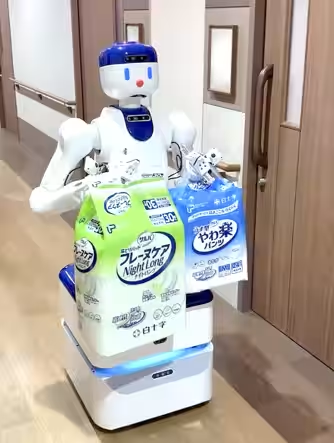
2. Light Item Transport: It transported various lightweight items that residents needed, combining its navigation abilities with the practical application of transport tasks.
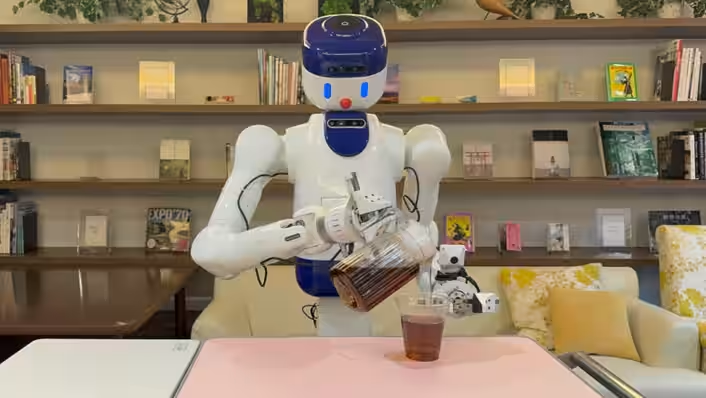
3. Tea Preparation: D1 executed an intricate task of pouring tea, showcasing its potential for handling delicate operations.
Day One: Setup and Initial Testing
On the first day, the focus was on getting D1 operational, which included connecting to the network and mapping the facility. After successfully completing initial tests with staff guidance, D1 was set to autonomously navigate using the created map. The ability to provide real-time assistance was tested in practical scenarios throughout the nursing home environment.
Day Two: Data Collection and Task Execution
On day two, the results from day one were integrated, leading to more refined testing. D1 achieved the tasks of guiding staff, transporting items, and even engaging in natural conversations with residents it encountered during its operations. This day solidified D1's effectiveness in navigating through a bustling environment where both staff and residents moved regularly.
Findings from Testing
A pivotal finding from the experiment was the adaptability of D1 in a complex environment. The robot functioned effectively while accounting for obstacles and interacting positively with residents, fostering a unique dynamism within the care facility:
1. Navigational Efficiency
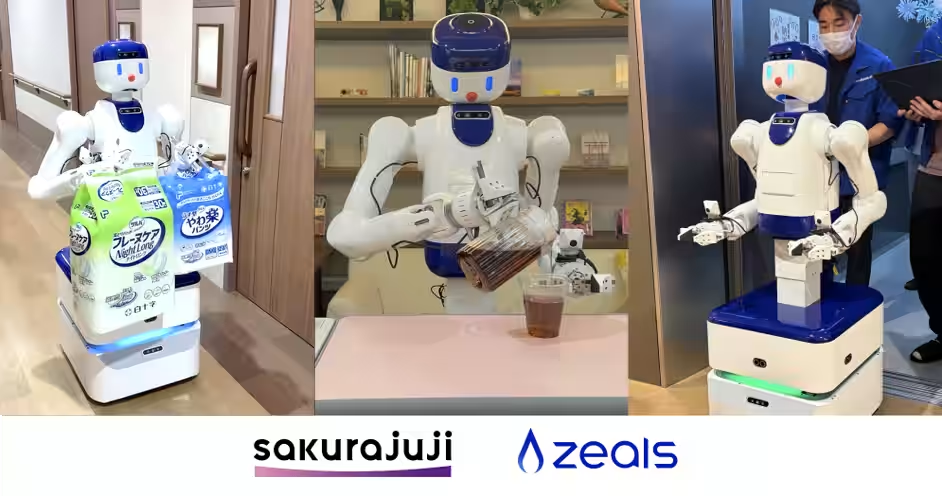
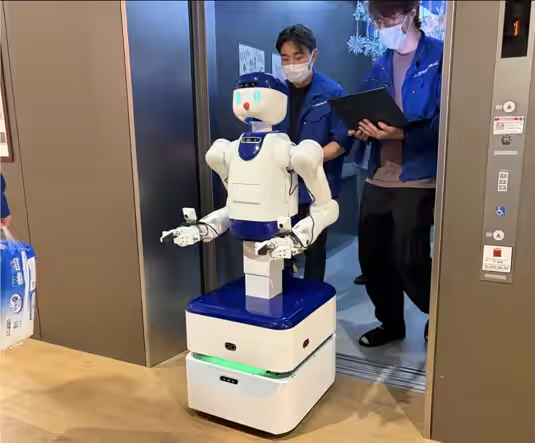
D1's ability to navigate autonomously was significantly enhanced by pre-acquired maps and real-time environmental scanning. Its utilization of elevators to move between different floors demonstrated how existing infrastructure could be leveraged without substantial modification.
2. Item Transport Capability
Through hands-on experiences involving real-time requests, D1 effectively transported light items, thereby showcasing potential reductions in the workload carried by human staff. Coupled with effective communication options, D1 was able to honor special delivery requests from residents, confirming its operational versatility.
3. Precision in Pouring Tasks
D1 exhibited skill in pouring tea autonomously, able to adjust to the quantity being served based on feedback from its sensors. While some challenges persisted regarding task accuracy and consistency, the positive response from staff and residents indicated a promising direction for future operations.
Conclusion & Future Directions
As this trial laid out, the development of D1 is greatly aligned with the future needs of the nursing care industry. Given the increasing workforce shortage in caregiving, the D1 robot potentially offers an invaluable solution to alleviate burdens on staff and enhance resident interaction.
The new insights gained will lead to improvements in D1's operation strategies, paving way for broader implementations in other facilities managed by Sakura Jujigumi. ZEALS continues to seek innovative ways to integrate humanoid robots into care environments to enhance both operational capabilities and quality of resident care, establishing a critical groundwork for future developments in medical and care technology.
Topics Health)


【About Using Articles】
You can freely use the title and article content by linking to the page where the article is posted.
※ Images cannot be used.
【About Links】
Links are free to use.