



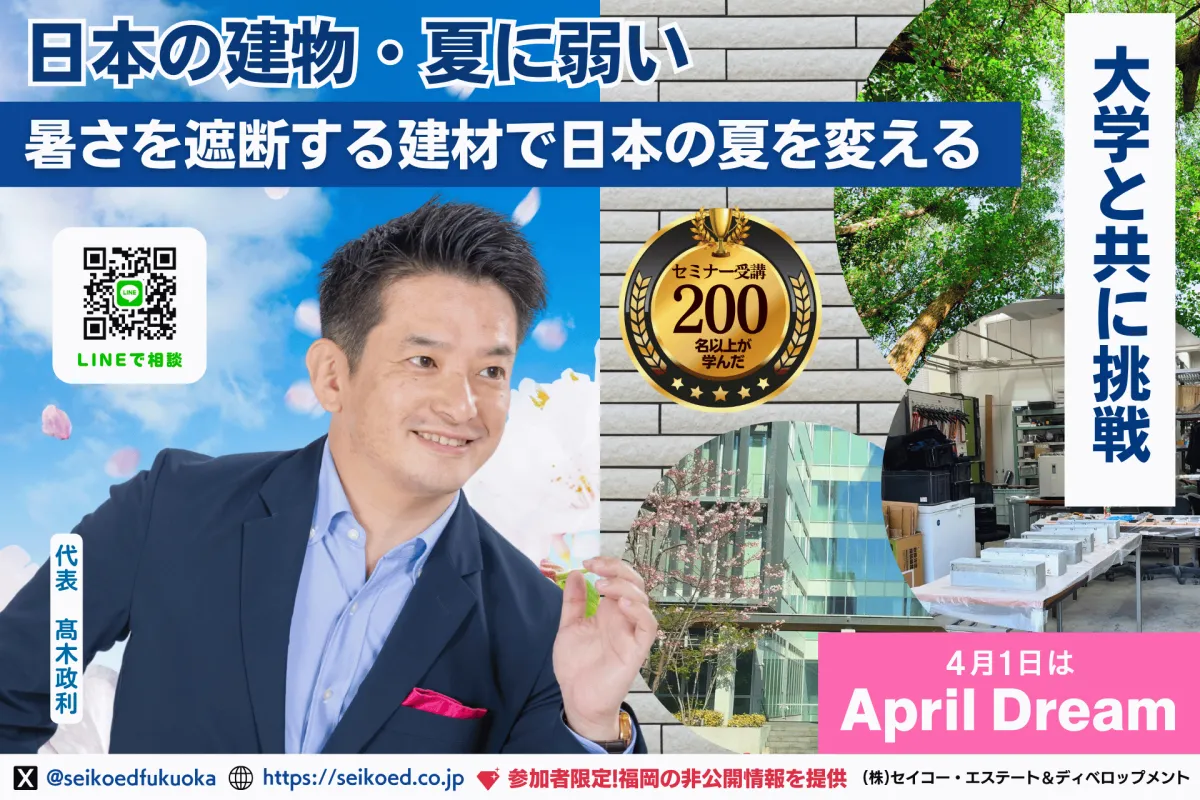
How Seiko Estate & Development Aims to Transform Japanese Architecture for Summer Comfort
Addressing Japan's Summer Building Challenges
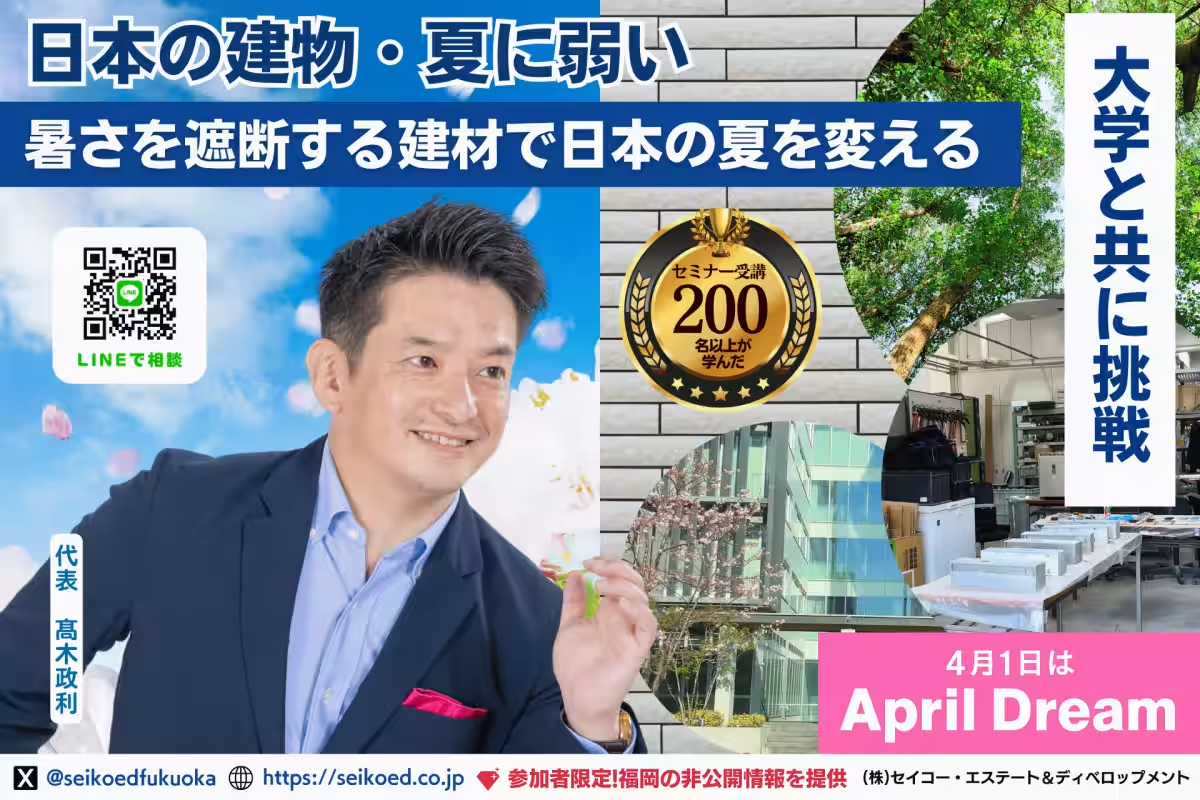
Japan's architecture often struggles under the oppressive summer heat, leading to increased reliance on air conditioning to maintain comfortable indoor environments. As temperatures rise, the challenge only intensifies, prompting companies like Seiko Estate & Development in Fukuoka to rethink traditional building materials. By collaborating with Fukuoka University, they aim to develop innovative heat-blocking materials that will significantly improve the energy efficiency of buildings throughout the country.
The Need for Change
Recent climatic trends indicate that heat waves are becoming increasingly common in Japan. For property developers and investors, this presents a pressing concern: how to ensure buildings remain livable without exorbitant energy costs? Current strategies frequently focus on mechanical cooling systems, thereby inflating electricity bills and contributing to a rise in carbon emissions. Seiko Estate's mission is to shift the paradigm towards structures designed from the ground up to naturally mitigate heat.
Vision for the Future
At the core of Seiko Estate's initiative lies a simple yet profound dream: to create buildings that inherently block summer heat. This approach not only enhances comfort but also diminishes environmental impact by reducing energy consumption. If buildings could be designed to resist external heat, the dependency on energy-consuming cooling systems would dramatically decrease, offering both financial savings and ecological benefits.
Collaborative Research with Fukuoka University
The partnership with Fukuoka University is crucial. Their research aims to bridge the gap between theoretical material science and practical construction methodologies. Seiko Estate’s President, Masatoshi Takagi, highlights the urgency of their mission in combating climate change, noting that current constructions fail to adequately shield against summer heat. Drawing inspiration from nature—like the shade offered by tree leaves—Takagi envisions a building that can naturally regulate indoor temperatures.
A Commitment to Sustainable Solutions
Seiko Estate's strategic focus on sustainability involves three main pillars:
1. Aesthetic and Function: To construct aesthetically pleasing buildings without compromising comfort and functionality.
2. Social Responsibility: To contribute positively to society and the environment by developing energy-efficient structures.
3. Client-Centric Operations: To provide investors with tangible value by adapting to the evolving demands of ecological challenges.
This holistic view underpins their research and development efforts. Takagi believes that such innovations could curtail energy consumption, enhance livability, and ultimately deliver substantial value to people across Japan and beyond.
The Broader Impact
The pursuit of heat-blocking materials aligns with global concerns regarding climate change. By developing technologies that not only improve energy efficiency but also reduce environmental footprints, Seiko Estate aims to position itself as a leader in sustainable construction. The goal goes beyond building materials; it seeks to reshape how society views and interacts with architecture.
Looking Ahead
As these innovations take shape, Seiko Estate & Development also plans to broaden its impact. They envision exporting their heat-blocking technologies not just across Japan but around the globe. By doing so, they hope to contribute to international efforts to combat environmental challenges associated with rising temperatures.
Conclusion
In a world increasingly challenged by climate change, Seiko Estate & Development's groundbreaking initiative could redefine Japanese architecture with an emphasis on summer comfort and energy sustainability. Their dream is not merely to construct buildings but to lead a movement towards environmentally conscious development that future generations will benefit from. This vision encapsulates the transformative power of collaboration between engineering and academia, paving the way for an innovative approach to tackling infrastructure and sustainability issues in Japan.
By fostering an environment where building designs inherently repel summer heat, Seiko Estate sets a new standard for comfort and efficiency, envisioning a future where Japanese architecture can thrive amidst extreme weather conditions.


Topics Consumer Products & Retail)


【About Using Articles】
You can freely use the title and article content by linking to the page where the article is posted.
※ Images cannot be used.
【About Links】
Links are free to use.