



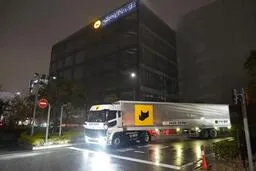
Yamato Transport Tests Innovative Level 2+ Automated Trucking Technology
Yamato Transport Tests Level 2+ Automated Trucking
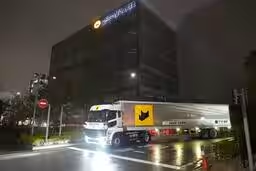
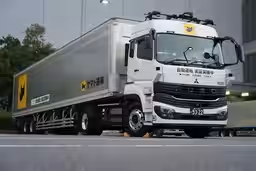
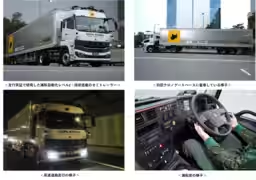
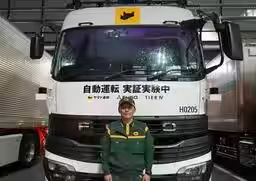
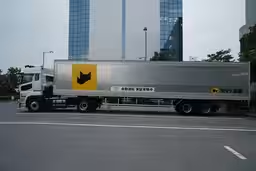
In a significant step towards the future of logistics, Yamato Transport Co., Ltd. has initiated a groundbreaking trial of Level 2+ (partial automation) technology in collaboration with Mitsubishi Fuso Truck and Bus Corporation and Tier4 Inc. This trial involves semi-trailers equipped with cutting-edge automation technology for trunk transportation. The practical application of this technology could reshape the logistics industry and enhance operational efficiency.
Objectives of the Trial
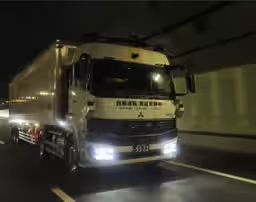
The primary aim of this demonstration is to evaluate the vehicle performance, safety, and the operational feasibility of this advanced automated trucking system. During this trial, Yamato Transport used real delivery cargo to transport goods, gaining vital data on vehicle behavior and functionality.
The data collected from this trial will be instrumental in refining automated driving technologies further. The company has a vision of deploying Level 4 (highly automated) self-driving semi-trailers in their trunk transportation network in the future.
Overview of the Demonstration
- - Trial Period: February 16-20, 2026.
- - Route: The test will cover approximately 500 km between Haneda Chrono Gate Base in Ota, Tokyo, and Kansai Gateway Base in Ibaraki, Osaka, totaling two round trips across four journeys. The specific segment for this demonstration is between Shizuoka Bay Numazu SA and Hamamatsu SA on the New Tomei Expressway, approximately 100 km.
Key Areas of Evaluation
1. Vehicle Performance and Safety:
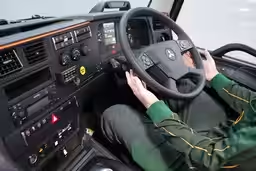
This aspect focuses on analyzing the unique movements and dynamics of large articulated vehicles. Specific metrics like hands-free driving rates and instances of lane departure were meticulously recorded to ensure stable operational performance. Additionally, the researchers examined driver interventions, assessing the surrounding context, decision-making criteria, and trends in manual intervention.
2. Travel Time:
A comparison with traditional manual driving revealed that the automated systems could operate with punctuality as per existing schedules, without delays.
3. Operational Procedures:
As part of evaluating automation, the study examined the possibility of automating pre-operational checks. This included developing systems to automatically assess tire conditions as a part of the vehicle inspection process. The project also piloted remote monitoring of vehicle conditions and surrounding environments in anticipation of future Level 4 trials.
Pilot Driver Feedback
A driver participating in the first operation noted, "Initially, I was nervous, but as I learned more about the characteristics of the automation features, I felt secure and confident. I hope self-driving trucks will become our future partners, aiding us in maintaining transportation capacity."
This insightful feedback highlights the importance of driver education and comfort in the transition to automated logistics systems.
Future Roadmap
The findings from this trial will play a crucial role in enhancing the precision of automated transport technologies. As the world trends towards digitalization, the initiative taken by Yamato Transport could lead to significant advancements in the logistics sector, setting a benchmark for other companies in the industry.
Conclusion
Yamato Transport's initiative not only represents a step towards autonomous logistics but also signifies a comprehensive approach to integrating advanced technology into everyday operations. With a focus on safety and efficiency, the future of automated trucking looks promising as this technology unfolds and is refined over time. The partnership with recognized leaders like Mitsubishi Fuso and Tier4 adds credibility and optimism to this venture, making it a keystone in the evolution of transportation systems.
For more detailed insights, you can refer to the Ministry of Land, Infrastructure, Transport and Tourism's official announcements here and the press release from Yamato Transport here.
Topics Other)
【About Using Articles】
You can freely use the title and article content by linking to the page where the article is posted.
※ Images cannot be used.
【About Links】
Links are free to use.