



New Insights Into Melatonin Receptor MT1: Mechanisms for Diverse Cellular Signaling
Unraveling the Complex Signaling of Melatonin Receptor MT1
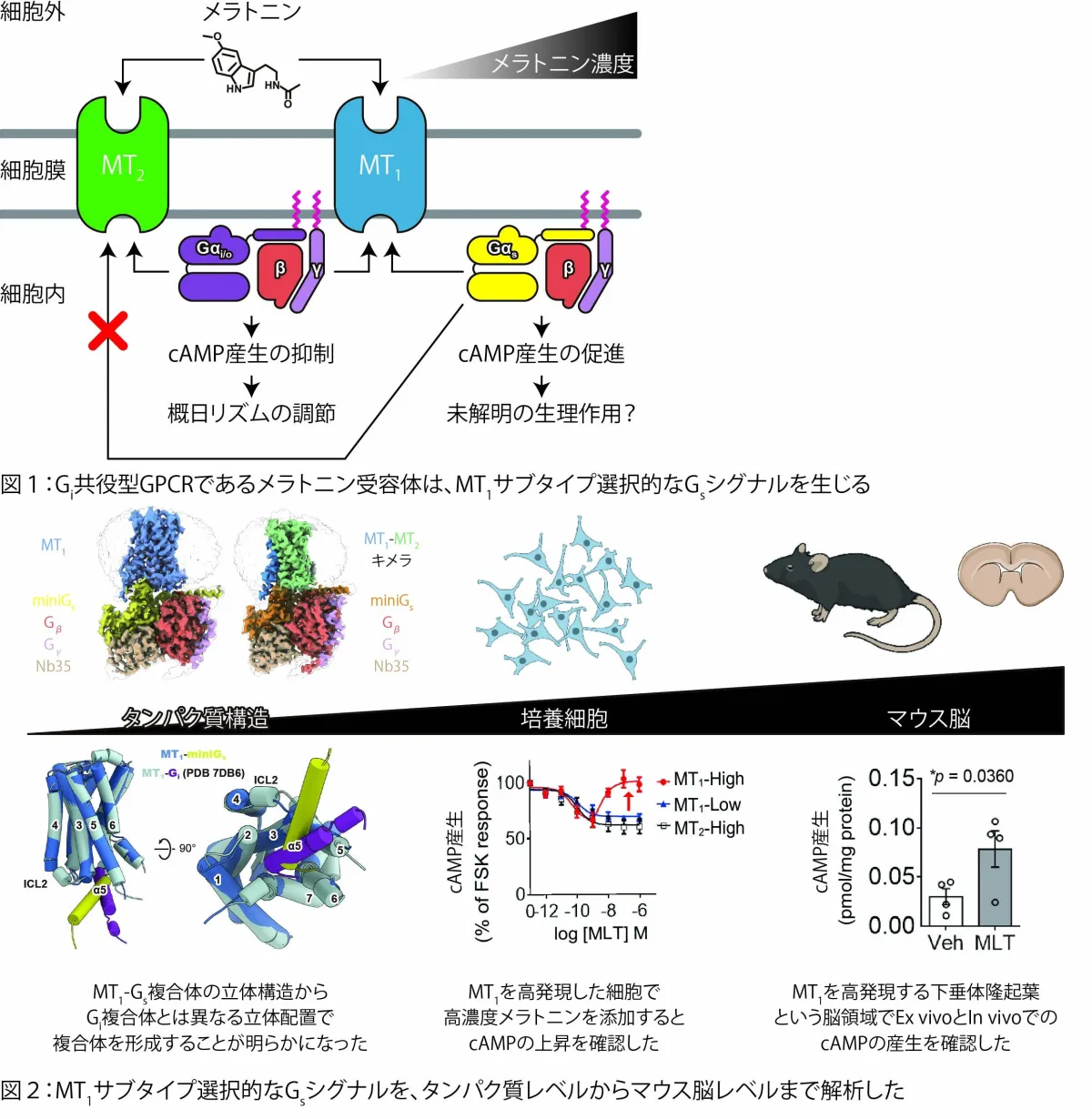
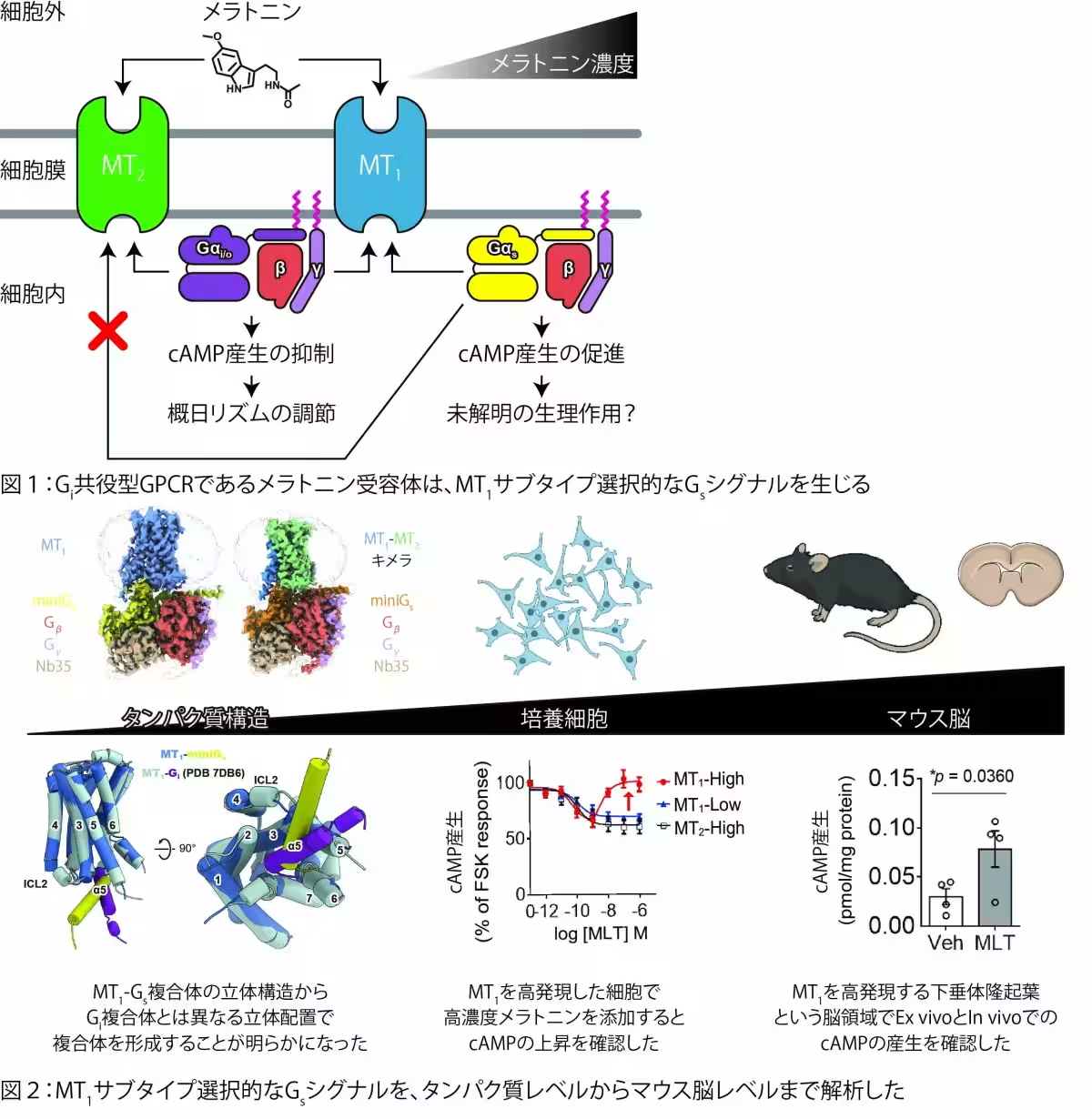
A collaborative research effort led by groups from Kyorin University, Kyushu University, and the University of Tokyo has made significant strides in understanding the melatonin receptor MT1's role in cellular signaling. Published in Nature Communications on May 21, 2026, their findings suggest that MT1 receptor not only interacts with the Gi protein pathway known for decreasing cAMP levels but also enhances cAMP levels through the Gs protein pathway, showcasing its complexity in regulating sleep and circadian rhythms.
Key Findings from the Study
The study highlights several important aspects:
1. Dual Pathway Activation: Traditionally, the MT1 receptor has been recognized for its role in activating the Gi protein pathway, which lowers cAMP levels, influencing sleep signals. The recent findings extend its functionality to include the activation of the Gs pathway when exposed to high concentrations of melatonin, demonstrating a more nuanced mechanism of action.
2. Structural Insights: Utilizing cryo-electron microscopy, the research team clarified how the MT1 receptor and Gs protein interact structurally. Unlike previous assumptions that these proteins might bind in a similar manner, it was determined that MT1 accommodates the C-terminal alpha helix of G proteins at different angles and positions, establishing a unique binding profile for Gi and Gs proteins.
3. Comparative Analysis with MT2: The study also investigated why the closely related MT2 receptor shows lower affinity for Gs proteins. By combining structural analysis and cellular signaling assays, it was found that variations in the third intracellular loop of MT1 and MT2 are crucial for their binding capabilities.
The Significance of GPCRs
G protein-coupled receptors (GPCRs) are vital in transmitting extracellular signals into the cells and are the targets for approximately 30% of all prescription medicines. Their diverse functions underscore the importance of understanding how these receptors interact with various G proteins to induce specific cellular responses. In the case of MT1, these findings not only elucidate the receptor's multifunctional mechanisms but also pave the way for potential selective signaling-based drug design aimed at minimizing side effects.
Future Directions
The research team's ongoing efforts will focus on how the Gs protein coupling mechanisms of the MT1 receptor operate under different physiological conditions, potentially linking these interactions to the regulation of sleep patterns. Understanding how MT1 differentiates between Gs and Gi proteins could accelerate research across other GPCRs, contributing to a broader understanding of cellular signaling in various physiological contexts.
In summary, this groundbreaking discovery surrounding melatonin receptor MT1’s versatile signaling mechanisms emphasizes the importance of multifaceted pathways in drug development, presenting opportunities for targeted therapies with improved efficacy and safety. As researchers continue to delve into the complexities of GPCR signaling, new therapeutic avenues will undoubtedly emerge, reinforcing the receptor's place in health and disease management.
Topics Health)
【About Using Articles】
You can freely use the title and article content by linking to the page where the article is posted.
※ Images cannot be used.
【About Links】
Links are free to use.