




Logistics Facility Market Shows Signs of Recovery Amid New Risks and Challenges
An Overview of the Current Logistics Facility Market
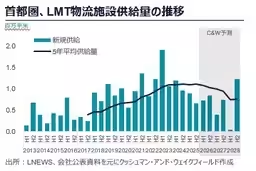
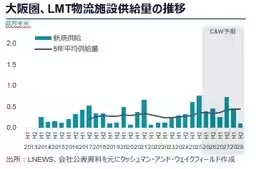
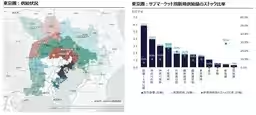
The logistics facility market is currently experiencing signs of recovery, shown by improvements in cargo transport volumes and the logistics activity index. Cushman & Wakefield, a leading global real estate services firm headquartered in Chicago, has recently published a report detailing the current state of logistics facilities. While market indicators point to recovery, underlying geopolitical tensions in the Middle East and heightened fuel costs continue to create uncertainties regarding future performance.
Improving Cargo Transport Volumes
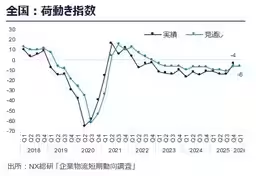
As of December 2025, preliminary data reveals a 4.1% increase in cargo transport volume compared to the previous year. However, the ton-kilometers transported saw a 9.2% decrease, indicating shorter average transport distances per operation. According to NX Institute's logistics activity index, a noticeable improvement of 10 points was recorded by Q4 of the same year, although the forecast for Q1 of 2026 suggests a decline to -6 points, primarily affected by rising geopolitical risks, particularly in the Strait of Hormuz.
The Impact of Fuel Prices on Logistics
The Japanese government, under the leadership of the Takeda administration, has pledged to eliminate the provisional gasoline tax rate by the end of 2025. Furthermore, it will abolish the light oil receipt tax provisional rate from April 2026, aiming to reduce the structural burden of fuel costs on logistics companies. However, recent developments in the Gulf region indicate a potential blockade of the Strait of Hormuz, threatening to amplify transport costs and disrupt the supply chain significantly for an industry largely dependent on Middle Eastern oil.
Japan's oil import dependency on the Middle East exceeds 90%, and the majority of this oil is transported through the Strait of Hormuz. Despite Japan maintaining approximately 200 days of oil reserves (as per International Energy Agency standards), delays in refining diesel fuel and panic-induced surges in demand could severely affect logistics operations. Furthermore, if freight companies are unable to transfer soaring fuel prices onto shippers, this could worsen the existing capacity challenges, exacerbating labor shortages, particularly anticipated under the upcoming '2024 problem'.
In light of this, the government is prioritizing initiatives to stabilize energy supplies, introducing emergency measures to mitigate fuel price surges and ensuring the release of oil reserves as necessary.
Changing Inventory Management Strategies
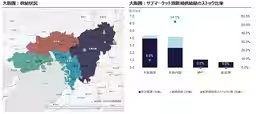
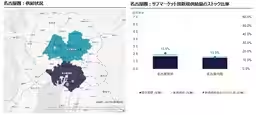
Given the rising risks in supply chains, manufacturers and retailers may shift their inventory management strategies from a

Topics Consumer Products & Retail)
【About Using Articles】
You can freely use the title and article content by linking to the page where the article is posted.
※ Images cannot be used.
【About Links】
Links are free to use.