



WOTA Partners with Hokkaido for a Robust Water Circulation Support System
WOTA and Hokkaido Join Forces for Water Circulation Support
WOTA Corporation, headquartered in Chuo-ku, Tokyo, has announced a significant partnership with Hokkaido to establish a cooperative agreement in developing a wide-area mutual assistance platform for water supply resources during disasters. This initiative is particularly vital in light of recent experiences from disasters like the Noto Peninsula Earthquake, which highlighted the pressing need for readiness against large-scale disasters that can disrupt water supply systems.
Background of the Agreement
The new agreement focuses on ensuring access to emergency water supplies to disaster-stricken areas. With water infrastructure often taking a long time to recover following major disasters, it becomes crucial to have a prepared and cooperative framework amongst local municipalities. This platform aims to guarantee hygiene conditions and provides necessary living water supplies in evacuation centers post-disasters.
WOTA's initiative seeks to create a robust system that can respond swiftly and flexibly not only to national crises but also to any unforeseen large-scale disasters. The Civil Engineering Society defines such national crises as disasters that can severely damage the nation's strength and disturb the standard of living over an extended period.
A Comprehensive Approach to Water Security
WOTA emphasizes that ensuring access to living water is of utmost importance, especially in the face of disasters when traditional water supply systems like sewerage can fail. The Noto Peninsula Earthquake saw more than 100,000 people experiencing prolonged water outages due to damages in essential water facilities. In such situations, while drinking water can be sourced more easily (e.g., through bottled water), living water, which is required in vastly larger quantities, becomes challenging to secure. The needs for utilizing water differ vastly, and it’s critical to maintain sanitation through bathing, handwashing, and other basic hygiene practices, or else face severe public health consequences.
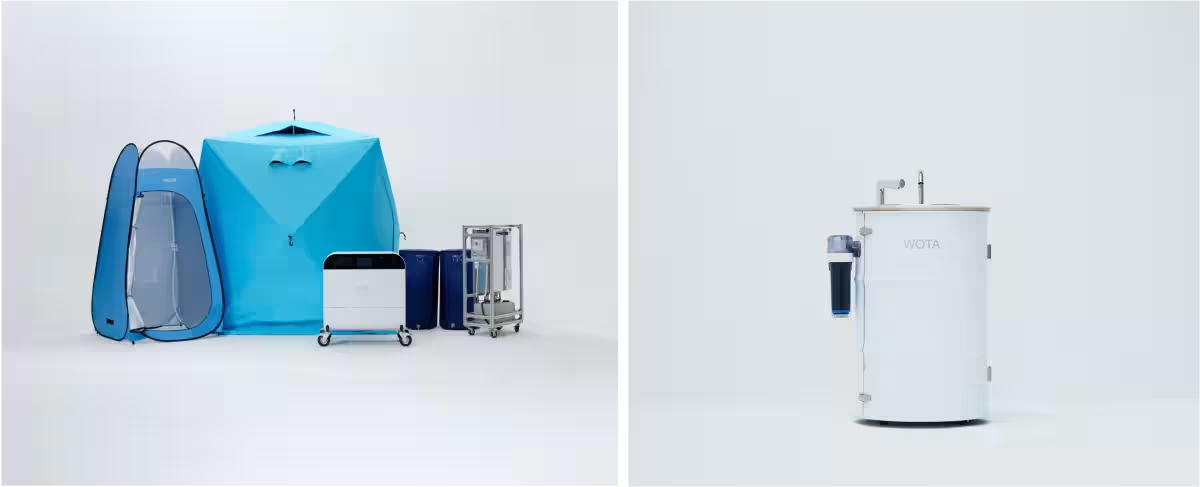
WOTA's response to the Noto Peninsula Earthquake involved mobilizing established temporary water systems that allowed for bathing and handwashing even amidst a cessation of municipal water services. Collaborations with the Nippon Foundation and contributions from various local municipalities showcased a successful model, deploying around 300 water systems across affected evacuation locations, covering approximately 89% of them during long-term outages.
Challenges and the Necessity for Mutual Assistance
The delay in establishing an effective assistance framework was evident during the Noto Peninsula Earthquake, where it took over a month to deploy adequate resources. Had there been a pre-existing mutual assistance setup among municipalities, the response may have been much quicker. While some facilities like laundromats can source water externally, essential needs for sanitation, like showers and handwashing stations, are significantly more complicated. Therefore, strategic planning to prioritize shower and handwashing provisions in future mutual assistance frameworks is deemed necessary.
In some areas, local governments have already demonstrated success by centralizing and distributing water circulation systems to affected areas very promptly in the wake of disasters, outlining the effectiveness of cooperative frameworks.
Forward-Looking Risk Mitigation Strategies
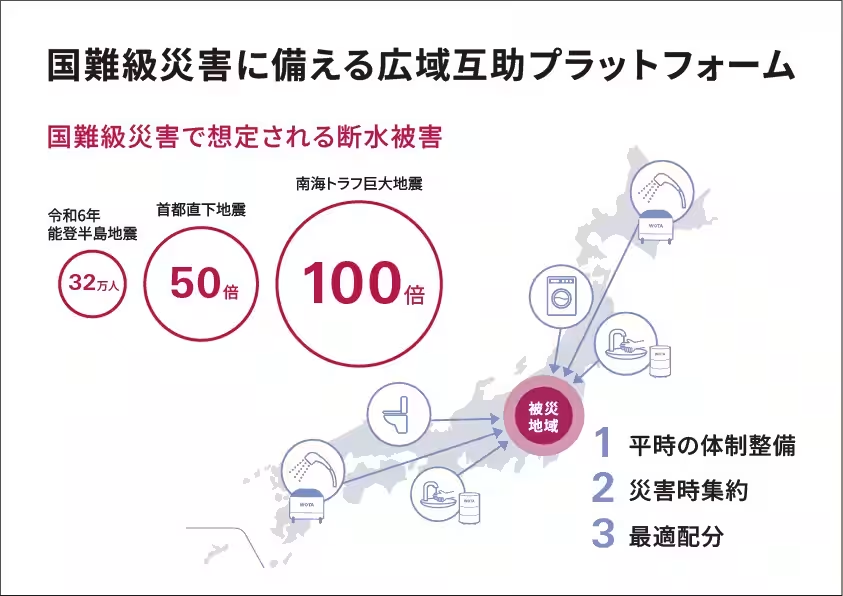
Considering probable future disasters such as a potential earthquake occurring under metropolitan areas, anticipated water outages could be exponentially larger than those experienced during previous crises. Ensuring a hygienic environment and a reliable supply of living water requires a strong and interconnected response system, appropriate at the municipal level.
To proactively address these risks, WOTA has envisioned a national platform to enable seamless distribution and allocation of water circulation systems in preparation for large-scale disasters. This platform will offer features focused on:
1. Establishing Systems During Peace Time: Raising efficacy within the mutual support framework through pre-emptive training and system placements.
2. Centralized Emergency Support: Coordinating requests for resources from affected municipalities and mobilizing support from those not affected.
3. Optimizing Resource Distribution: Maintaining close connections with impacted areas to facilitate efficient distribution of resources and address their specific needs.
Future Developments
WOTA plans to extend this platform nationwide and has already initiated agreements for mutual assistance under this framework with various prefectures. The aim is to establish a reliable support system that is responsive not just to large-scale disasters, but also to any emergency that might arise regardless of time and location. This initiative is critical as it anticipates future challenges and underscores WOTA's commitment to improving water management in crisis situations.
For more information about WOTA's endeavor in addressing global water issues, visit WOTA's website.
Topics Environment)
【About Using Articles】
You can freely use the title and article content by linking to the page where the article is posted.
※ Images cannot be used.
【About Links】
Links are free to use.