



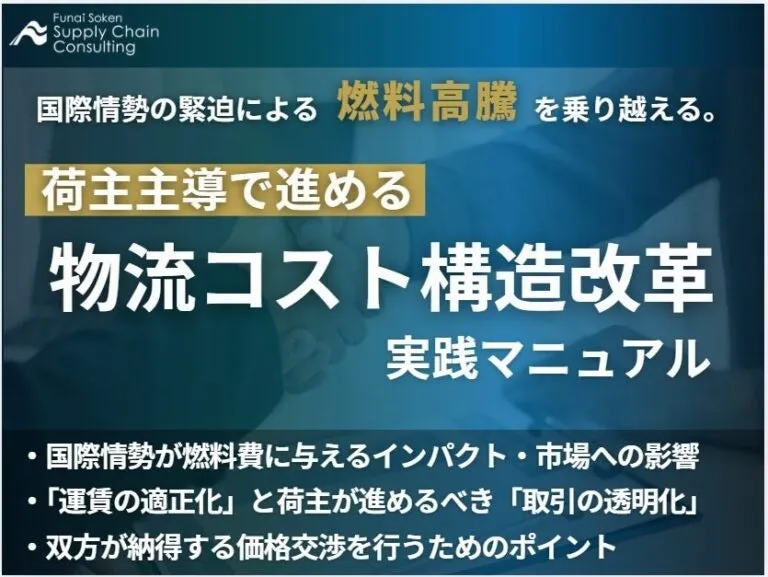
Overcoming Fuel Price Surges: A Manual for Logistics Cost Reform
Overcoming the Surge in Fuel Prices
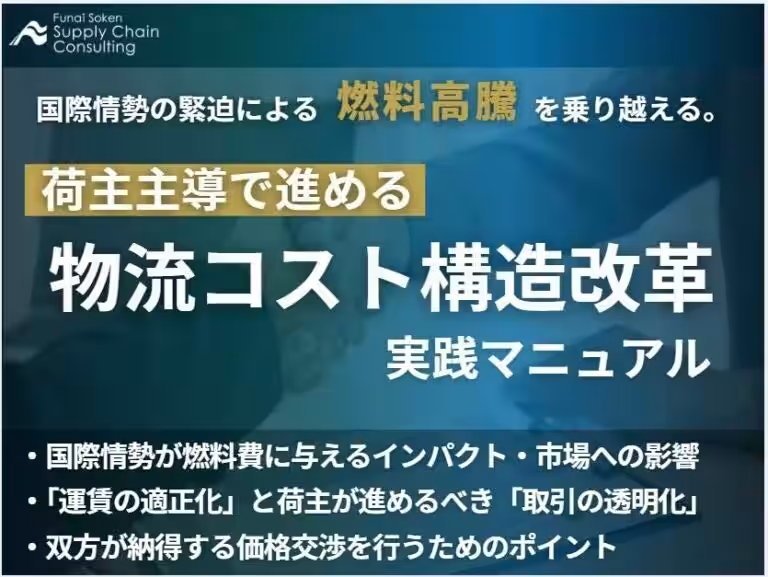
In light of recent international tensions leading to skyrocketing fuel prices, companies are urged to reassess their logistics strategies. Funaisoken Supply Chain Consulting, headquartered in Chuo-ku, Tokyo, has published a comprehensive manual titled 'Logistics Cost Structural Reform Manual', aimed at helping businesses navigate these pressing challenges and establish sustainable supply chains.
The Crises Faced by Traditional Logistics Models
The current global situation has put unprecedented pressure on logistics frameworks. Companies relying on outdated models are finding it increasingly difficult to maintain their delivery networks due to rising operational costs. A mere reactive approach to these cost increases is no longer sufficient. To ensure a continuous and uninterrupted supply chain, it is imperative for shippers to lead transformative logistics structural reforms.
Key Insights from the Manual
The newly released manual outlines practical approaches for logistics managers, focusing on three pivotal areas to help counter the rising costs of fuel:
1. Implementing Fuel Surcharges and Adjusting Freight Rates
The manual suggests implementing a systematic approach to introduce fuel surcharges that accurately reflect fluctuations in fuel prices. By doing so, companies can build a sustainable partnership with their logistics service providers. This ensures that all parties are fairly compensated for the escalating fuel costs, helping avoid a breakdown in supply chain relations.
2. Enhancing Transparency in Transactions
Another key aspect highlighted is the reduction of waiting times for truck drivers and the monetization of previously uninsured ancillary services, such as loading and unloading tasks. This shift toward transparency not only visualizes the cost structures but also aligns service expectations between suppliers and clients, ultimately fostering a clearer understanding of logistical operations and associated expenses.
3. Data-Driven Price Negotiations
Utilizing objective market data and simulation tools for price negotiations is critical. The manual provides essential tips for both stakeholders to reach consensus and feel satisfied with the agreements. This methodology encourages a fair negotiation process, paving the way for mutually beneficial outcomes, thereby reducing conflicts and friction in business relationships.
How to Access the Manual
Businesses looking to reform their logistics strategies can download the manual for free through the following link: Download Link. This resource serves as a foundational tool to mitigate the impact of rising fuel costs on their operations.
About Funaisoken Supply Chain Consulting
Founded on May 10, 2000, Funaisoken SC has been at the forefront of supply chain consultancy in Japan. Their dedication to helping businesses adapt to ever-changing market conditions is evident in their recent work published in this manual. For further inquiries or professional consultations, please reach out to:
Tokyo Headquarters:
2-2-1 Yaesu, Chuo-ku, Tokyo 104-0028, Japan
Phone: 03-4223-3163
Email: [email protected]
Website: Funaisoken SC
Osaka Headquarters:
3-2-123 Umeda, Kita-ku, Osaka 530-0001, Japan
Located on the 21st and 22nd floors of Innogate Osaka.
In conclusion, as fuel prices become increasingly volatile, the 'Logistics Cost Structural Reform Manual' stands as a vital resource for businesses striving to create resilient and efficient supply chains. By embracing these proactive strategies, companies can better navigate the complexities of the current geopolitical landscape and thrive amid uncertainty.
Topics Business Technology)
【About Using Articles】
You can freely use the title and article content by linking to the page where the article is posted.
※ Images cannot be used.
【About Links】
Links are free to use.