



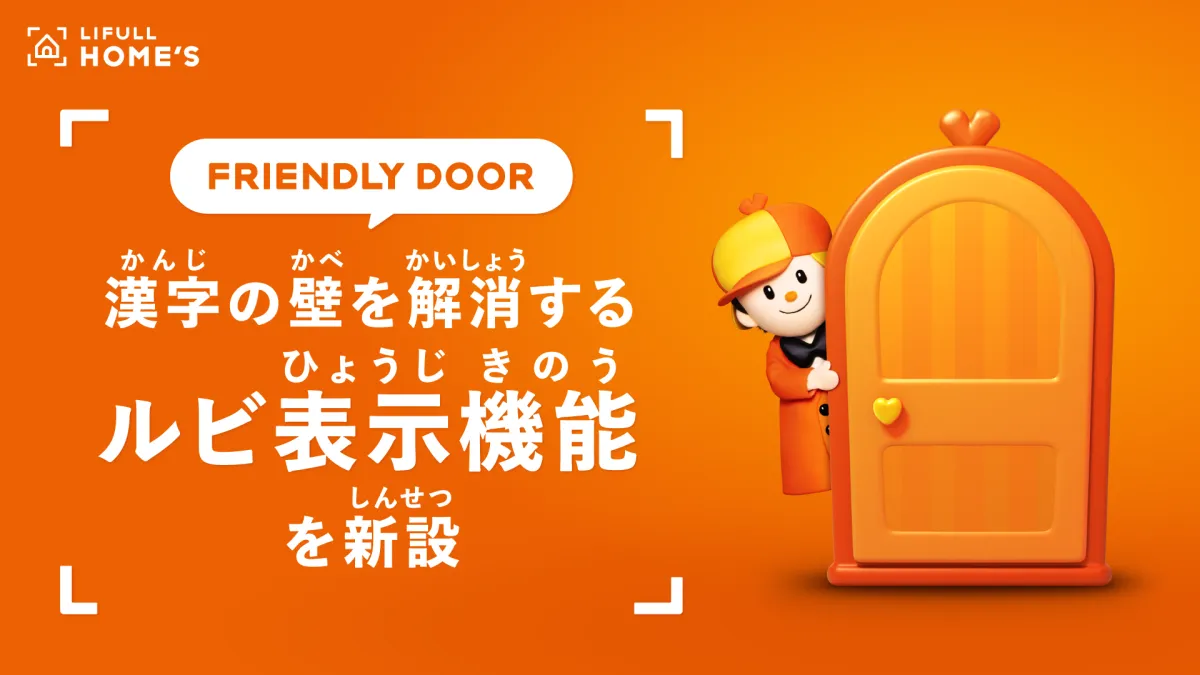
Breaking Down the Kanji Barrier for Housing Searches with Ruby Feature by LIFULL HOME'S
Breaking Down the Kanji Barrier for Housing Searches
In an effort to address social challenges through its initiatives, LIFULL Inc., headquartered in Chiyoda, Tokyo, has introduced a new Ruby display feature in its housing information service LIFULL HOME'S. Starting September 4, 2026, the feature aims to assist those unfamiliar with the Japanese language or those who struggle with kanji reading, promoting a smoother and more accurate housing search experience.
The addition of this feature is expected to ease the kanji barriers for individuals from diverse backgrounds, including non-native speakers and those with learning difficulties such as dyslexia. By lowering the psychological hurdles associated with reading kanji, more people will be able to locate their ideal homes without unnecessary stress. This initiative is a stride towards achieving housing equality for all.
Introducing the Ruby Display Feature
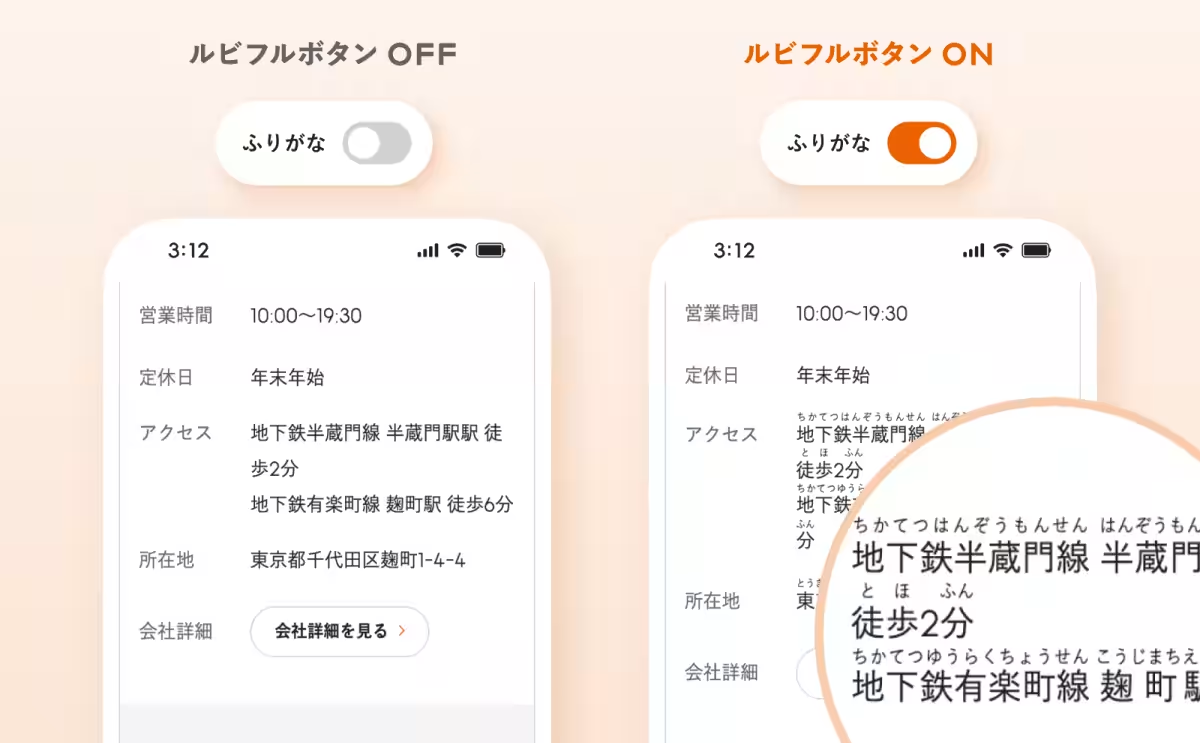
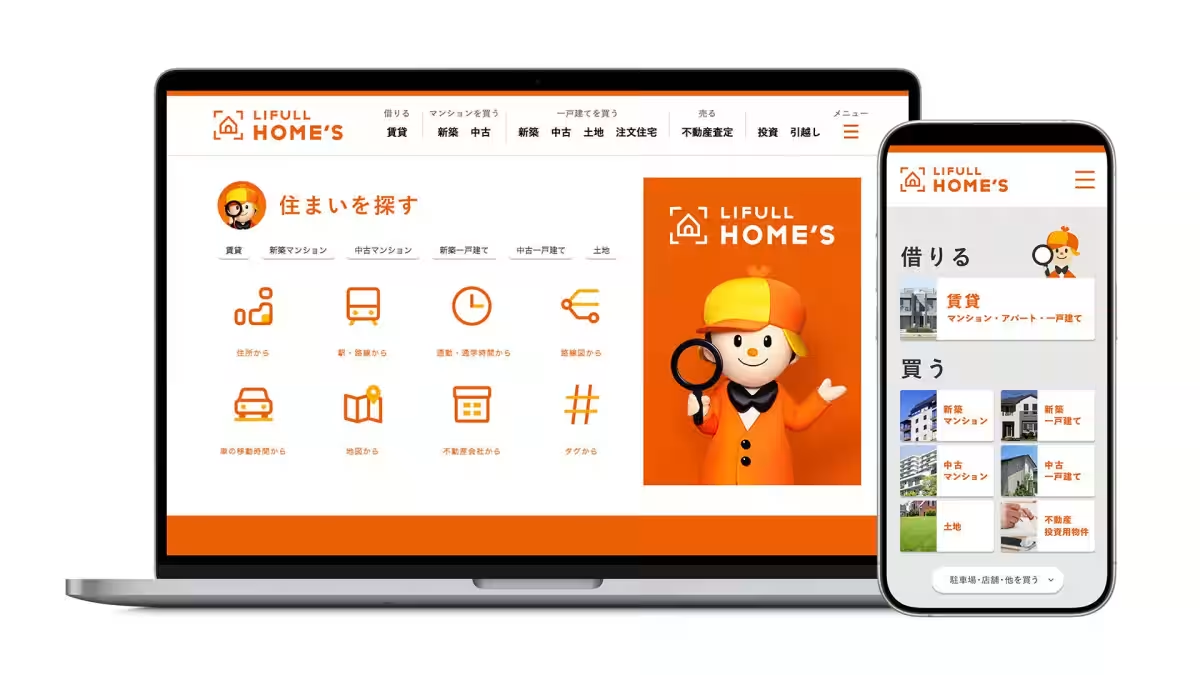
The FRIENDLY DOOR service on LIFULL HOME'S allows users to enable Ruby (pronunciation annotation) with just one click. This feature leverages the Rubyful Button provided by the Ruby Foundation, ensuring accurate Ruby display without compromising visibility. The system minimizes erroneous displays of place names or station names by utilizing LIFULL HOME'S reliable database for special readings of unique names.
Background: An Inclusive Solution Through Ruby
LIFULL HOME'S conducted a survey in 2022 regarding the housing search experiences of those facing challenges in finding housing. It revealed that about 25% of respondents expressed difficulty understanding real estate terminology, which highlights a significant language barrier in housing searches. Additionally, 18.2% of non-Japanese individuals faced similar challenges.
Initially, the company considered using Easy Japanese, a simplified language approach. However, this often led to longer texts that were still hard to read, increasing difficulties for users. Hence, they turned to Ruby as a solution that maintains information depth while enhancing comprehension.
Ruby is not only beneficial for non-native Japanese speakers but also significantly aids dyslexic individuals, who are estimated to make up about 8% of the population. This inclusive method provides a practical solution to the barriers faced by those in need of assistance during their housing search.
Research Findings: Increasing Clarity with Ruby
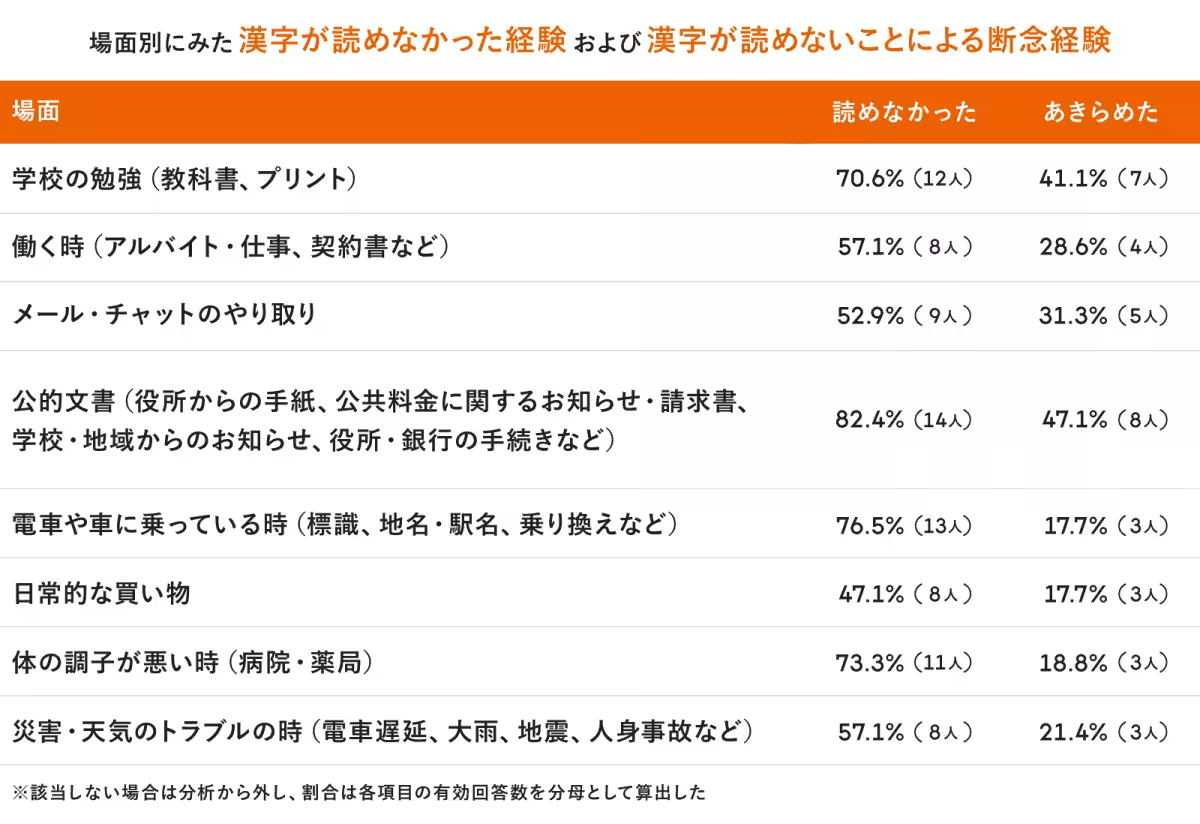
A study conducted by the University of Tokyo's Graduate School revealed that Ruby significantly enhances clarity and understanding of written Japanese for students from non-kanji background countries. Approximately 82.4% of individuals reported having faced difficulties reading kanji in essential documents, leading to a common experience of abandoning attempts to understand essential information.
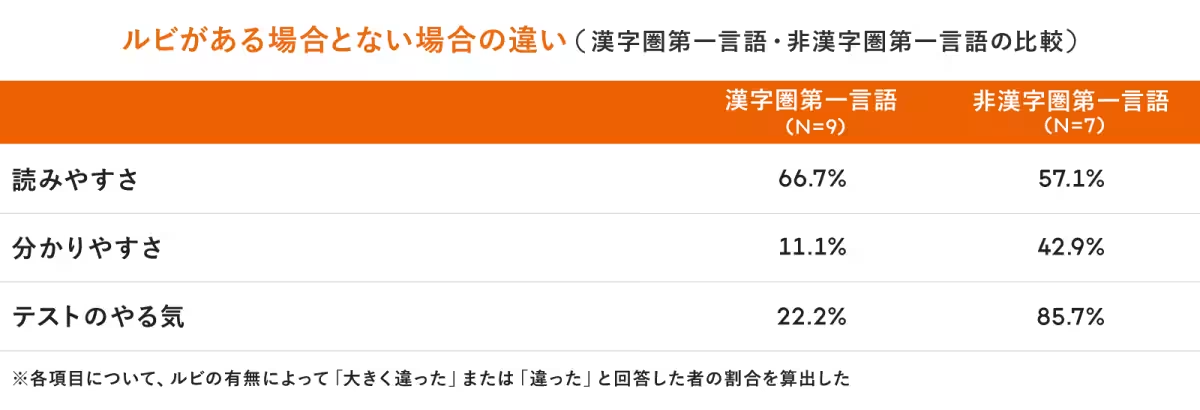
The presence of Ruby was shown to boost clarity and understanding of content. After a reading comprehension test, 42.9% of those surveyed noted that Ruby made a noticeable difference in how clear they found the information. Additionally, an outstanding 85.7% reported feeling a significant increase in motivation and willingness to engage with the reading material, illustrating how Ruby display reduces psychological burdens and fosters a proactive approach to learning.
A Step Towards Universal Accessibility
The Ruby display feature is more than just a resource for learning Japanese; it serves as a universal design for ensuring access to information and supporting social participation. By implementing this feature in FRIENDLY DOOR, LIFULL HOME'S takes a crucial step toward eliminating the exclusion that arises from reading difficulties, allowing everyone equal opportunities in their housing search.
Expert Opinions
Comments from Associate Professor Fumiko Takahashi at Tokyo University emphasize the lack of research on Ruby's impact on Japanese language learners. This exploratory study has revealed critical insights into the experiences of non-kanji background individuals, showcasing how Ruby can provide choices and reduce feelings of despair in housing situations.
Toyo Ito, director of the Ruby Foundation, shared that the challenge of providing accurate Ruby for unique place names has been a technical hurdle. However, collaboration with LIFULL has enabled the development of this innovative feature.
Kyo Yigun, head of FRIENDLY DOOR, pointed out the increasing percentage of non-kanji background individuals in Japan, stressing the importance of removing the kanji wall to facilitate better communication and access to information in housing.

Topics Consumer Products & Retail)






【About Using Articles】
You can freely use the title and article content by linking to the page where the article is posted.
※ Images cannot be used.
【About Links】
Links are free to use.