



Examining the Gap Between Expectations and Realities in Consultant Career Shifts
Exploring Consultant Career Transitions: Expectations vs. Reality
Recently, Axis Consulting Group, headquartered in Chiyoda, Tokyo, unveiled a significant white paper based on a survey of 1,004 professionals. This study primarily focuses on the career transitions of consultants moving into corporate sectors or returning to consulting firms after gaining corporate experience. The paper scrutinizes the anticipated roles versus the actual responsibilities these consultants encounter post-transition.
Background of the Study
In today's dynamic professional landscape, consultants are increasingly exploring varied career paths, including transitions to corporate companies or independent consultancy. However, the real experiences of consultants making such moves—particularly the gaps between their expectations and the actual job roles they assume—have not been extensively analyzed. Hence, the survey aimed to elucidate this experience, surveying individuals in three categories:
1. Current consultants considering a move to corporate roles.
2. Those who have successfully transitioned into corporate roles.
3. Former consultants who returned to consulting after working in the corporate environment.
Key Findings
The major insights drawn from the research reveal important discrepancies between the roles consultants hope to attain versus what they are assigned:
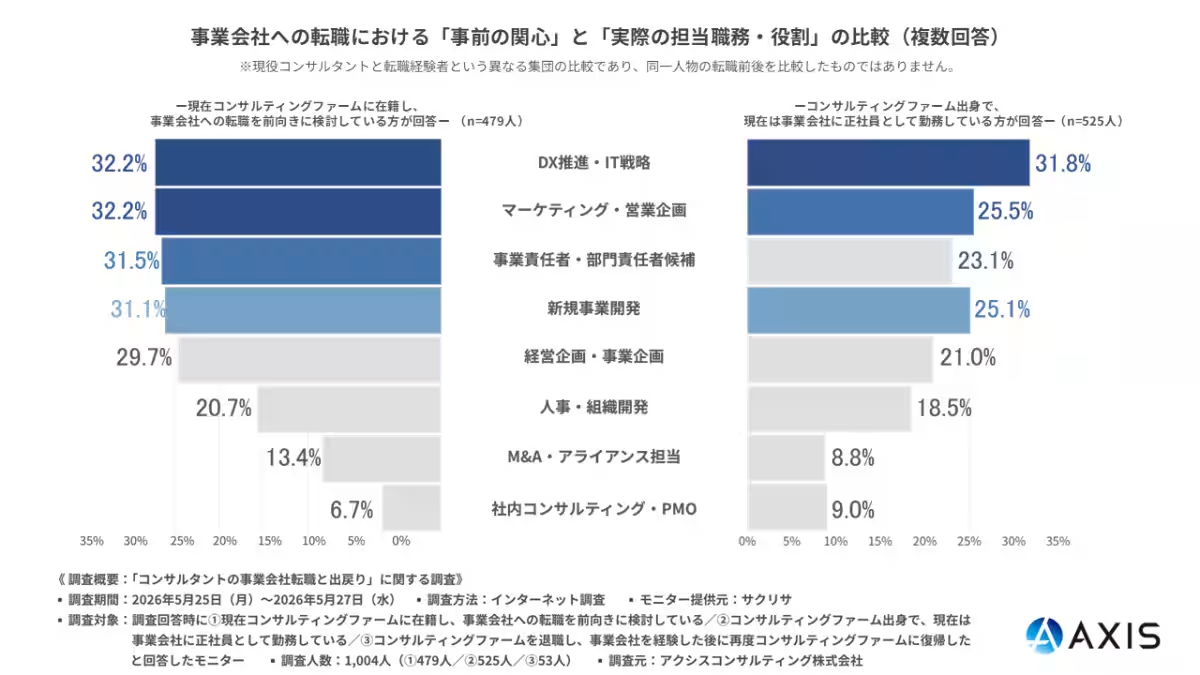
- - Desired Roles vs. Actual Assignments: When respondents were asked about the roles they aspired to in corporate settings, many indicated a yearning for significant positions such as DX Promotion and IT Strategy (32.2%), Marketing and Sales Planning (32.2%), Business Director or Department Head Candidates (31.5%), and New Business Development (31.1%). However, those who transitioned into actual roles found a stark contrast. While the percentage for DX Promotion and IT Strategy (31.8%) remained steady, the figures for Marketing and Sales Planning (25.5%), Business Director Roles (23.1%), and New Business Development (25.1%) fell short of their expectations.
- - Real Responsibilities: The survey also highlighted that even though consultants seek out leadership roles when entering a corporate environment, companies often prioritize leveraging their skills in specialized areas first. This suggests that businesses have a tendency to assign consultants to more focused tasks, such as enhancing IT initiatives or driving specific operational advances rather than placing them in overarching leadership positions immediately.
Insights into Corporate Culture
The findings further indicate that despite possessing a wealth of consulting experience, the challenges faced within corporate structures often surprise newcomers. The research pointed out several factors:
1. The Reality of Practical Execution: Consultants learn that logical thinking isn't the sole mechanism for driving an organization. Familiarizing themselves with practical realities within businesses can present unexpected obstacles, referred to as the ‘walls’ of the ground realities.
2. The Value of Experience: The evaluation post-return to consulting was not merely about having corporate experience but focused on what responsibilities respondents had shouldered while in the corporate sector. The worth of corporate experience is seen in the understanding of business operations rather than just in the titles held.
The Significance of the White Paper
This insightful white paper is among the first to thoroughly examine the expectations consultants harbor regarding their roles in corporate environments and how those expectations align with the tasks they actually perform. It embraces various crucial chapters:
1. Why consultants are drawn to the corporate world.
2. The disparities between their anticipated transitions and the reality.
3. The essential nature of responsibilities assumed in corporate roles.
4. Understanding the deeper significance of moving outside the familiar consulting sphere.
The document serves as a vital resource for professionals contemplating transitions, offering clarity on what to expect versus the potential challenges they may face. Moreover, the white paper aids businesses in finding proper methods to utilize the unique skill sets consultants bring with them.
How to Access the White Paper
The findings and detailed analysis from this study can be accessed through AXIS Insights, a platform by Axis Consulting that provides insights on career development and lifestyle choices. Interested individuals can download the white paper here.
Conclusion
In an ever-evolving job market, understanding the transition from consultancy to corporate roles is crucial for those contemplating such movements. This white paper sheds light on the existing gaps between expectations and realities, providing invaluable insights for professionals at various career stages. With diverse insights collected from numerous participants, it becomes an essential read for consultants eager to elevate their careers effectively.
Topics Business Technology)
【About Using Articles】
You can freely use the title and article content by linking to the page where the article is posted.
※ Images cannot be used.
【About Links】
Links are free to use.