



Exploring Japan: How AI Is Shaping Travel Recommendations for Tourists
Exploring Japan: How AI Is Shaping Travel Recommendations for Tourists
In recent years, artificial intelligence (AI) has transformed various sectors, including travel. The emergence of generative AI has made it easier for travelers to find suitable destinations via a single question on platforms that leverage this technology. Recognizing this trend, 56project—a company located in Koto, Tokyo—has launched an innovative platform called JAPAN INBOUND AI VISIBILITY, aiming to study how AI recommends different regions in Japan to inbound visitors.
The Objective of 56project
Founded by Hiroaki Tanaka in May 2025, 56project has its sights set on mitigating the risks that regions may face in an AI-driven travel landscape. The company aims to ensure that even lesser-known places gain visibility in AI-generated answers. The JAPAN INBOUND AI VISIBILITY project aims to continuously examine which areas in Japan generative AI recommends when posed with fixed questions regarding travel intentions.
Gathering Insights from AI
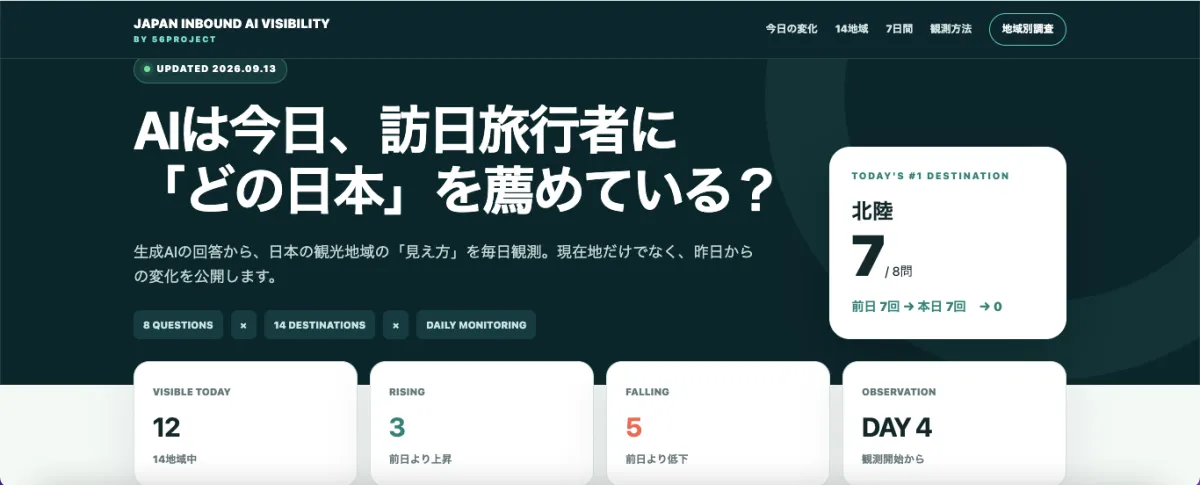
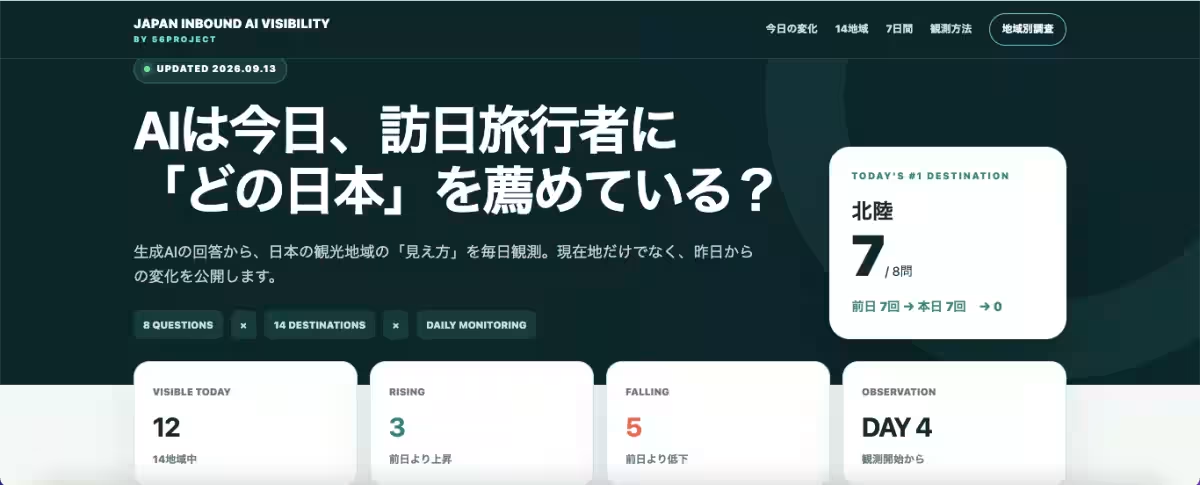
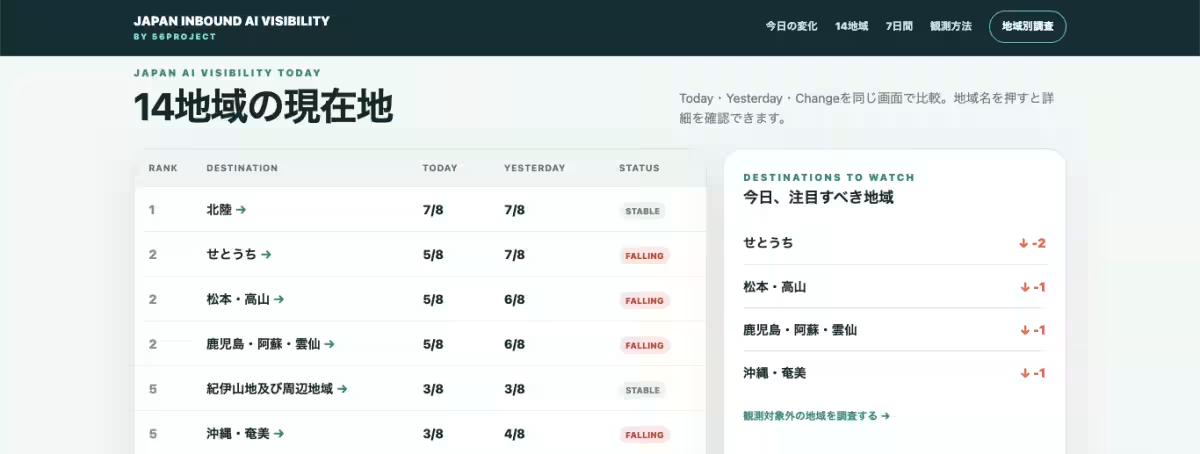
In its initial observation, the 56project team targeted fourteen model tourist locations designated by the Japan Tourism Agency. They prepared eight fixed questions concerning travelers' intent. For instance, they asked things like, "Where should I visit besides Tokyo and Kyoto?" or "What are some less-crowded places to experience traditional culture?" On September 13, 2026, it was revealed that the Hokuriku region emerged in seven out of eight responses, establishing its appeal among various travel intents. Meanwhile, Setouchi, Matsumoto-Takayama, and Kagoshima-Asou-UNZEN followed closely, each appearing in five responses. Notably, the observation confirmed that twelve out of the fourteen regions appeared at least once.
Observations and Findings
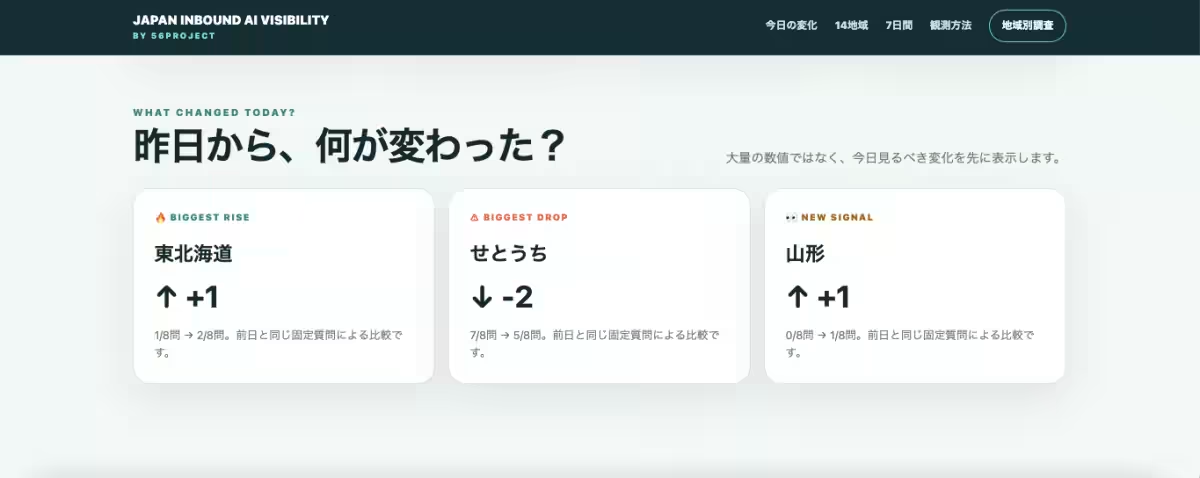
The results indicated intriguing dynamics. When looking at changes day-over-day, regions like Higashi Hokkaido saw a change of +1, while Setouchi noted a decrease of -2, and Yamagata made its debut in the recommendations. Importantly, the goal is to assess not just by daily outcomes, but also to track long-term trends in responses and the visibility of areas as perceived by AI. Each day's results will contribute to understanding how regions are represented and understood by generative AI from the perspective of inbound travelers.
The Evolution of AI Visibility
So, how did this journey begin? The inspiration for 56project arose from a video series that showcased local food experiences in Koto. Recognizing that the promotional value of firsthand experiences was evident, the team then ventured into testing AI's recognizability by examining if individual restaurants would emerge in AI-driven searches. This involved a pilot study dubbed GEO Scope Kameido, which leveraged generative AI services like ChatGPT Search and Google AI Mode to determine how well local businesses could be recommended to users.
From these early stages, the focus has expanded to include not just individual establishments but entire regions, noting how AI perceives and recommends these areas. By keeping the data collection consistent, 56project seeks to form a comprehensive narrative of regional visibility that transcends the transient nature of specific inquiries.
Why It Matters
In the age of AI, travelers increasingly turn to generative AI for destination recommendations, posing questions to discover unique locales beyond the famous tourist hotspots like Tokyo and Kyoto. Understanding how AI interprets various regions will play a crucial role in how lesser-known areas might be promoted to a broader audience. Failure to adapt and enhance the informational quality surrounding these destinations may render them virtually invisible to potential visitors in an AI-centric world.
Looking Ahead
Going forward, 56project intends to keep evolving their observatory. They plan to integrate additional generative AI models into their observations to provide a more comprehensive view of how various AIs respond over time to the same fixed questions. Monthly reports and custom dashboards will also be made available, keeping local stakeholders informed of their regions' status and AI visibility.
In summary, the conscientious efforts exhibited by 56project highlight the importance of AI's role in travel planning and destination visibility. As generative AI continues to evolve, understanding the recommendations it provides will be essential for ensuring that all regions of Japan can benefit from the tourism boom. By tracking trends and adjusting the information available to these AIs, it is possible to develop a system in which every corner of Japan can shine in the eyes of potential travelers.

Topics Travel)



【About Using Articles】
You can freely use the title and article content by linking to the page where the article is posted.
※ Images cannot be used.
【About Links】
Links are free to use.