



Exploring the New Frontiers in Lithium-Ion Electrode Technology and Solid Electrolytes
Advancements in Lithium-Ion Electrode Technology
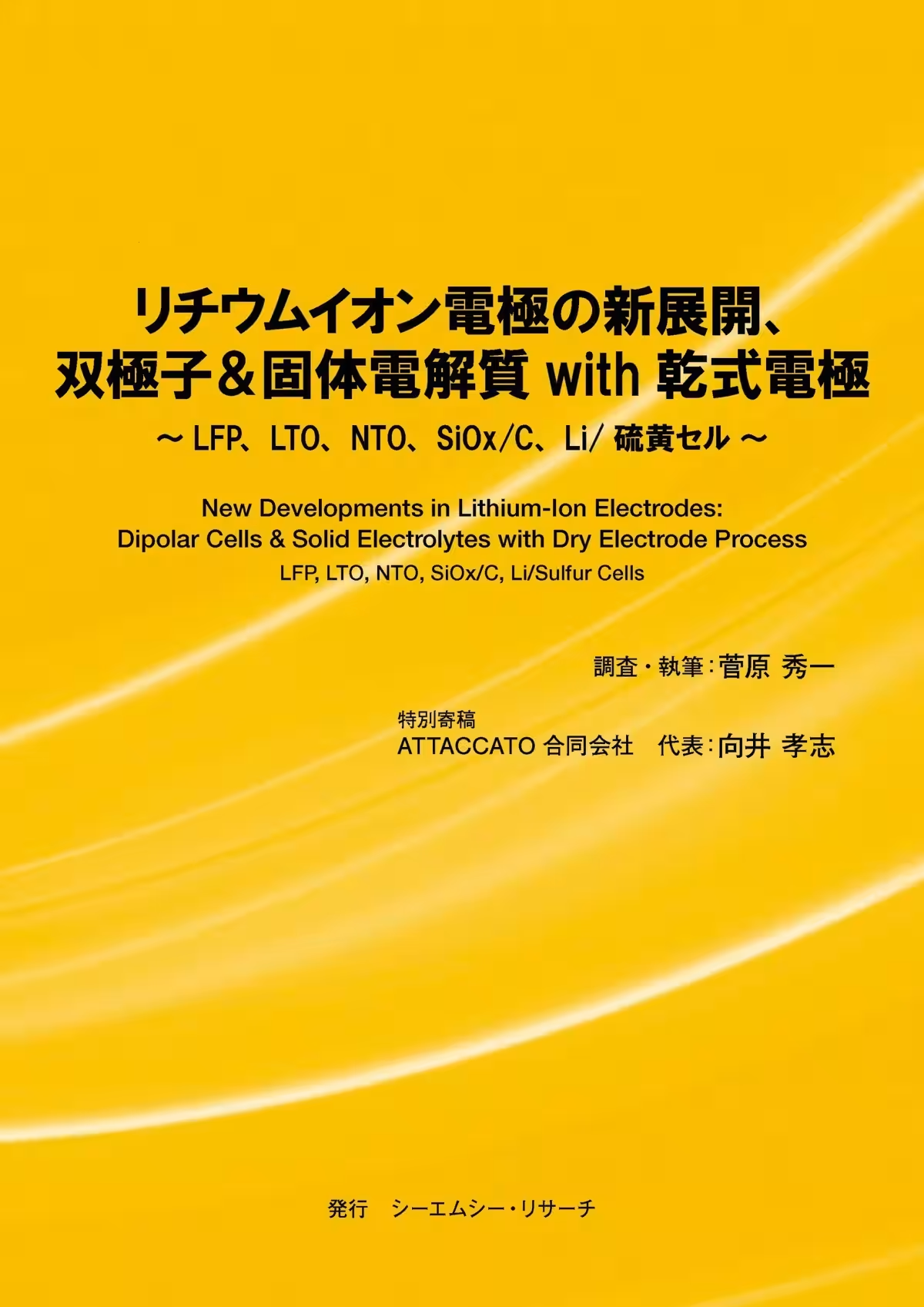
In recent years, the electric vehicle (EV) industry has experienced significant growth, leading to a surge in demand for high-performance batteries. Yet, amidst this booming market, crucial advancements in electrode technology have often gone unnoticed. The publication "New Developments in Lithium-Ion Electrodes: Dipolar Cells & Solid Electrolytes with Dry Electrode Process" by Hidekazu Sugawara aims to shed light on these pivotal changes focusing on Lithium Iron Phosphate (LFP), Niobium Titanium Oxide (NTO), SiOx/C, and Lithium-Sulfur batteries.
Context and Need for a New Approach
As observed in the previous years, high-performance battery manufacturing faced various hurdles, which can be attributed to both technological limitations and supply chain issues. The focus of this new publication is to address these gaps and explore the intricacies behind dry electrode processes and dipolar structures, which significantly enhance battery efficiency and performance.
The author’s intention is to present a comprehensive review of the various types of positive and negative electrode materials with updated insights that reflect the rapid changes within the lithium-ion battery landscape since the last publication in 2022. Notably, the evolution of materials such as LFP and NTO as a response to growing environmental concerns and performance demands are examined in depth.
Key Features of the Book
The book does not shy away from discussing the hurdles that have kept certain technologies out of the limelight. For instance, while LFP dominates as the chosen cathode material due to its stability and cost-effectiveness, questions arise regarding the future of high-capacity nickel-based materials. This comprehensive analysis also engages with the following topics:
- - The misleading implications of coal-powered EVs despite clean electricity promises.
- - The ongoing challenges of integrating SiOx/C materials in commercial batteries.
- - The prospect of transitioning to lithium-sulfur cells as the next major innovation.
Delving Into the Materials
The book is structured into two main sections: the first addressing existing positive and negative electrode materials and their practical applications, while the second section focuses on emerging production processes, including drying techniques that minimize the use of solvents.
In the first part, the fundamental characteristics of different electrode materials are explored, discussing both their advantages and limitations. The journey of LFP is particularly noteworthy, where it has positioned itself as the go-to solution in the current battery market. In contrast, high-capacity nickel-based cathodes and their prospects post-2025 are demystified, revealing the competitive landscape for advanced battery technologies.
The second section highlights innovative manufacturing approaches, emphasizing the advantages of dry electrode processes and the combination of dipolar cells with solid electrolytes. This aspect is crucial as it aligns with growing concerns about sustainability in battery production and the potential for enhanced battery life through novel engineering.
Recognizing the evolving demands for energy storage systems, Sugawara’s work presents a roadmap for future battery technology developments that extend beyond traditional methods. It invites researchers and engineers to rethink current paradigms and consider the balance between cost, performance, and sustainability in their designs.
Conclusion
As the industry pushes toward improved battery solutions, recognizing these new developments is critical. New Developments in Lithium-Ion Electrodes serves as a crucial resource for anyone involved in battery technology, from researchers to industry professionals. By addressing the transformation in electrode materials and production technologies, this publication acts as a beacon guiding the future of energy storage solutions for electric vehicles and beyond.
The book is set to hit the shelves on October 23, 2025, and is priced at JPY 132,000, or JPY 154,000 for a set that includes a CD. For further details, you can visit CM Research's portal.
Topics Consumer Technology)
【About Using Articles】
You can freely use the title and article content by linking to the page where the article is posted.
※ Images cannot be used.
【About Links】
Links are free to use.