



The Evolving Role of Engineers in the Age of AI: Insights from Manufacturing Industry
Introduction: The Future Landscape for Engineers
In a world increasingly driven by artificial intelligence, the manufacturing industry is undergoing a significant transformation. As numerous sectors optimize and automate their operations through AI, the role of engineers is becoming more critical than ever. A recent survey conducted by BREXA Technology sought to investigate how demands for talent in the manufacturing sector are shifting in light of these advancements.
Methodology of the Survey
From July 27 to July 28, 2026, BREXA Technology engaged with 1,002 respondents holding key positions in manufacturing technical departments—specifically, responsible managers and personnel involved in AI and digital transformation. The goal was to understand perceptions regarding necessary skills and characteristics of engineers as AI becomes ubiquitous in the workplace.
Key Findings: The Most Valued Capabilities
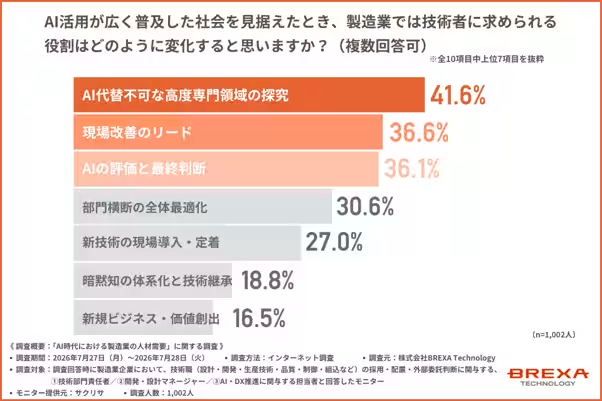
The survey revealed intriguing insights into the evolving expectations placed upon engineers. The predominant role anticipated for engineers was the 'exploration of specialized domains that are irreplaceable by AI,' with 41.6% of participants affirming this perspective. Moreover, 36.6% emphasized the importance of leading field improvements, and 36.1% recognized the critical need for engineers to evaluate AI outputs. These findings underscore the necessity for engineers to possess advanced expertise and the ability to make informed decisions about AI-generated information.
Critical Areas of Human Expertise
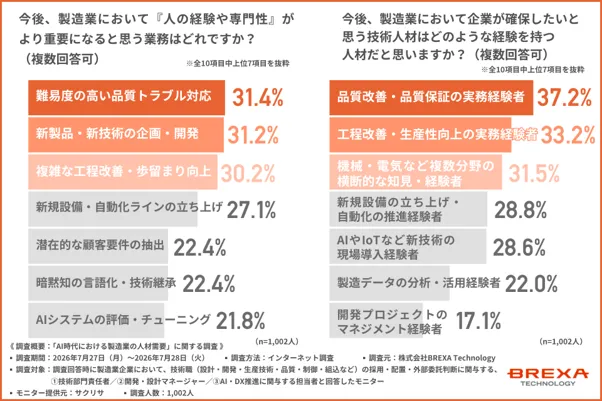
When delving into specific tasks where human expertise will be indispensable, 31.4% of respondents identified 'handling complex quality issues' as a priority, followed closely by 'planning and developing new products and technologies' at 31.2%, and 'improving complex processes and yield optimization' at 30.2%. The complexities involved in problem-solving and innovation in these domains indicate a persistent reliance on human insights that cannot be standardized or automated.
Desired Experience in Technical Talent
Regarding the experience companies seek in prospective engineers, 37.2% highlighted the need for candidates with experience in 'quality improvement and assurance,' followed by 33.2% citing 'process improvement and productivity enhancement,' and 31.5% emphasizing the necessity for candidates to possess a broad knowledge base across fields such as mechanical and electrical engineering. This demand stems from the increasing complexity of products and production lines, requiring multidisciplinary knowledge rather than singular expertise.
Market Value of Engineering Roles
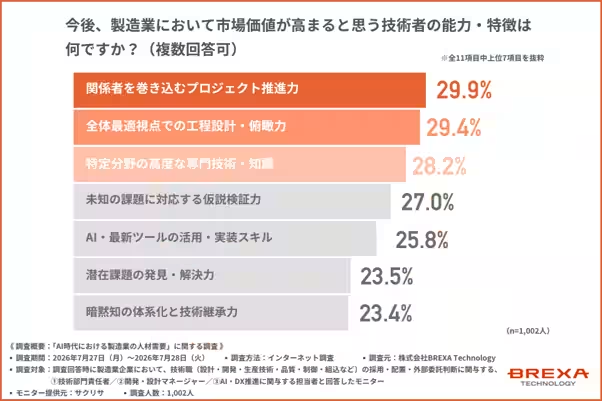
When asked about the engineers' qualities expected to command high market value in the future, 29.9% indicated that 'the ability to lead projects involving relevant stakeholders' would be paramount. This was followed by the importance of 'designing processes with a holistic view' at 29.4% and 'advanced technical skills in specific domains' at 28.2%. These attributes suggest that the future landscape of engineering will favor not only technical prowess but also soft skills necessary for collaboration and project management.
Addressing the Talent Shortage
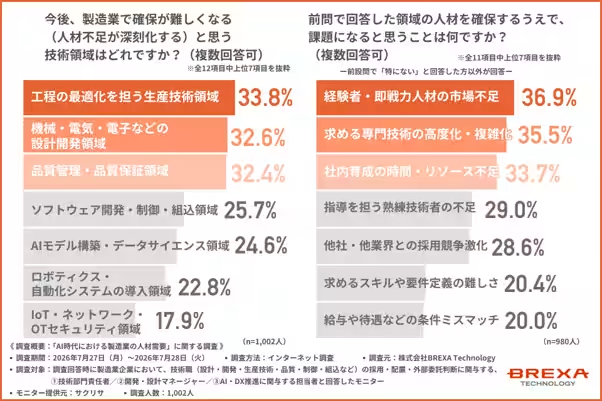
The survey also gauged concerns regarding talent shortages in key technical areas. For example, 33.8% of participants noted that the 'production technology area responsible for process optimization' would face the most challenges in securing personnel. This aligns with findings emphasizing that the core areas of manufacturing—production technology, design, and quality management—require extensive hands-on experience and accumulated know-how, which makes nurturing talent a time-intensive endeavor.
Additionally, 36.9% attributed anticipated difficulty in securing qualified personnel to the 'lack of available experienced workers,' emphasizing a growing need for industry-specific talent. This shortage highlights the dual challenge of finding experienced capabilities alongside the requisite time and resources for internal talent development.
External Engagement: A Viable Solution
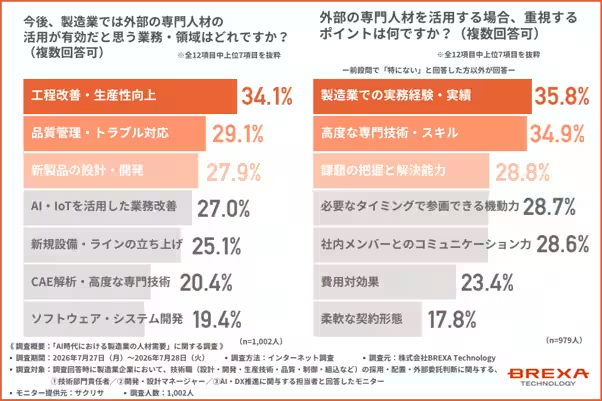
As companies grapple with hiring challenges, the role of external specialized talent, such as freelancers and external partners, is gaining traction. A significant 34.1% of participants indicated the effectiveness of engaging external specialists for 'process improvement and productivity enhancement.' As organizations seek to fortify their critical operations in light of labor shortages, leveraging the expertise of external resources appears to be a pragmatic strategy.
When accepting external personnel, 35.8% of respondents stated that consideration of 'practical experience in the manufacturing sector' would be the foremost evaluation criterion, underscoring the importance of actionable expertise and alignment with specific corporate challenges.
Long-term Strategies for Talent Acquisition
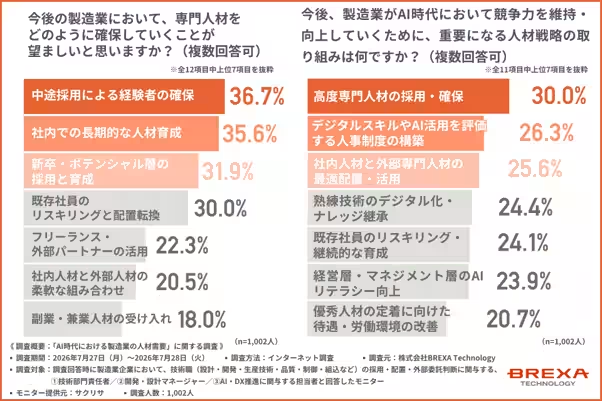
For sustainable talent acquisition strategies, 36.7% of participants suggested that companies should focus on 'hiring experienced professionals through mid-career recruitment,' acknowledging the urgency of onboarding individuals with proven backgrounds. There was a comparable emphasis on cultivating internal talent and hiring new graduates to ensure long-term completeness in the workplace skillset.
Competitive Strategies in AI Era
In summary, as the manufacturing sector evolves, maintaining a competitive edge will hinge upon adopting effective human resource strategies that recognize the rising importance of highly skilled workers, particularly in AI and other cutting-edge technologies. Companies must construct personnel frameworks that appropriately assess digital capabilities and pragmatically allocate both internal and external resources.
Building a workforce that is agile, specialized, and well-integrated is critical in navigating the complexities of the AI-driven manufacturing landscape to foster future growth and innovation. With the insights gathered from this survey, BREXA Technology is positioning itself to offer comprehensive solutions through its service, Enbest, which focuses on providing immediate access to capable engineers who can aid in alleviating staffing challenges while ensuring operational efficiency.
For more information about BREXA’s talent solutions, visit Enbest and explore the survey report available for download here.
Topics Business Technology)
【About Using Articles】
You can freely use the title and article content by linking to the page where the article is posted.
※ Images cannot be used.
【About Links】
Links are free to use.