



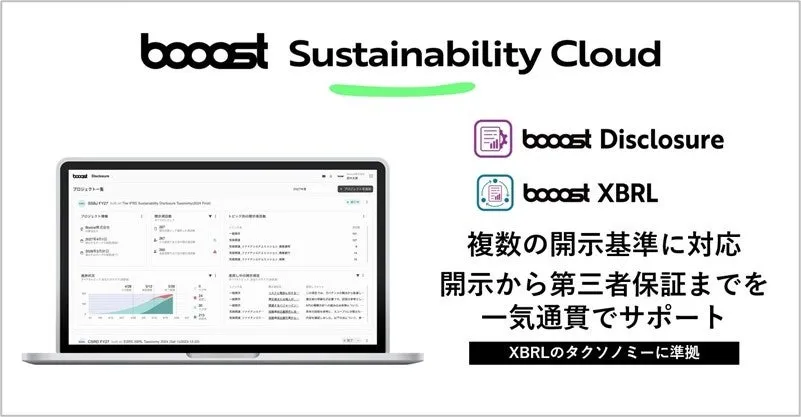
Booost Launches New Multi-Reporting Features for Sustainability Compliance in Japan
Booost Launches Comprehensive Reporting Features for Sustainability
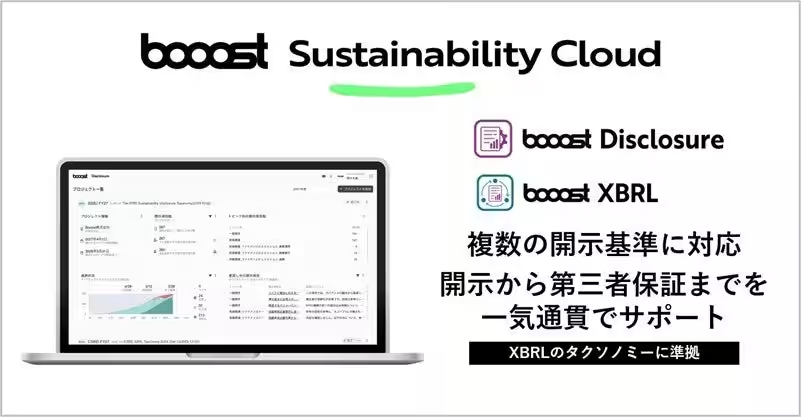
Booost Inc., headquartered in Shinagawa, Tokyo, has officially introduced new features, 'booost Disclosure' and 'booost XBRL', aimed at facilitating compliance with multiple reporting standards in sustainability. Beginning September 30, 2025, these features will provide an integrated approach to generate and disclose sustainability-related data in Japan. This significant step follows the recent announcement of a beta release on March 10, 2025, detailing functionalities compliant with Japanese sustainability reporting frameworks.
Background
In recent years, global attention towards sustainability has intensified, leading to the escalation of its significance in corporate strategy and investment decisions. In Japan, the Sustainability Standards Bureau (SSBJ) has issued standards aligned with international guidance, establishing mandatory disclosures for sustainability information within securities reports. Concurrently, directives in Europe, such as the Corporate Sustainability Reporting Directive (CSRD), necessitate compliance with the European Sustainability Reporting Standards (ESRS), placing an urgent requirement on Japanese firms with global interests to align with multiple standards effectively.
Additionally, reports must be submitted in XBRL format, signifying the critical need for organizations to develop robust data management systems that can handle these standards simultaneously. Historically, numerous systems have existed for collecting and aggregating non-financial data, but none have adequately addressed the requirements for XBRL-based disclosures in compliance with EDINET taxonomy and SSBJ standards.
Understanding XBRL
XBRL (eXtensible Business Reporting Language) serves as a standardized XML-based computer language designed to facilitate the preparation, dissemination, and utilization of various business reports ranging from financial to operational data. It is particularly adept at describing financial and disclosure information, enhancing the accessibility and interactivity of business reporting processes. As a de facto standard, XBRL is widely recognized and lauded globally, emphasizing its importance in modern financial reporting. Booost is proud to hold a director position within XBRL Japan, advocating for application in non-financial domains.
Features of 'booost Disclosure' and 'booost XBRL'
Integrated Data Collection and Reporting
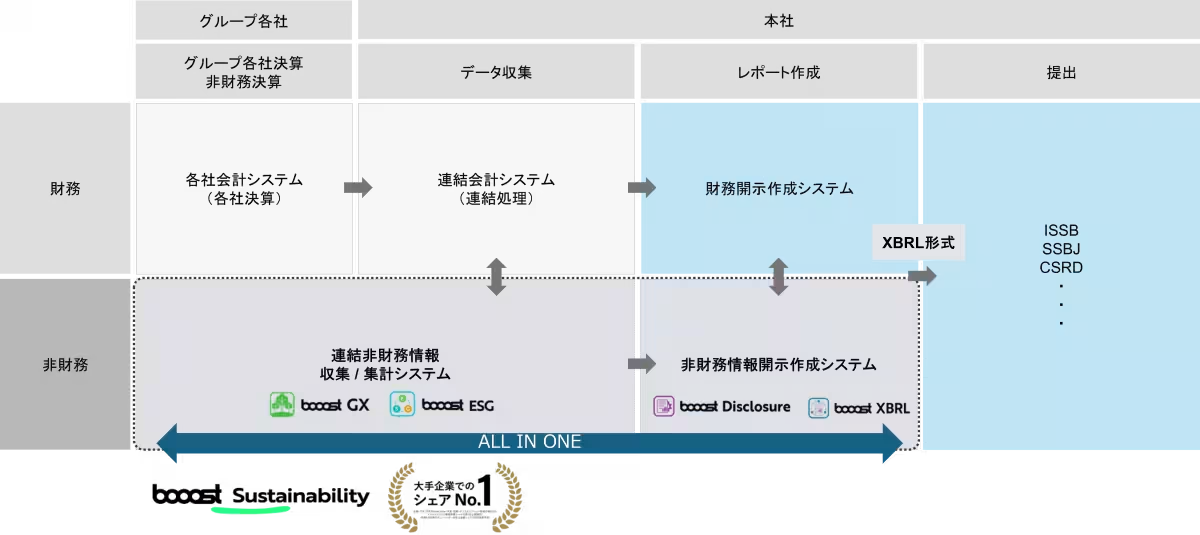
'booost Disclosure' provides a comprehensive platform encompassing multiple frameworks, including ISSB, SSBJ, and CSRD/ESRS. This platform assists in managing disclosure items, project progress tracking, audit trails, and review processes, offering a unified approach to handling sustainability disclosures. Seamless integration with the existing 'booost Sustainability' platform allows for a thorough handling of non-financial data collection and reporting on a global scale.
On the other hand, 'booost XBRL' adheres to the XBRL taxonomies of ISSB, SSBJ, and ESRS, supporting users in streamlining the disclosure process from organizing taxonomy items to automatic tagging and generating XBRL files for submission. This eradicates the traditional cumbersome process of tagging after document creation, significantly reducing the burden associated with compliance work.
Key Features Include:
- - Framework Compliance: Adheres to major frameworks, ensuring accurate reporting structures and item visibility.
- - Automated Tagging: Simplifies processes allowing users, regardless of expertise, to efficiently tag disclosure data with XBRL.
- - Efficient Workflow Management: Employs user settings for inputters and approvers, alongside audit trails to ensure process transparency.
- - Export Capabilities: Allows for accurate and efficient submissions in XBRL format, reducing redundancy in compliance efforts.
Future Outlook
Booost is committed to enhancing corporate value through sustainable information integration while driving overall operational efficiency. Plans are underway to further accelerate infrastructure development supporting



Topics Other)









【About Using Articles】
You can freely use the title and article content by linking to the page where the article is posted.
※ Images cannot be used.
【About Links】
Links are free to use.