




New Insights into the Mechanism of Stomach Cancer Induced by Helicobacter Pylori's DNA Restriction Enzymes
New Insights into Helicobacter Pylori's Role in Stomach Cancer
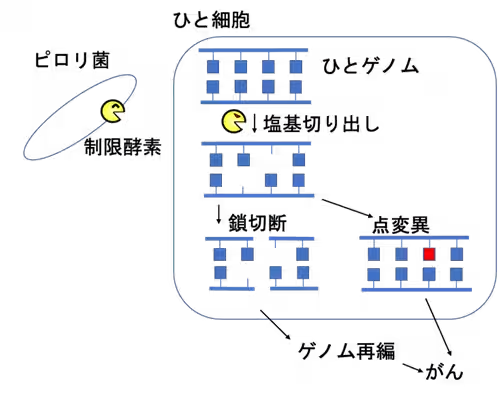
Recent collaborative research led by Professor Takako Osaki from Kyorin University's Department of Preventive Medicine, in conjunction with the international Helicobacter pylori Genome Project (HpGP), has shed light on how the bacterium Helicobacter pylori can contribute to the development of stomach cancer. This study brings forward critical evidence explaining the mechanism by which this common bacterium causes changes in human DNA, leading to cancer.
Helicobacter pylori, known for its ability to inhabit the stomach lining, has long been recognized as a significant risk factor for gastric cancer. However, the details of how it influences human genome interactions remained largely unexplored until now. Through rigorous analysis, the researchers uncovered that a specific restriction enzyme produced by H. pylori acts similarly to
Topics Health)
【About Using Articles】
You can freely use the title and article content by linking to the page where the article is posted.
※ Images cannot be used.
【About Links】
Links are free to use.