



Innovative Water Supply System for Disaster Resilience and Daily Use by Waterpoint Co.
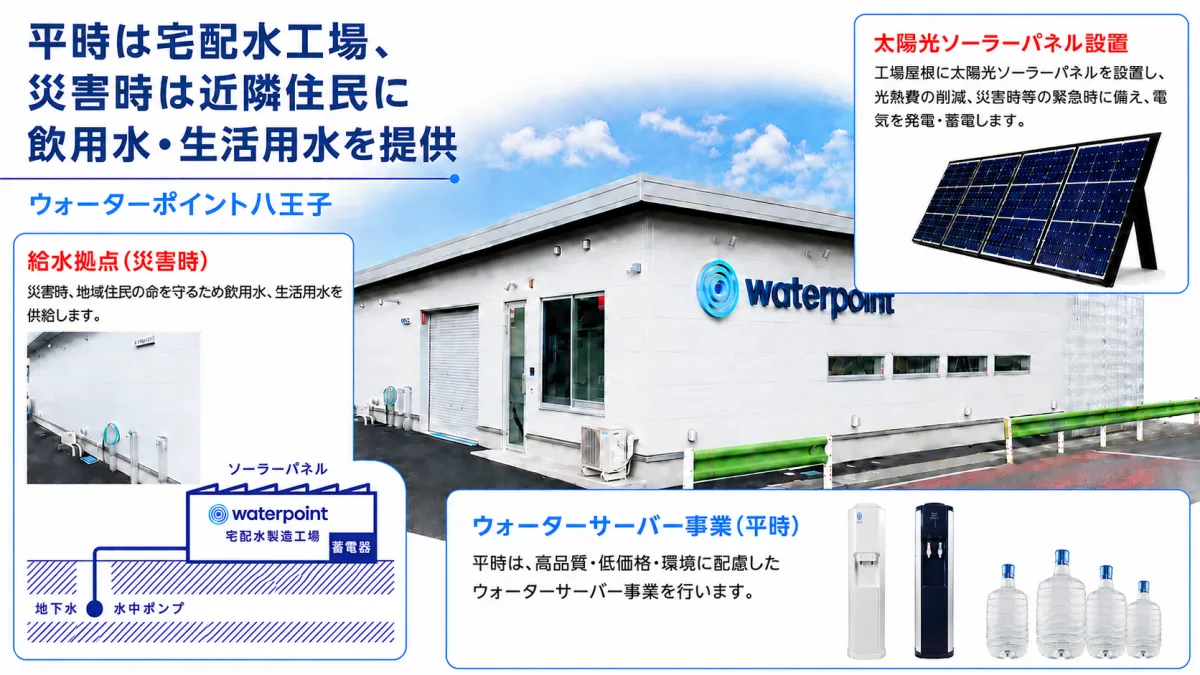
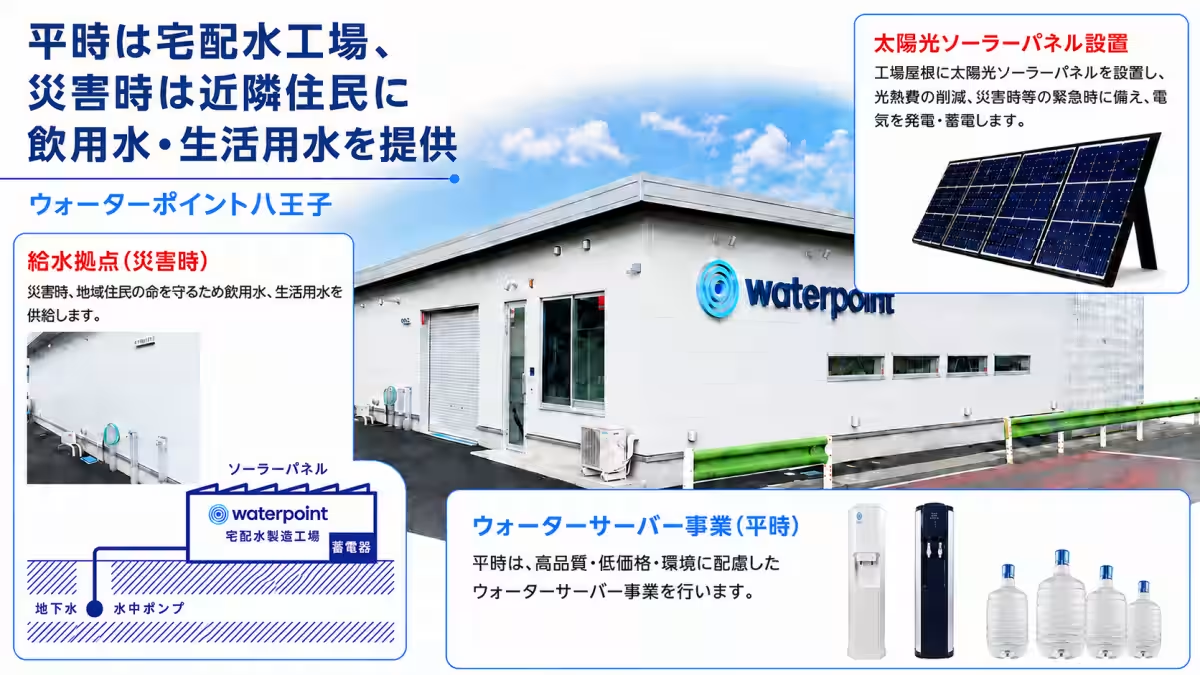
Waterpoint Co., based in Hiroshima, Japan, has made significant strides in water sustainability with the recent acquisition of a patent for its innovative water purification system. Announced on September 1, 2026, coinciding with Disaster Prevention Day, this system is set to be implemented at the company’s disaster-resistant water delivery factory in Hachioji, Tokyo. The patented technology allows the same purification equipment to be utilized for both everyday delivery of high-quality water and as a reliable source of drinking and potable water during emergencies.
At the heart of this system is its ability to seamlessly switch operations based on circumstances. During normal conditions, Waterpoint employs a two-stage reverse osmosis (RO) process that prioritizes the highest quality delivery water, known as "Waterpoint Mineral Pure Water." This water has been rigorously tested and shown to meet safety standards regarding 45 different contaminants, including PFAS. In contrast, when a disaster strikes, the system can adapt by utilizing alternative water sources, such as wells, combined with renewable energy sources like solar power to continue providing essential water supplies. Operating the RO system in a single stage during emergencies simplifies the filtration process, allowing for continued operation even under limited power supply.
The main goal of Waterpoint's innovation is clear: maintain a continuous supply of hygienic drinking water and essential water for everyday activities, even in crisis situations. This flexible water hub is viewed by the company not just as a technological advancement but as a crucial infrastructure model that enhances community resilience. It represents a phase-free water service that operates not only for profit in daily use but is also prepared to shift to emergency water supply when necessary.
The patent highlights a dual approach—even during natural disasters, the focus is not only on delivering water that meets everyday standards but on ensuring that communities have access to significant quantities of safe water, regardless of the environmental conditions. By employing a one-stage RO operation during emergencies, Waterpoint can keep power consumption low while still fulfilling the vital need for drinking and utility water.
During the day-to-day operations, Waterpoint minimizes logistics costs by focusing its delivery services within a confined geographical area surrounding its Hachioji factory. This strategy allows them to provide affordable rates for high-quality bottled water while stabilizing income to maintain equipment and manage quality control effectively. By fostering a reliable profit structure in normal business operations, Waterpoint ensures that they can maintain high standards and operational readiness for emergencies.
In direct response to disasters, Waterpoint is capable of supplying up to 20 tons of total water per day—enough to support approximately 2,000 people. Their stock includes around 1,000 eight-liter bottles of water readily available for immediate deployment following an emergency. This proactive approach underlines Waterpoint's commitment to community welfare, with the goal of fostering not just immediate solutions but a sustainable model for distributed water infrastructure.
The company believes that the success of such an initiative lies in its ability to balance profitability, maintenance, and effective community supply. Regular operational checks and ongoing local delivery systems significantly enhance their preparedness for any crisis, making the system reliable and efficient year-round.
In summation, Waterpoint Co. embodies the future of sustainable water provision by blending innovative technological solutions with everyday business practices. This dual-functionality and seamless transition between normal and emergency conditions sets a precedent for water supply practices across Japan and beyond. Their vision is to integrate local water resources and renewable energy into a network of small-scale, decentralized water centers that not only produce water during regular times but also pivot to emergency supply points when necessary.
As Waterpoint President Katsushi Kobayakawa states, "The true measure of success isn’t just about being ready to supply water in an emergency but ensuring the infrastructure is actively used and maintained during regular times. Our approach ensures that we build resilience through everyday operations, making our capabilities dependably available during crises." With this groundbreaking model, Waterpoint Co. stands ready to set new standards in water infrastructure resilience that could inspire similar initiatives globally.
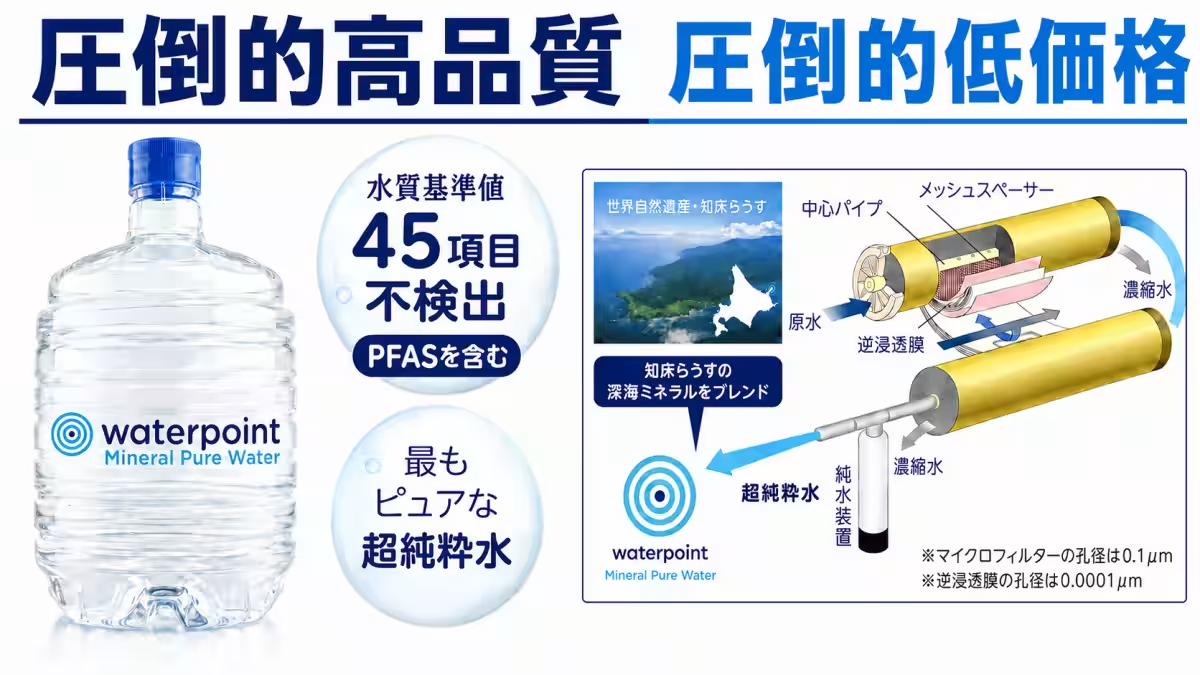
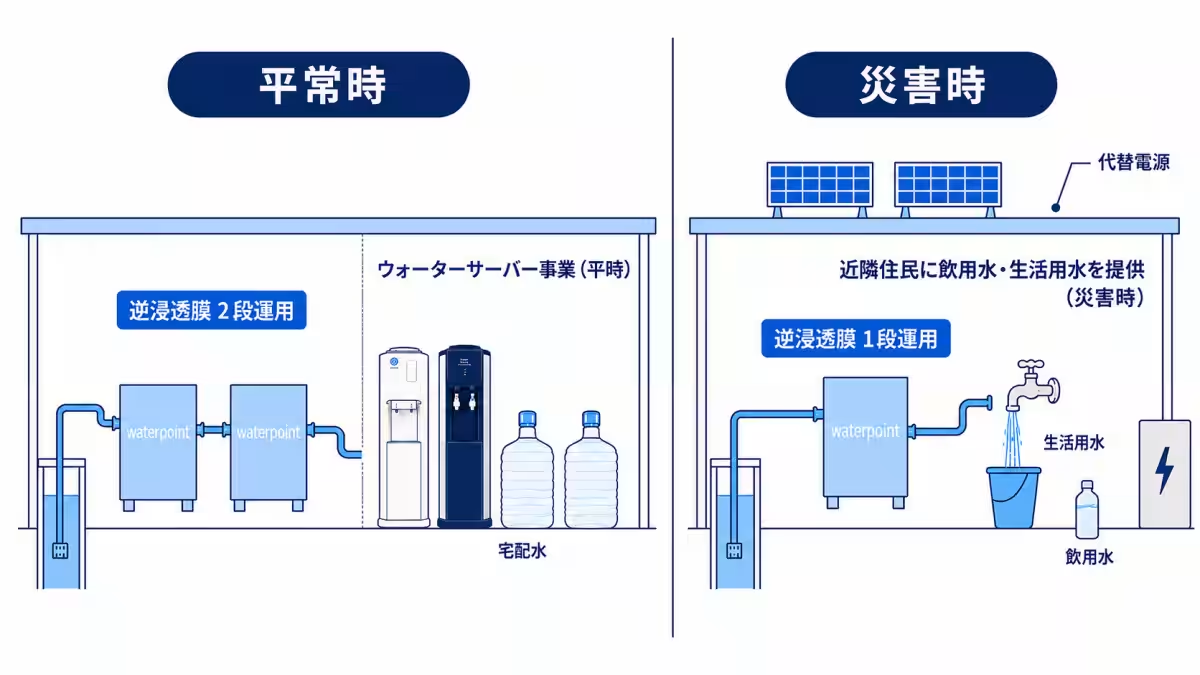
At the heart of this system is its ability to seamlessly switch operations based on circumstances. During normal conditions, Waterpoint employs a two-stage reverse osmosis (RO) process that prioritizes the highest quality delivery water, known as "Waterpoint Mineral Pure Water." This water has been rigorously tested and shown to meet safety standards regarding 45 different contaminants, including PFAS. In contrast, when a disaster strikes, the system can adapt by utilizing alternative water sources, such as wells, combined with renewable energy sources like solar power to continue providing essential water supplies. Operating the RO system in a single stage during emergencies simplifies the filtration process, allowing for continued operation even under limited power supply.
The main goal of Waterpoint's innovation is clear: maintain a continuous supply of hygienic drinking water and essential water for everyday activities, even in crisis situations. This flexible water hub is viewed by the company not just as a technological advancement but as a crucial infrastructure model that enhances community resilience. It represents a phase-free water service that operates not only for profit in daily use but is also prepared to shift to emergency water supply when necessary.
The patent highlights a dual approach—even during natural disasters, the focus is not only on delivering water that meets everyday standards but on ensuring that communities have access to significant quantities of safe water, regardless of the environmental conditions. By employing a one-stage RO operation during emergencies, Waterpoint can keep power consumption low while still fulfilling the vital need for drinking and utility water.
During the day-to-day operations, Waterpoint minimizes logistics costs by focusing its delivery services within a confined geographical area surrounding its Hachioji factory. This strategy allows them to provide affordable rates for high-quality bottled water while stabilizing income to maintain equipment and manage quality control effectively. By fostering a reliable profit structure in normal business operations, Waterpoint ensures that they can maintain high standards and operational readiness for emergencies.
In direct response to disasters, Waterpoint is capable of supplying up to 20 tons of total water per day—enough to support approximately 2,000 people. Their stock includes around 1,000 eight-liter bottles of water readily available for immediate deployment following an emergency. This proactive approach underlines Waterpoint's commitment to community welfare, with the goal of fostering not just immediate solutions but a sustainable model for distributed water infrastructure.
The company believes that the success of such an initiative lies in its ability to balance profitability, maintenance, and effective community supply. Regular operational checks and ongoing local delivery systems significantly enhance their preparedness for any crisis, making the system reliable and efficient year-round.
In summation, Waterpoint Co. embodies the future of sustainable water provision by blending innovative technological solutions with everyday business practices. This dual-functionality and seamless transition between normal and emergency conditions sets a precedent for water supply practices across Japan and beyond. Their vision is to integrate local water resources and renewable energy into a network of small-scale, decentralized water centers that not only produce water during regular times but also pivot to emergency supply points when necessary.
As Waterpoint President Katsushi Kobayakawa states, "The true measure of success isn’t just about being ready to supply water in an emergency but ensuring the infrastructure is actively used and maintained during regular times. Our approach ensures that we build resilience through everyday operations, making our capabilities dependably available during crises." With this groundbreaking model, Waterpoint Co. stands ready to set new standards in water infrastructure resilience that could inspire similar initiatives globally.
Topics Consumer Products & Retail)







【About Using Articles】
You can freely use the title and article content by linking to the page where the article is posted.
※ Images cannot be used.
【About Links】
Links are free to use.