




Industry-Specific Analysis Report on Physical AI Released by Lister for 2026
Lister Unveils 2026 Industry-Specific Analysis Report on Physical AI
In a significant development for various sectors, Corporation Lister, based in Tokyo, has published its extensive analysis titled "Industry-Specific Physical AI Structural Analysis Report 2026." This report leverages Lister's comprehensive database, examining 734 Physical AI-related companies across 15 different sectors, including manufacturing, logistics, construction, healthcare, agriculture, and mobility.
Key Findings from the Report
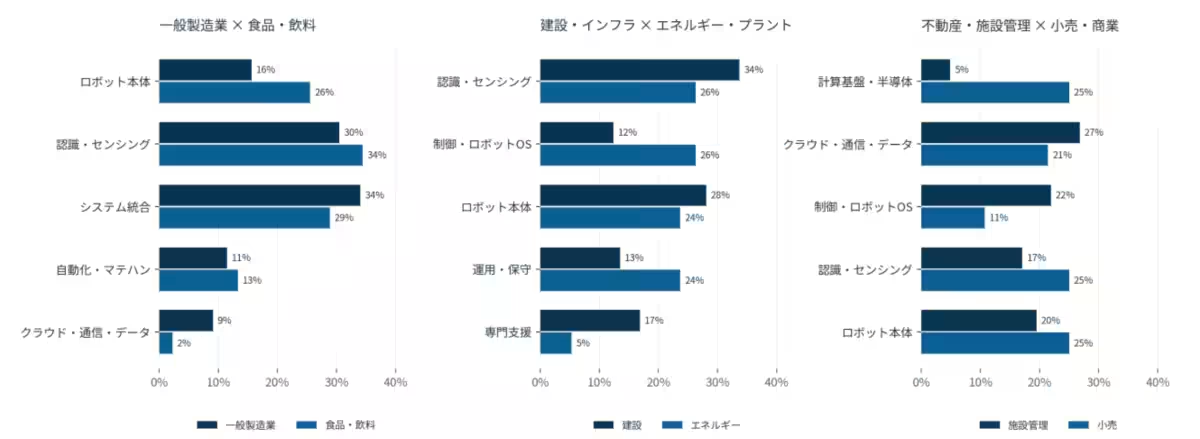
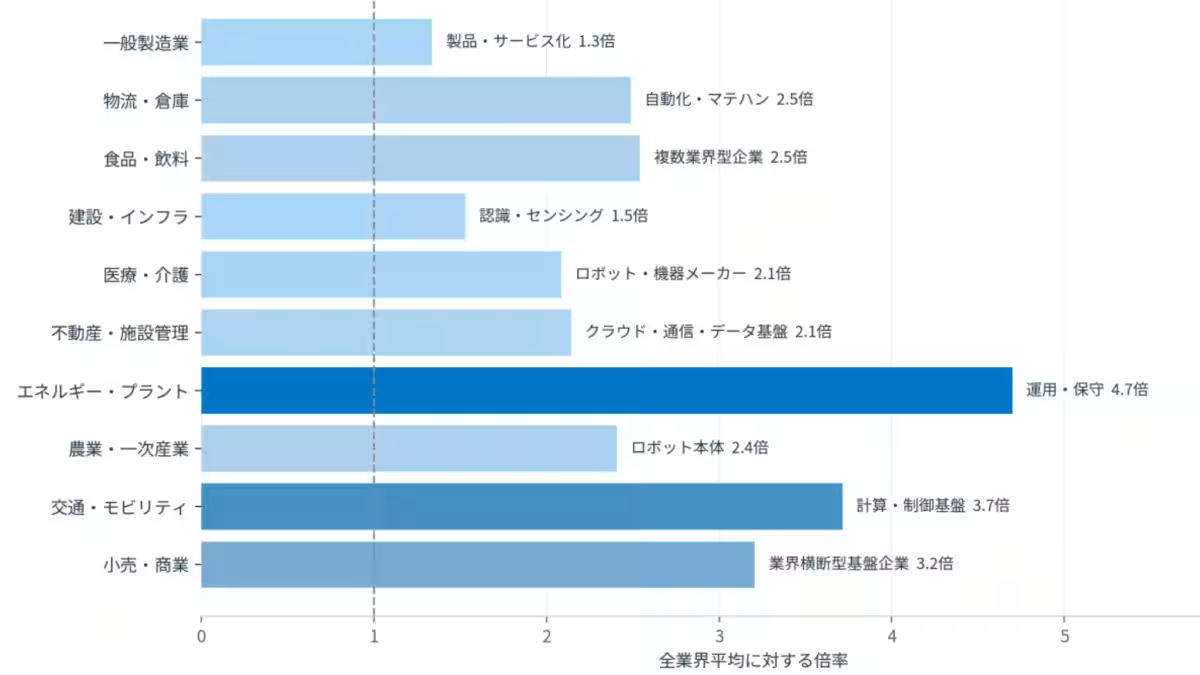
The report meticulously breaks down the supply chains, technology structures, and company types within these industries, culminating in 1,105 industry-company relationships. It reveals a startling diversity in the focus of Physical AI applications across sectors. For instance, while agriculture emphasizes the development of robot hardware, construction relies heavily on recognition and sensing technologies, and the transport and mobility sectors center around computation and control systems.
Interestingly, even within industries categorized differently, similar operational challenges lead to closely related functional configurations among supply companies. This makes the distinction between industry names less relevant when considering the actual challenges and implementations faced on the ground.
The Changing Landscape of Physical AI
As generative AI continues to evolve, its applications are expanding from digital environments to physical realms, where robots and machines recognize, make decisions, and perform actions in the real world. However, recognizing the Physical AI market as a monolithic entity can obscure genuine business opportunities and entry structures. Each setting—whether it's factories, warehouses, construction sites, hospitals, farms, or stores—has its own unique requirements influenced by the objects, operational environments, safety standards, existing equipment, and framework for operation.
Through its rigorous work, Lister has crafted a database featuring over 1,000 Physical AI companies to support its analysis. This database forms the foundation upon which the report diverges into distinct sectors, showcasing how physical AI's supply structures vary significantly across industries.
Breakdown of Industry Structures
The report identified five critical structures across different industries:
1. Work Structure Over Industry Classification: When comparing corporate composition within sectors, three predominant clusters were identified:
a) General manufacturing, food and beverage, agriculture
b) Logistics, warehousing, property and facility management, retail
c) Construction, infrastructure, energy, and plants.
This demonstrates that the sharing of challenges leads to commonality in supplier configurations, despite differing industry classifications.
2. Variable Value Layers within Physical AI: Even when the same Physical AI technology is at play, the layers adding value can significantly differ by industry, emphasizing the need to understand these nuances when considering market entry or investment strategies.
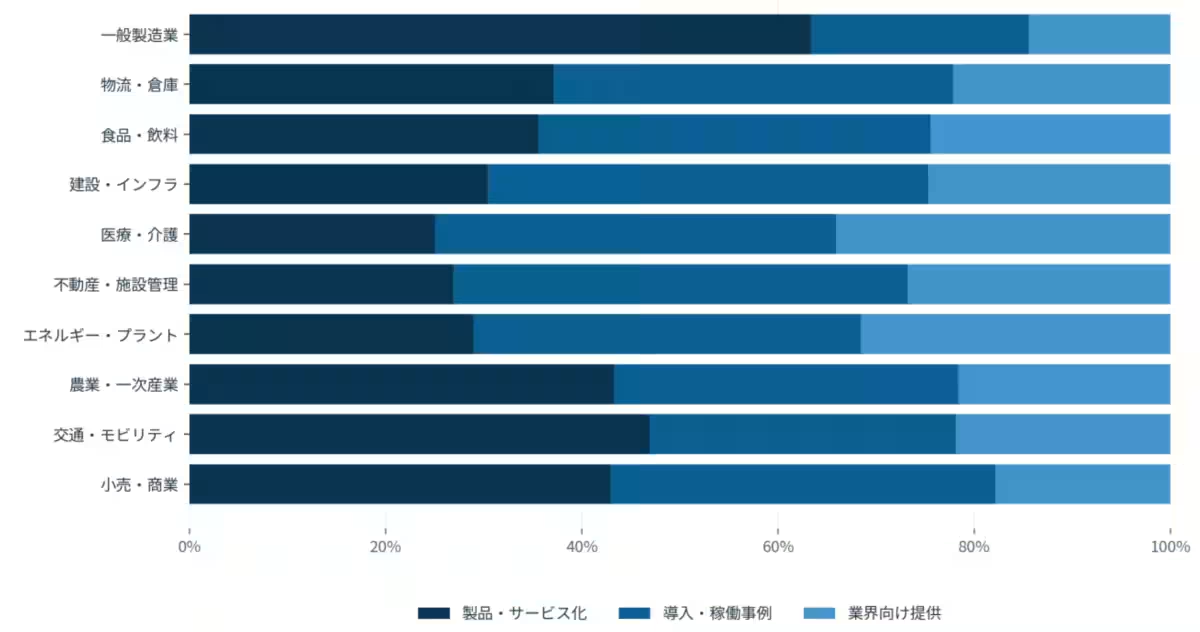
3. Visibility of Corporate Relationships: In general manufacturing, information about products and services predominates, while property management and construction are more heavily linked to existing use cases and implementation examples.
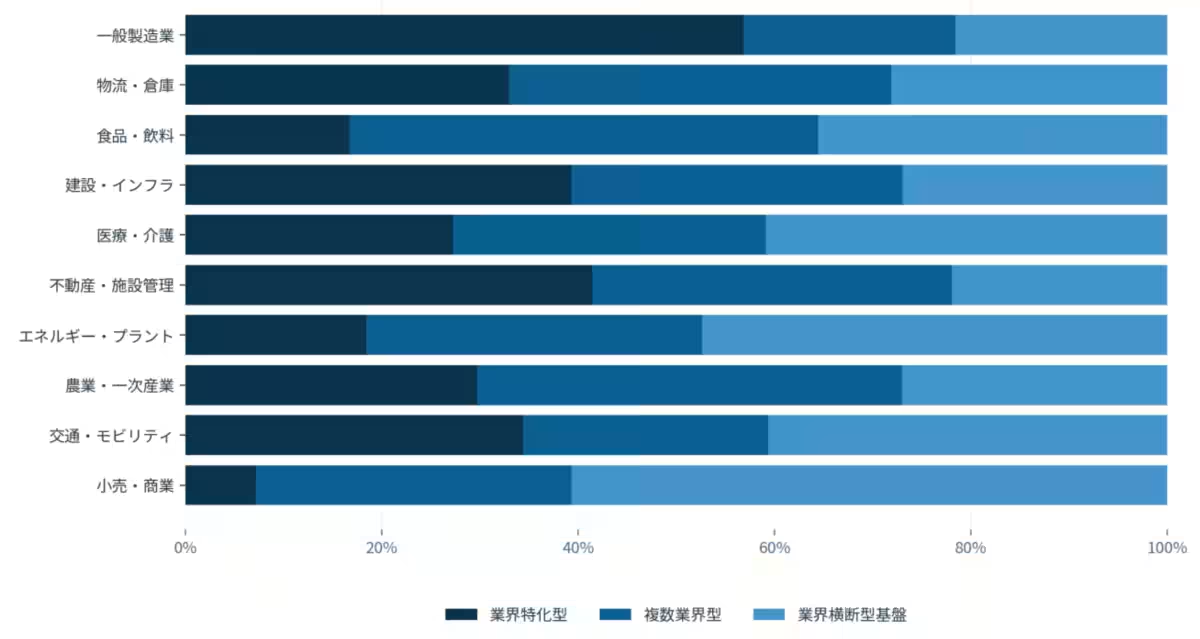
4. Industry-Specific Foundations: Companies in general manufacturing are primarily industry-specific, whereas retail sees a higher proportion of cross-industry foundational enterprises. This illustrates how industries adapt shared technologies to their unique operational needs.
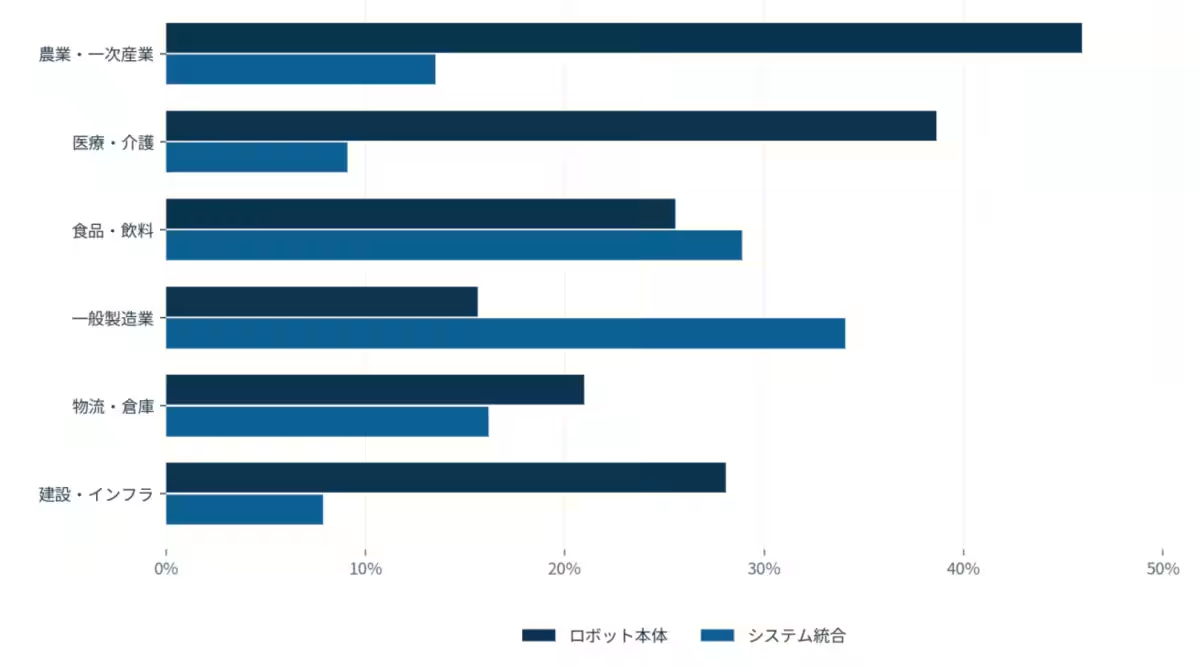
5. Distinction in Market Responsibilities: Analyzing the ratio of companies producing robot hardware versus those responsible for integrating these systems highlights that manufacturing robots and ensuring their integration into operational frameworks are not synonymous. Understanding who ultimately bears responsibility in real-world deployments is essential for grasping the operational dynamics of the Physical AI market.
Conclusion and Future Implications
The analysis provides vital insights that could inform new business strategies, cooperation opportunities, and market entry plans across sectors. Stakeholders are encouraged to consider not just who is creating the technology but also who will take responsibility for its deployment in actual environments. This report serves as a valuable resource for entities seeking to navigate the evolving landscape of Physical AI, make informed decisions about partnerships, and develop targeted strategies for investment or market entry.
For a deeper dive into these findings, you can access the full report via the dedicated Lister webpage, where it is available for free as a PDF download.
Access the Full Report
Explore the detailed analysis and graphs at Lister's dedicated site: Industry-Specific Physical AI Structural Analysis Report 2026.
About Lister
Established in Tokyo, Corporation Lister specializes in developing a market information research and data provision platform focusing on the manufacturing sector. Lister supports its initiatives with a rich database and valuable insights, guiding collaborations and shaping strategies in a rapidly advancing technological landscape.






Topics Consumer Technology)








【About Using Articles】
You can freely use the title and article content by linking to the page where the article is posted.
※ Images cannot be used.
【About Links】
Links are free to use.