



The Essential Guide to Thermal Design and Management Techniques for Electronics
Unveiling the Importance of Thermal Design
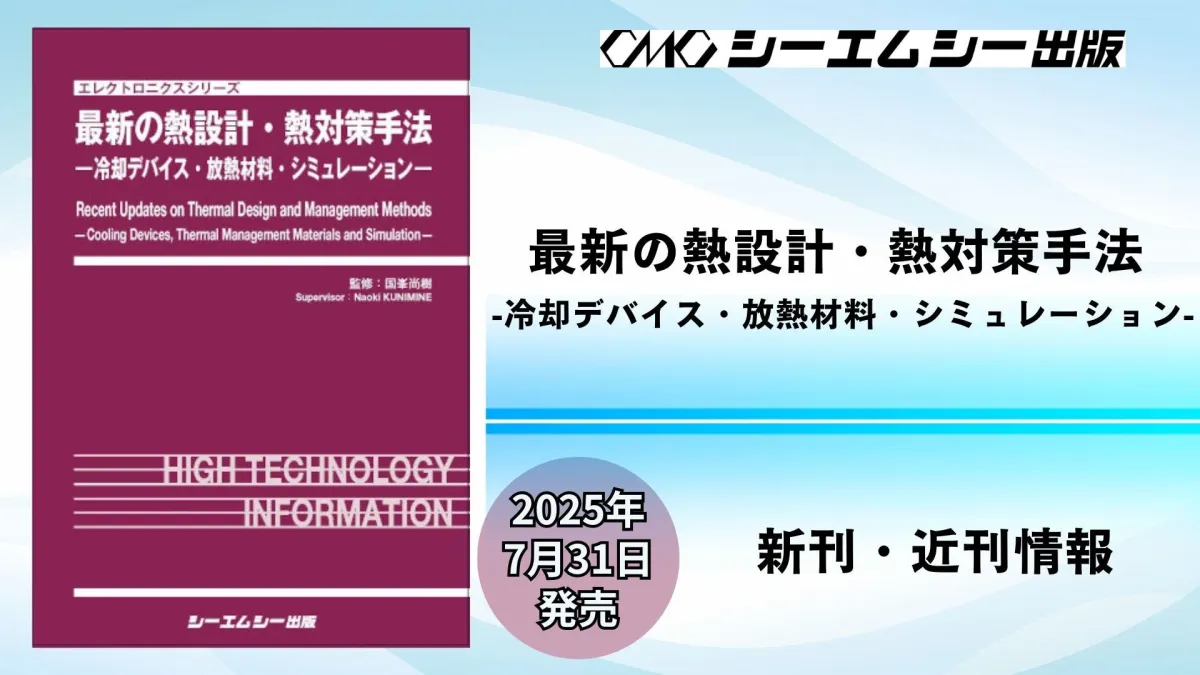
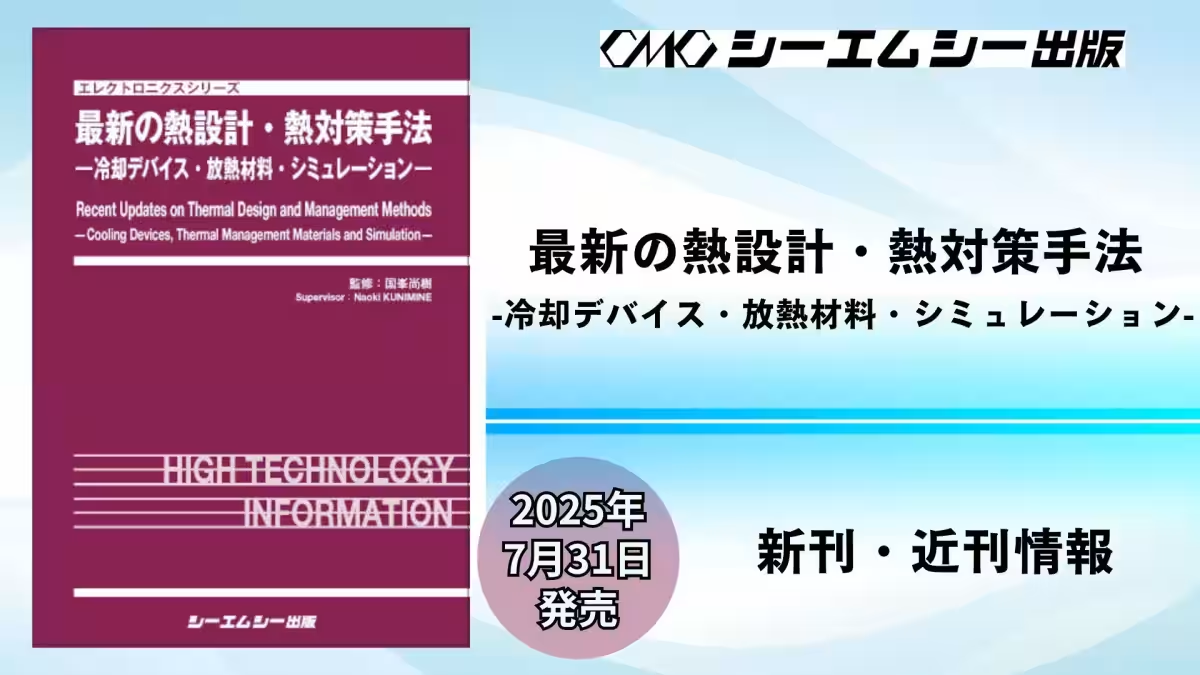
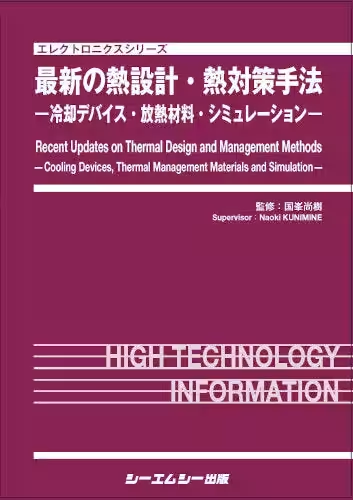
The book titled "Latest Thermal Design and Management Techniques - Cooling Devices, Heat Dissipation Materials, and Simulations" is set to be released on July 31, 2025 and is generating buzz in the electronics field. Thermal issues have been prevalent since the inception of vacuum tube computers, and efficient thermal design has always been critical in enhancing product reliability. Ignoring thermal design can lead to heightened temperatures, frequently resulting in component failure.
The significance of thermal design has evolved tremendously over recent decades. With Moore's Law driving the density of semiconductors higher, their performance has drastically improved. However, integrating these advanced chips into compact housings like smartphones restricts performance due to thermal limitations, preventing them from operating at full capacity. Manufacturers that achieve superior cooling solutions can leverage the full power of their chips compared to competitors using the same technology.
In the rapidly advancing realm of electric vehicle (EV) electronics, the phrase "Master the heat, master the EV" has become a mantra in the industry, highlighting the critical nature of thermal management. Allocating energy for cooling batteries can directly impact driving range, making minimal energy use for temperature regulation a necessity.
The explosive adoption of AI technologies in computing is prompting scrutiny about energy consumption in data centers and servers. The Japanese Ministry of Economy, Trade, and Industry (METI) aims to reduce the Power Usage Effectiveness (PUE) of such installations to below 1.4, emphasizing the reduction of power used for cooling as a major goal. Thus, thermal management is not just a concern for device reliability, but has escalated to a societal issue.
Conversely, advancements in heat dissipation and cooling technologies have lagged behind the progress made in semiconductors and automotive technologies. Many devices still rely primarily on fans and heat sinks for cooling, despite the growing power consumption and miniaturization of electronic components. The heat transfer mechanics as a physical phenomenon remains universally applicable, making radical approaches unlikely. If innovative methods arise but are costly, they may struggle to gain wide adoption.
While the cooling technology may not have made groundbreaking leaps, the foundational developments are steadily progressing. Innovations in high thermal conductivity materials such as TIMs and heat spreaders, phase-change devices like heat pipes and vapor chambers, and high-performance compact cooling fans and heat sinks are continuously evolving alongside new thermal design techniques and simulations.
It's essential for product developers to integrate these cutting-edge technologies into their designs, or risk being left behind in a competitive market. This book aims to equip individuals dealing with stringent thermal design requirements, exploring the latest advancements in thermal management, simulation utilization, and thermal property measurement.
Table of Contents
Introduction
Part I: Latest Thermal Design and Management Techniques
1. Thermal Design Methods and Processes
1.1 Thermal Design Approaches in Product Development
1.2 Digital Design for Advanced Thermal Management
2. Heat Dissipation Materials
2.1 Trends and Future Perspectives
2.2 Developments in Silicone Thermal Grease
2.3 Applications of Heat Dissipation Materials in EV Batteries
3. Semiconductor Heat Management
3.1 Mechanisms and Design of Heat Generation in ICs
4. PCB Heat Dissipation Strategies
5. Cooling Devices
5.1 Development of Ultra-Thin Loop Heat Pipes
Part II: Thermal Design Techniques in Products
1. Automotive Electronics
2. Information and Communication Devices
Part III: Simulation and Measurement Techniques
1. Latest Simulation Technologies
2. Measurement and Evaluation Technologies
This comprehensive guide seeks to enlighten professionals in the electronic device field about the latest thermal management trends and technologies, thus ensuring products maintain reliability and efficiency in an ever-evolving landscape.
Topics Consumer Products & Retail)
【About Using Articles】
You can freely use the title and article content by linking to the page where the article is posted.
※ Images cannot be used.
【About Links】
Links are free to use.