



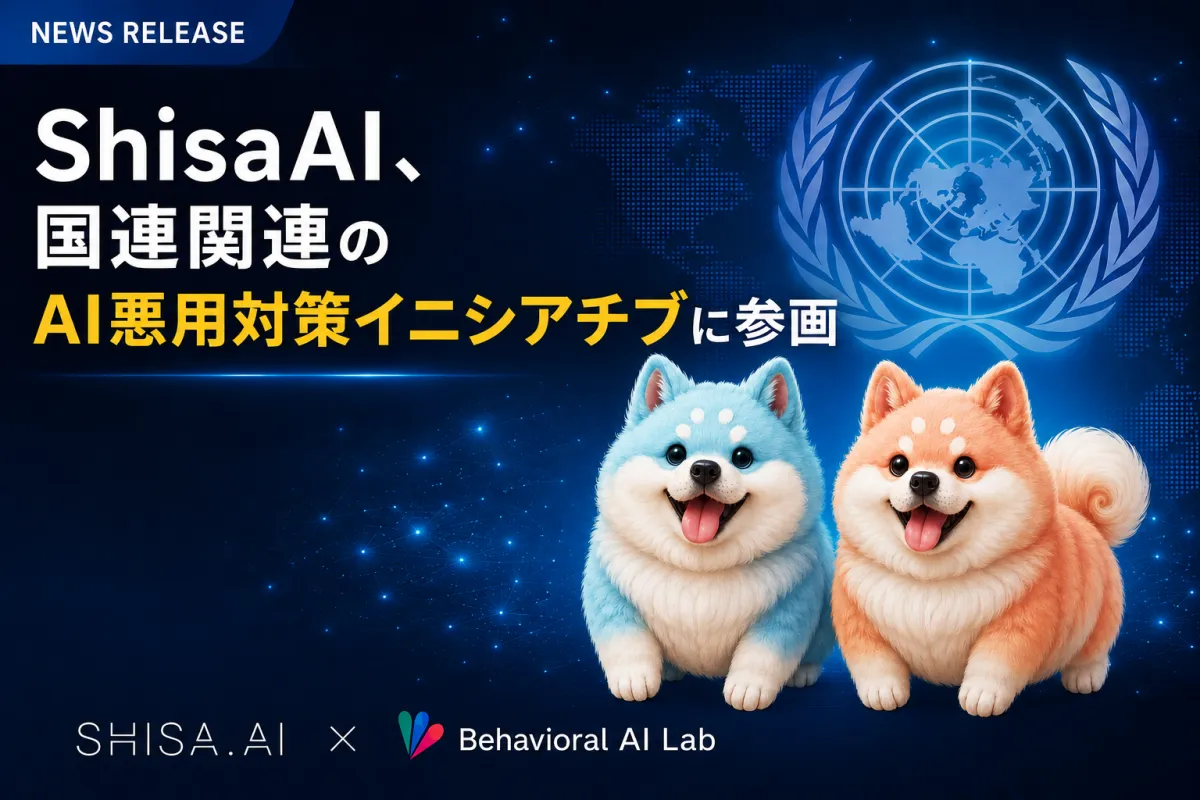
Shisa.AI Partners with the UN to Tackle AI-Enabled Scams and Fraud
Shisa.AI Joins Global Partnership on AI Fraud Prevention
In a groundbreaking move, Shisa.AI, a Tokyo-based company specializing in AI technology, has become an integral part of the Global Partnership for Detecting and Preventing AI-Enabled Manipulation and Scams. This initiative is spearheaded by the Behavioral AI Lab and has secured formal recognition under the UN Global Dialogue on AI Governance Registry of Initiatives. Shisa.AI's research team will provide key technological contributions, positioning itself as a leader in this vital global endeavor.
Founded by Tomomi Tanaka, the Behavioral AI Lab focuses on integrating behavioral economics with artificial intelligence to create effective decision-making designs. Tanaka also represents the firm BEworks in Japan, which promotes the application of behavioral economics in both private and public sectors. Additionally, she contributes to academia as a Visiting Professor at Kindai University.
The key challenge this initiative aims to tackle is the growing threat of multilingual scams, particularly those emerging from the rapid advancements in generative AI. Traditional scam detection systems primarily function based on predetermined rules, keyword lists, and message analysis. However, these outdated methods fall short when addressing personalized and multilingual scams, such as romance fraud and impersonation scams, where interactions can span lengthy conversations.
To effectively combat this emerging threat, the project will leverage advanced language models and classifiers, enabling the identification of contextual patterns across different languages. This approach aims for earlier and more trustworthy detection of fraudulent activities, thus better protecting consumers worldwide.
Shisa.AI possesses a comprehensive set of technical capabilities, ranging from dataset development to model training and evaluation design. The company's extensive experience with multilingual models, alongside its recent advancements in model safety, bias reduction, and alignment, underscores its suitability to lead the technical development of this project. The initiative plans to expand on existing research that has examined tens of thousands of scam messages arising from numerous documented cases of cryptocurrency romance scams.
During its active period, the partnership is set to generate five open-source resources. These will be designed for Trust & Safety teams, AI developers, and consumer protection agencies globally. The outcomes include:
1. Behavioral Manipulation Taxonomy v1 and Implementation Guidance (Expected release: Q4 2026)
2. Multilingual Behavioral-Risk Datasets and Evaluation Benchmarks (Expected release: Q2 2027)
3. Safety by Design Framework for Deception Prevention (Expected release: Q2 2027)
4. Interactive Capacity-Building Workshops in at least three countries (Scheduled for June 2027)
5. Pilot Implementations with at least three global partner organizations (Scheduled for June 2027)
Leonard Lin, co-founder and CTO of Shisa.AI, expressed enthusiasm about the project's potential: "Shisa.AI was founded on the belief that AI should tangibly improve people’s lives in Japan, so it’s gratifying to contribute to a project that can help protect people worldwide from scams and manipulation."
Through this international collaboration, which covers crucial regions such as Japan, Singapore, the US, the UK, and Southeast Asia, Shisa.AI continues to emphasize its commitment to building open-source safety infrastructures, advancing Sovereign AI, and promoting privacy-focused AI defense strategies.
For press inquiries:
- - Email: [email protected]
- - Corporate Website: Shisa.AI



Topics Consumer Technology)
【About Using Articles】
You can freely use the title and article content by linking to the page where the article is posted.
※ Images cannot be used.
【About Links】
Links are free to use.