



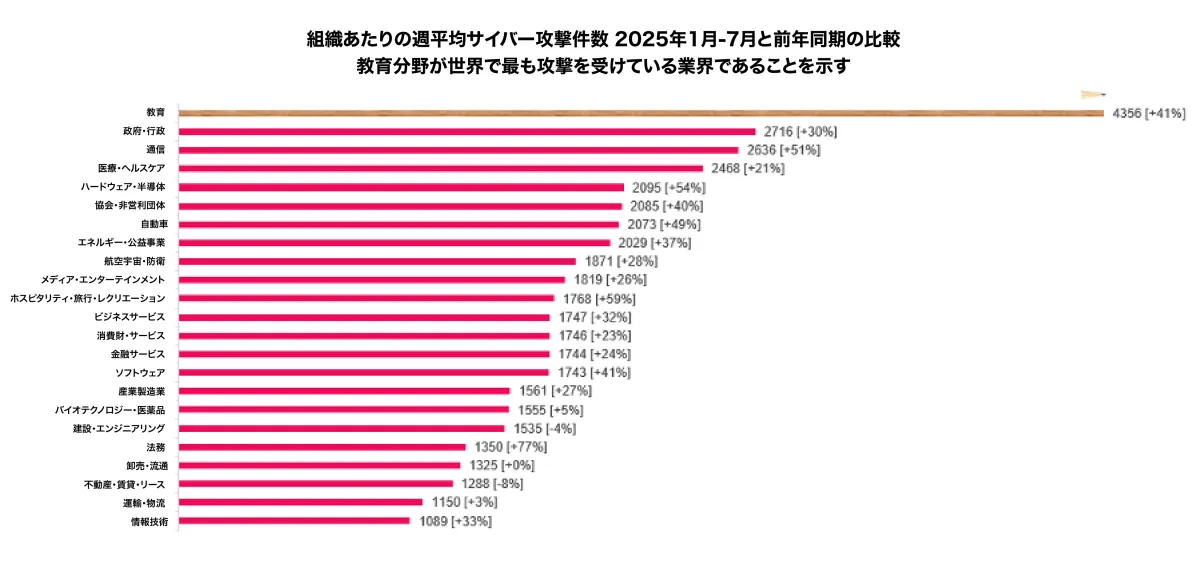
Cyber Attacks Surge in Education Sector with New Term Begins
Surge in Cyber Attacks Against Education Sector
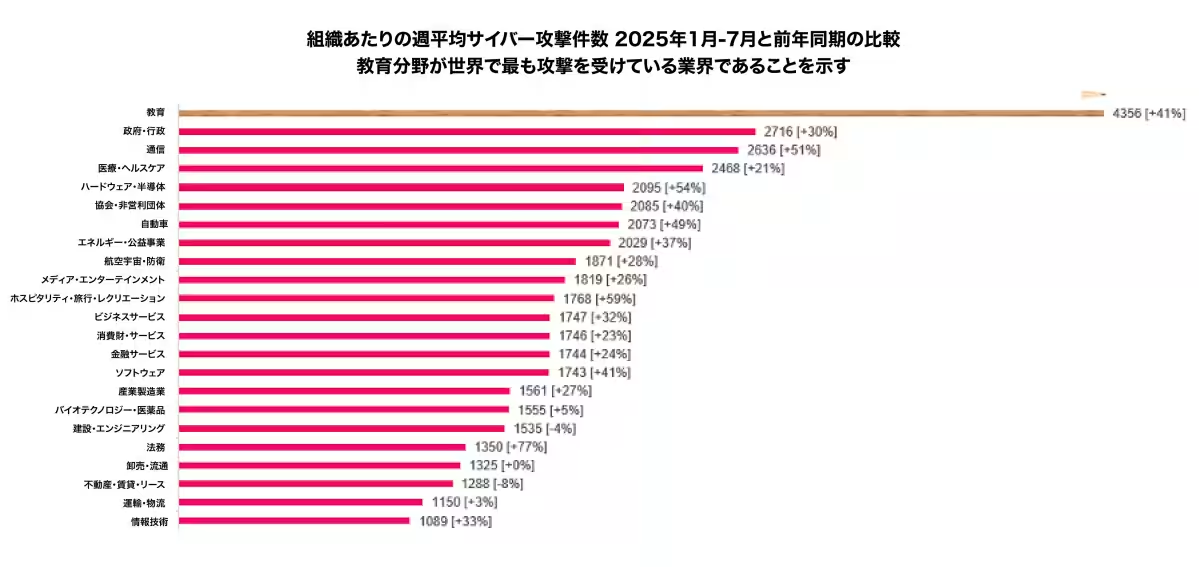
As the new academic year kicks off, Check Point Research (CPR) has uncovered alarming statistics regarding the rise of cyber attacks within the education and research sectors. According to their latest findings, educational institutions are now facing unprecedented levels of cyber threats. From January to July 2025, this sector is projected to remain the most targeted by cybercriminals, with an average of 4,356 attacks per organization per week, marking a staggering 41% increase compared to the previous year.
Global Situation of Cyber Attacks in Education
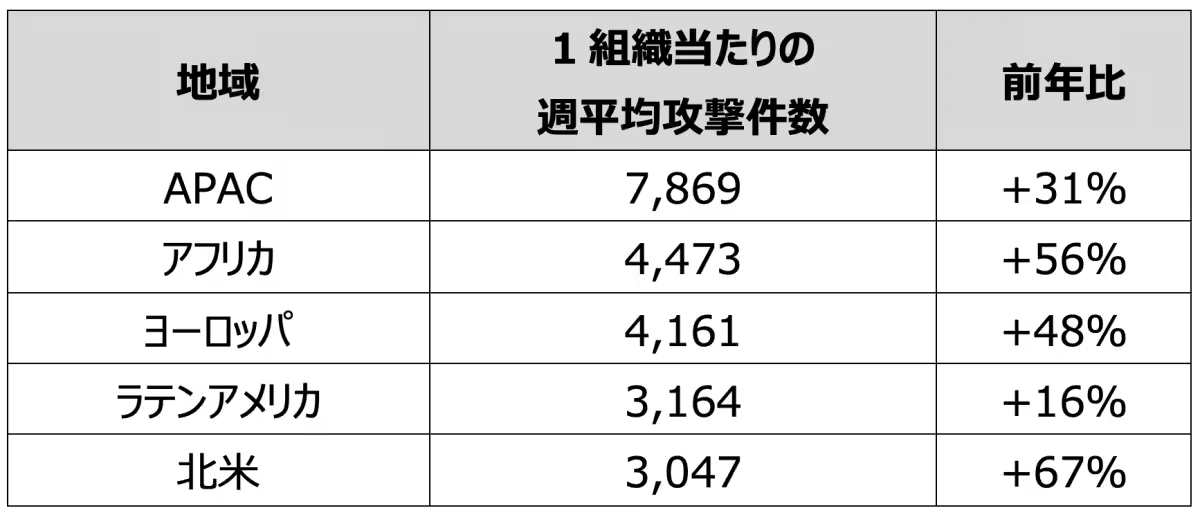
The data reveals a distressing trend where educational organizations are subjected to continuous cyber attacks, irrespective of their geographical location. Both developed and developing countries are witnessing a rise in incidences of attacks, indicating the global nature of this threat. Notably, the Asia-Pacific (APAC) region tops the list with an astonishing average of 7,869 attacks weekly per organization. In terms of percentage increases, North America has seen a 67% rise, while Europe and Africa have reported increases of 48% and 56%, respectively.
Among the countries with the sharpest increases are:
- - Hong Kong: 5,399 attacks (+210%)
- - Italy: 8,593 attacks (+82%)
- - Portugal: 5,488 attacks (+80%)
- - United States: 2,912 attacks (+75%)
These statistics illustrate a growing trend where schools, universities, and professional institutions are becoming prime targets for cybercriminals, especially during crucial periods like the beginning of a new academic term.
Phishing Threats Targeting Students and Staff
Cybercriminals are actively exploiting the increased digital activities associated with the new school year. In July 2025 alone, Check Point identified 18,391 new domains associated with schools and universities, with approximately 1 out of every 57 domains being malicious or suspicious in nature.
Several phishing campaigns have emerged, where attackers masquerade as academic entities to deceive victims. For instance:
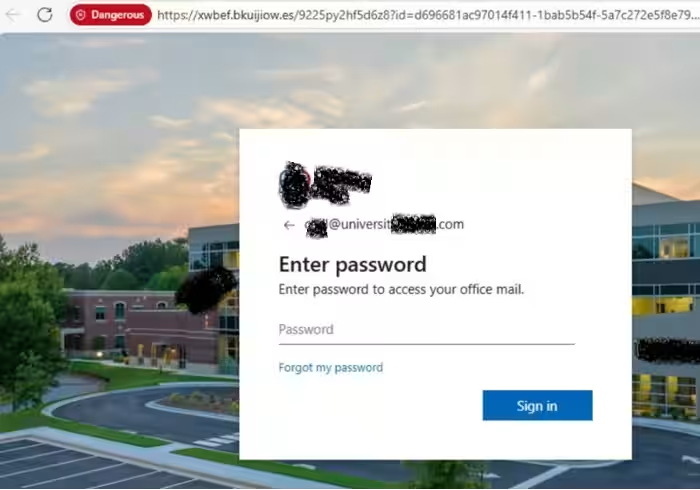
- - A phishing email was circulated on August 12, employing a file name format similar to "[university_name].comVWAV.svg" to lure victims to a fake university login page, mimicking Microsoft Outlook to steal credentials.
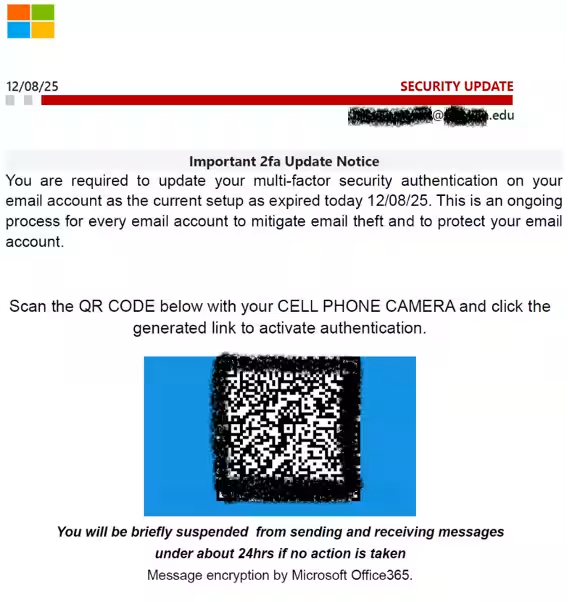
- - In another case, university staff in the U.S. received a PDF titled "****** University-Pay Update.pdf," prompting them to update MFA settings via a QR code, ultimately redirecting them to a fraudulent Microsoft login page.
These examples illustrate how attackers are leveraging the chaos of the new semester to extract sensitive information from users under false pretenses.
Reasons for the Education Sector Being a Primary Target
The education and research sector is uniquely vulnerable due to a combination of factors, including:
- - A dispersed user base consisting of students, staff, alumni, and parents
- - Heavy reliance on online platforms and shared credentials
- - Budget constraints on IT and cybersecurity
- - Access to sensitive data ranging from student records to cutting-edge research
These vulnerabilities make educational institutions appealing targets for cybercriminals seeking financial gain or personal data theft.
Defensive Measures by Educational Institutions
To mitigate the risks associated with the new academic term, educational institutions are advised to adopt various proactive measures:
- - Educate staff and students about phishing threats using updated fraud case examples
- - Implement Multi-Factor Authentication (MFA) comprehensively, while monitoring for phishing tactics targeting MFA fatigue
- - Track newly registered domains related to the organization to guard against typosquatting and impersonation attempts
- - Regularly apply system updates and patches, particularly on widely used platforms like email and collaborative tools
- - Deploy advanced threat mitigation solutions to block malicious emails, files, and links before reaching users
Conclusion
With attacks against the education and research sector rising over 40%, the urgency for robust cybersecurity measures has never been more critical. The exploitation of the new term's chaos by phishing campaigns places this sector at the forefront of the global cyber threat landscape. Proactive security awareness and multi-layered defenses are vital to safeguard students, staff, and educational institutions amidst these evolving threats.
This article is derived from a blog released on August 28, 2025, US time.
About Check Point Research
Check Point Research provides the latest cyber threat intelligence to Check Point's customers and the global threat intelligence community. By analyzing data on cyber attacks from the ThreatCloud AI platform, it contributes to deterring cybercriminals while enabling effective protection within Check Point’s products.
About Check Point Software Technologies
Check Point Software Technologies is a leading provider of cyber security solutions, protecting over 100,000 organizations worldwide with AI-driven security measures. They offer integration of management and simplicity through their Infinity Platform, adopting a comprehensive risk-reduction approach. Based in Tokyo, the Japanese branch was established on October 1, 1997.
Topics Other)
【About Using Articles】
You can freely use the title and article content by linking to the page where the article is posted.
※ Images cannot be used.
【About Links】
Links are free to use.