



KMS Strengthens AI Collaboration Framework with MCP Server Implementation
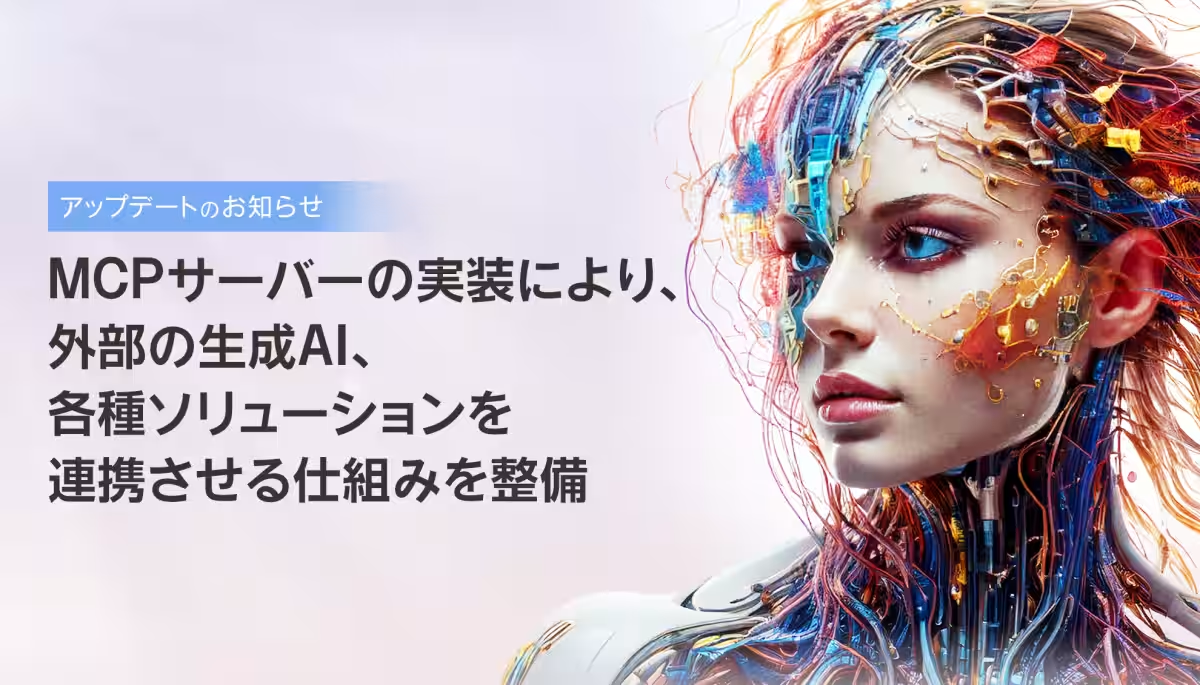
KMS, under the leadership of CEO Kentarō Kajihara, has recently announced a significant advancement in its AI offerings: the integration of the Model Context Protocol (MCP) server into their AI Solutions platform. This strategic move is designed to enhance the collaboration between KMS's generative AI solutions and external AI tools and various other applications, establishing a robust framework for operational efficiency that companies can leverage.
The advent of the MCP server facilitates a more streamlined integration of existing generative AI environments with KMS's solutions. This means that businesses can now utilize generative AI without the need to set up new operational environments, making it possible to incorporate necessary AI functions into their workflows seamlessly. This will support overall productivity enhancements in various business functions, including information organization, decision-making assistance, and the optimization of development tasks.
By implementing the MCP server, KMS effectively creates an environment that seamlessly incorporates generative AI into business processes, which is essential for driving digital transformation (DX) initiatives within organizations. The MCP server acts as a linking framework that connects generative AI capabilities with in-house business systems and databases, all governed by predefined rules for security and management.
Understanding the mechanics of the MCP server is crucial. This update lays the groundwork for what has been termed a 'common rule-based integration system.' The server enables KMS's AI solutions to determine which data sources generative AI can access and to what extent it can perform actions within those sources. For instance, a RAG-based AI agent developed on KMS's platform can be accessed by external generative AI applications, significantly enhancing the user experience and operational versatility.
Moreover, this structure ensures that while utilizing generative AI, businesses can maintain a strong grip on security and governance through effective permission management, access restrictions, and operation logs. Consequently, firms are empowered to expand their generative AI usage flexibly, gradually ascending to more advanced operational frameworks without becoming reliant on specific AI tools or environments.
KMS is also committed to fostering ongoing advancements in the practical operation of generative AI, further supporting companies in enhancing their operational capabilities and maintaining sustainable value creation. This is especially relevant as the landscape of AI technologies continues to evolve rapidly.
In addition, KMS’s AI Solutions leverage state-of-the-art AI models such as GPT-5.2, GPT-5.1-codex, and others, offering natural conversation, content generation, coding, and image creation functionalities. This versatility extends to creating customized experiences that cater to a wide array of tasks, thereby maximizing the utility of client-owned data in a secure environment.
As an integrative hub for these technological elements, KMS's AI Solutions interface seamlessly with platforms like Microsoft Teams and external services such as SharePoint and Box. This amalgamation allows businesses to experience unprecedented levels of interaction and operational fluidity.
In summary, with the introduction of the MCP server, KMS not only fortifies its AI solutions’ infrastructure but also paves the way for a more efficient and versatile application of generative AI across various business landscapes. As KMS continues to innovate, the future looks promising for organizations looking to harness the full potential of AI technologies for their operational needs.
For more information about KMS and their AI Solutions, please visit KMS's corporate website or explore their AI Solutions platform at KMS AI Solutions.
The advent of the MCP server facilitates a more streamlined integration of existing generative AI environments with KMS's solutions. This means that businesses can now utilize generative AI without the need to set up new operational environments, making it possible to incorporate necessary AI functions into their workflows seamlessly. This will support overall productivity enhancements in various business functions, including information organization, decision-making assistance, and the optimization of development tasks.
By implementing the MCP server, KMS effectively creates an environment that seamlessly incorporates generative AI into business processes, which is essential for driving digital transformation (DX) initiatives within organizations. The MCP server acts as a linking framework that connects generative AI capabilities with in-house business systems and databases, all governed by predefined rules for security and management.
Understanding the mechanics of the MCP server is crucial. This update lays the groundwork for what has been termed a 'common rule-based integration system.' The server enables KMS's AI solutions to determine which data sources generative AI can access and to what extent it can perform actions within those sources. For instance, a RAG-based AI agent developed on KMS's platform can be accessed by external generative AI applications, significantly enhancing the user experience and operational versatility.
Moreover, this structure ensures that while utilizing generative AI, businesses can maintain a strong grip on security and governance through effective permission management, access restrictions, and operation logs. Consequently, firms are empowered to expand their generative AI usage flexibly, gradually ascending to more advanced operational frameworks without becoming reliant on specific AI tools or environments.
KMS is also committed to fostering ongoing advancements in the practical operation of generative AI, further supporting companies in enhancing their operational capabilities and maintaining sustainable value creation. This is especially relevant as the landscape of AI technologies continues to evolve rapidly.
In addition, KMS’s AI Solutions leverage state-of-the-art AI models such as GPT-5.2, GPT-5.1-codex, and others, offering natural conversation, content generation, coding, and image creation functionalities. This versatility extends to creating customized experiences that cater to a wide array of tasks, thereby maximizing the utility of client-owned data in a secure environment.
As an integrative hub for these technological elements, KMS's AI Solutions interface seamlessly with platforms like Microsoft Teams and external services such as SharePoint and Box. This amalgamation allows businesses to experience unprecedented levels of interaction and operational fluidity.
In summary, with the introduction of the MCP server, KMS not only fortifies its AI solutions’ infrastructure but also paves the way for a more efficient and versatile application of generative AI across various business landscapes. As KMS continues to innovate, the future looks promising for organizations looking to harness the full potential of AI technologies for their operational needs.
For more information about KMS and their AI Solutions, please visit KMS's corporate website or explore their AI Solutions platform at KMS AI Solutions.
Topics Business Technology)

【About Using Articles】
You can freely use the title and article content by linking to the page where the article is posted.
※ Images cannot be used.
【About Links】
Links are free to use.