



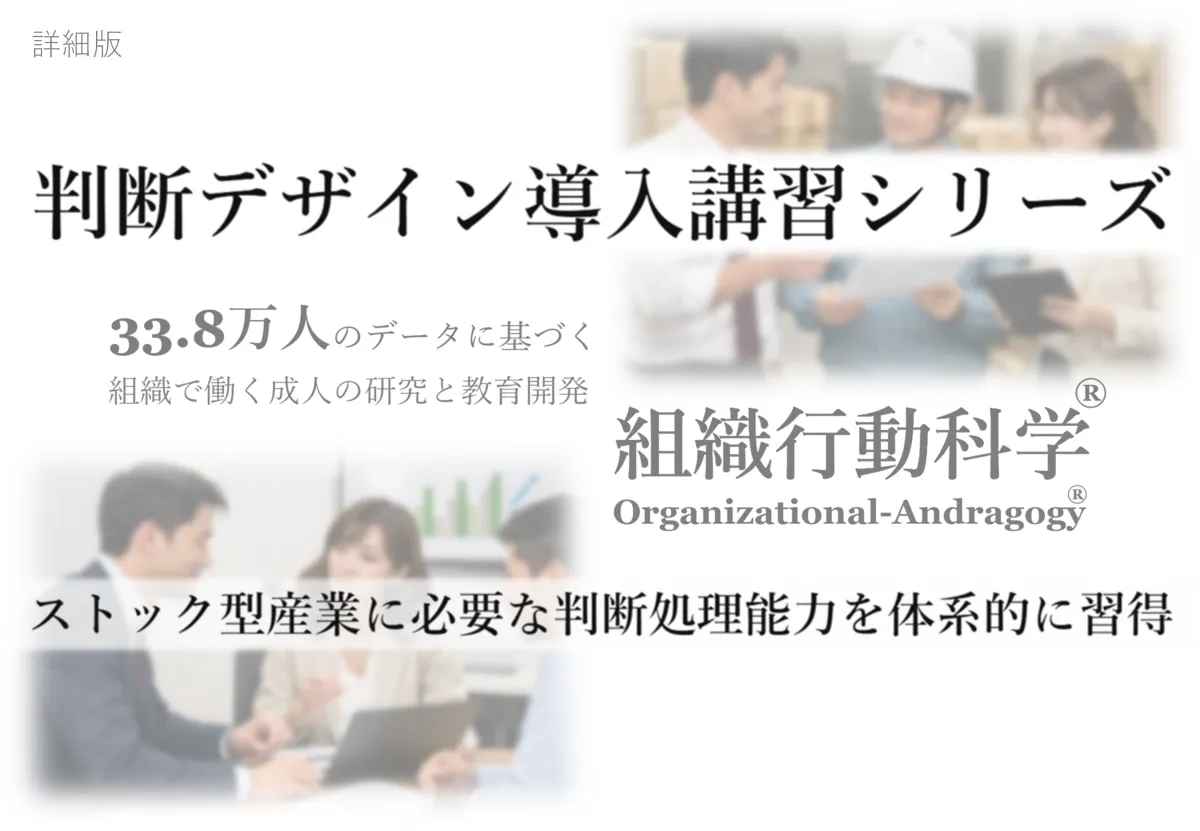
Revolutionizing Decision-Making in Organizations with Real-World Design Training Series
Introduction
In various sectors such as construction, healthcare, and B2B sales, a common issue has been identified: the over-reliance on seasoned professionals for decision-making. Request Inc., based in Shinjuku, Tokyo, aims to tackle this challenge through their newly launched program titled the 'Decision Design Training Series.' This program focuses on alleviating the dependency on experts by providing a structured approach to decision-making within organizations.
Addressing Over-Reliance on Experts
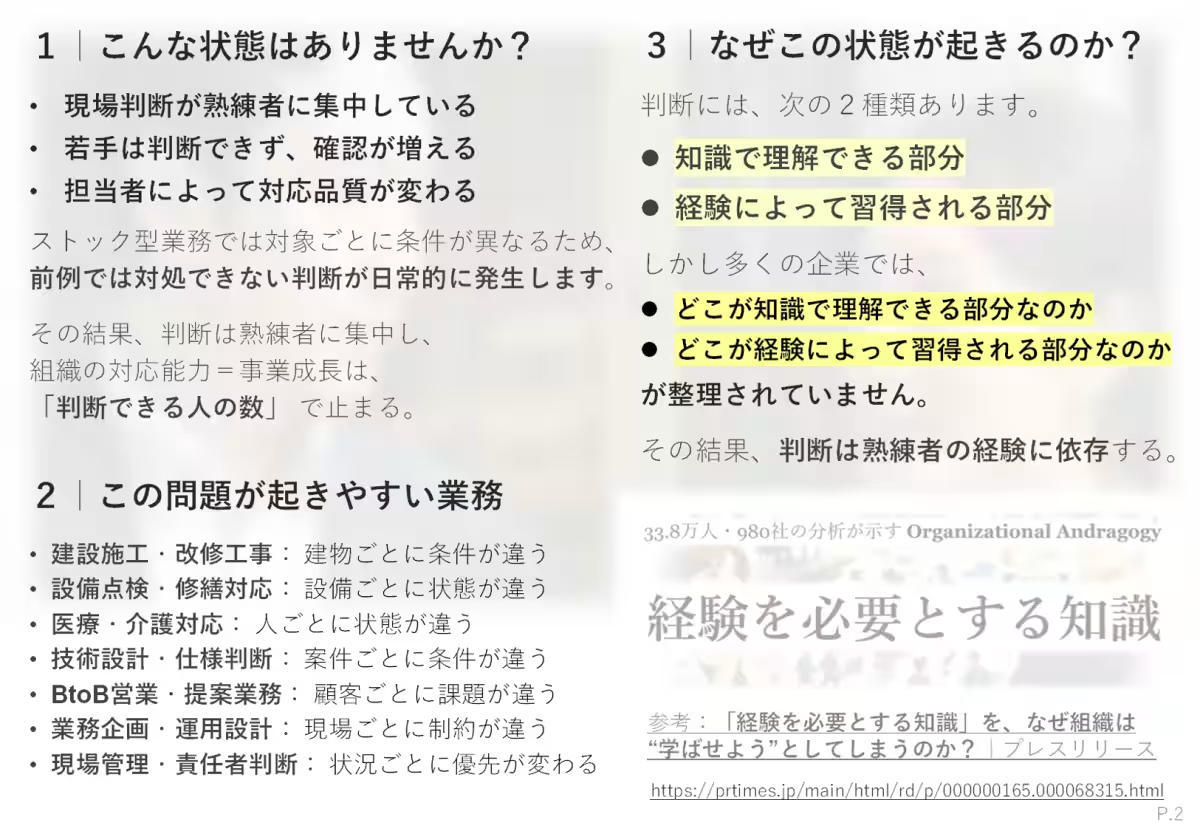
Organizations often find themselves facing critical decision-making processes that hinge heavily on the expertise of a select few individuals. The result is that inexperienced employees may struggle to make confident decisions, leading to an increase in verification tasks and inconsistency in service quality depending on the person responsible. This situation is not isolated to specific industries but can be seen across various fields, including:
- - Construction Projects: Different conditions arise with each project, making uniform decision-making difficult.
- - Equipment Maintenance: Each piece of equipment may have varying statuses requiring tailored responses.
- - Healthcare: Patient care requires individualized attention based on unique health conditions.
- - B2B Sales: Each client presents different challenges necessitating unique solutions.
Understanding Stock-Type Work
Stock-type work requires individualized judgments due to the differential conditions present in various tasks. In the absence of standardized decision-making frameworks, decisions become increasingly centralized among seasoned professionals, which restricts the development of younger employees. This dynamic leads to a further reduction in the organization's capability to respond to market changes or business growth, hinging on the number of individuals available to make informed decisions.
Types of Judgment
Research in organizational behavior science has identified two primary types of judgment:
1. Knowledge-Based Judgment: This type can be systematically organized through manuals, procedures, and rules.
2. Experience-Based Judgment: This type is influenced by situational variables and conditions that might alter the necessary response, as well as exceptions that might not be covered by standard procedures.
Despite their importance, many organizations fail to clearly differentiate between knowledge-based and experience-based areas. This often results in a blurring of lines that complicates the training process, with firms attempting to educate employees on experience-based judgments through knowledge-based means.
Proposals for Improvement
To effectively mitigate the reliance on seasoned professionals and enhance organizational decision-making capacity, Request Inc. proposes two key initiatives:
1. Structuring Decision-Making Frameworks: Clearly outline decision criteria, conditions, and procedures to identify which aspects can be simplified through basic knowledge.
2. Experiential Learning: Intentionally design frameworks for employees to accumulate relevant experience in varied real-world situations.
The Decision Design Training Series
The Decision Design Training Series, based on comprehensive behavioral analysis involving over 338,000 workers across 980 companies, aims to provide a systematic understanding and implementation of the necessary decision-making capacities tailored for stock-type work. The training is particularly beneficial for organizations involved in:
- - Construction and Maintenance: Where critical decision-making can be improved through better clarity in procedures.
- - B2B Sales: Where unique client needs must be addressed upon personalized grounds.
- - Healthcare Services: Which frequently require nuanced and individualized decisions.
The series consists of four key modules:
1. Conceptual Understanding: Recognizing the unique requirements for decision design in stock-type work.
2. Learning Transfer: Techniques for unlearning and relearning effective practices.
3. Practical Implementation: Strategies for encasing decision design into everyday work practices.
4. Organizational Deployment: Structuring roles and operations around the newly implemented decision-making framework.
Conclusion
As businesses adapt to an ever-evolving environment, the performance of their workforce is increasingly feeling the impact of decision-making structures. By engaging with the Decision Design Training Series provided by Request Inc., companies can enhance their decision-making capabilities and foster a more capable, confident workforce, free from over-dependence on seasoned professionals.
For further inquiries and detailed information, you can connect with Request Inc. through their official channels.


Topics Business Technology)
【About Using Articles】
You can freely use the title and article content by linking to the page where the article is posted.
※ Images cannot be used.
【About Links】
Links are free to use.