



Japan's Green Investment Corp. to Support Lean Mobility's Electric Three-Wheelers
Japan's Green Investment Corp. to Support Lean Mobility's Electric Three-Wheelers
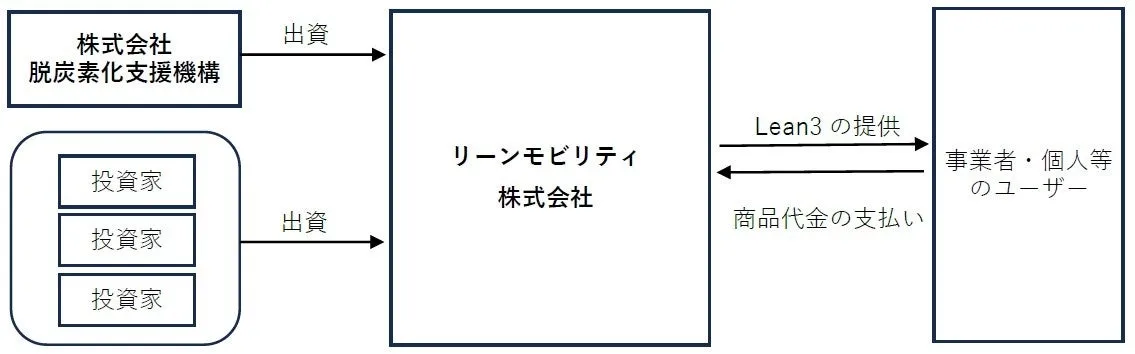
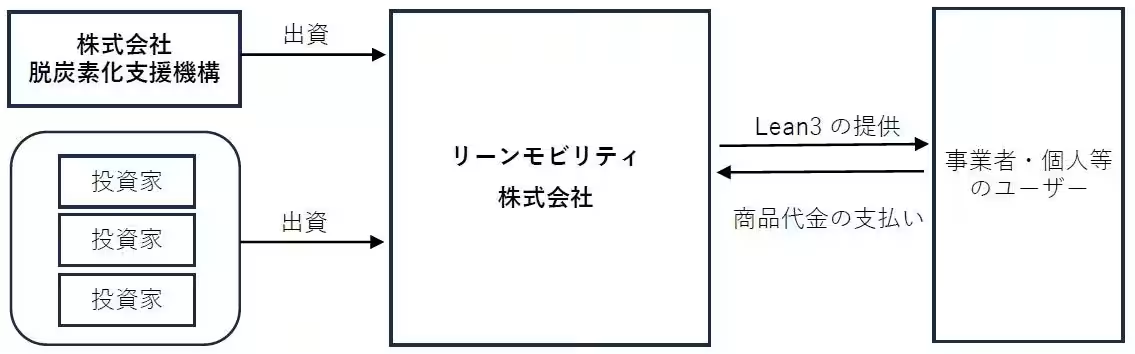
In a significant move toward sustainable transportation, Japan Green Investment Corp. for Carbon Neutrality (JICN) has approved a financial investment of 200 million yen in Lean Mobility Inc. This support aims to enhance the production and promotion of the company’s electric three-wheeler known as Lean3, a vehicle designed for urban mobility.
Overview of Lean Mobility Inc.
Founded on January 31, 2025, Lean Mobility is headquartered in Toyota City, Aichi Prefecture. The company is led by its CEO, Sojiro Tanaka, who previously worked on the development of Toyota's i-ROAD and C+pod electric vehicles. The primary focus of Lean Mobility is the design, manufacture, and sale of their groundbreaking Lean3 model.
Features of Lean3
Lean3 is an ultra-compact electric tricycle measuring approximately 970 mm in width, accommodating one passenger. It boasts a maximum speed of 60 km/h and a range of approximately 100 km, making it a practical choice for short trips. The vehicle comes equipped with air conditioning and can be charged via a standard household power source. Importantly, it can be operated with a regular driver's license and does not require vehicle inspection, classifying it as a mini-vehicle.
The Lean3 employs an innovative body control system called the Active Lean System. This advanced software-driven technology ensures vehicle stability by optimizing the tricycle's posture during turns, thus preventing potential accidents. With the promise of future automation, this electronic control system could lead Lean3 toward self-driving capabilities.
Production and Market Plans
Lean Mobility anticipates operational readiness for mass production in Tainan, Taiwan by 2026. The initial rollout to the Japanese market is expected within that year, as well. The company plans to accelerate outreach to both corporate and individual customers in Japan while also exploring market opportunities in Taiwan.
Additionally, Lean Mobility aims to expand its services with the LeanX platform, which includes charging services, over-the-air updates, parking sharing, and used vehicle sales.
Environmental Impact and Policy Significance
The introduction of Lean3 is anticipated to significantly lower greenhouse gas emissions. The transportation sector in Japan accounts for about 19% of the country's total CO₂ emissions, with personal and freight vehicles contributing over 80% of that figure as of the fiscal year 2023. Lean3’s fully electric design allows it to utilize renewable energy sources, promising a substantial reduction in CO₂ emissions compared to gasoline-powered vehicles. Furthermore, Lean’s size and cost efficiency make it an ideal replacement for second cars, particularly for last-mile delivery solutions, aiding in the reduction of fossil fuel consumption and greenhouse gas emissions.
Economic and Environmental Synergy
The development of Lean Mobility is expected to foster a new industry in the ultra-compact electric vehicle segment, leveraging Japan's expertise in manufacturing and the automotive industry. The efficient transportation offered by Lean3 can enhance commuting options for various sectors, including manufacturing, delivery, retail, and agriculture, also freeing up valuable parking space.
Future Perspectives
As JICN continues its collaboration with various stakeholders, it seeks to establish funding for a range of projects aimed at carbon reduction. The organization also strives to present their expertise and resources to foster the ideas and technologies from diverse entities, contributing to a sustainable future.
By investing in innovations such as Lean Mobility’s Lean3, Japan is taking a step toward reimagining urban transportation, ultimately contributing to a greener and more sustainable economy.

Topics Consumer Technology)
【About Using Articles】
You can freely use the title and article content by linking to the page where the article is posted.
※ Images cannot be used.
【About Links】
Links are free to use.