



Rising Gas Prices in Japan Due to Middle East Issues and Their Impact on Consumer Behavior
Rising Gas Prices in Japan Due to Middle East Issues
As tensions in the Middle East continue, Japanese consumers are feeling the pinch of soaring gasoline prices, which have recently reached a staggering ¥190 per liter. A recent survey conducted by Happy Cars, a car buying specialty store based in Kamakura, Kanagawa, has delved into the consciousness and behavioral changes among individuals aged 20 to 60 who regularly drive cars. The high gas prices pose a severe threat not only to maintenance costs for vehicle owners but also ripple through logistics and utility costs, ultimately weighing on the overall consumer lifestyle.
Survey Overview
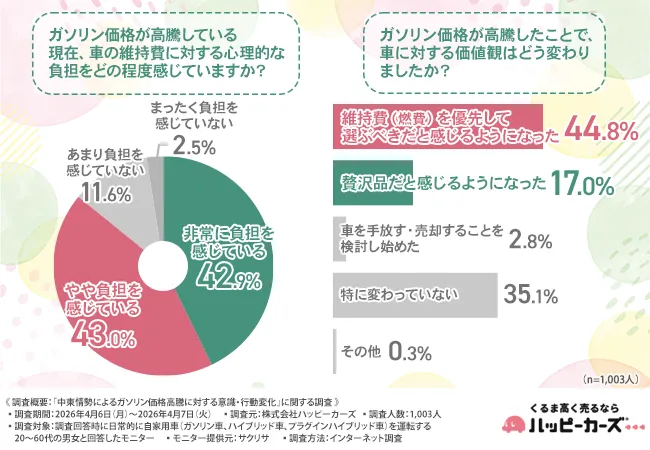
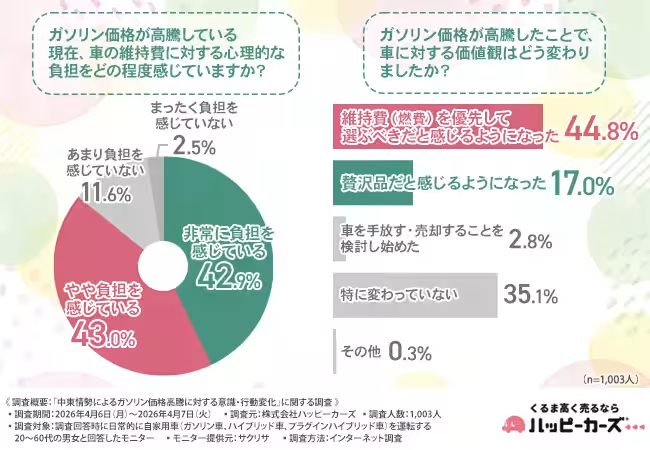
The survey, conducted between April 6 and April 7, 2026, garnered responses from 1,003 individuals who own and operate petrol, hybrid, or plug-in hybrid vehicles. Among these participants, approximately 90% reported feeling a significant or moderate burden from rising gasoline expenses.
When respondents were asked how their perceptions of car ownership had shifted due to soaring gas prices, about 44.8% felt that prioritizing fuel economy is now essential, whereas 17% began viewing their vehicles as luxury items. With ongoing inflation impacting the cost of living, it appears that many now perceive vehicle ownership as a financial strain.
As consumers adapt, notable behavioral changes have emerged. Nearly 28% reported reducing the frequency of long drives or outings. Close to 26% indicated a tendency to limit unnecessary travel, while approximately 24% seek out lower-priced fuel options, highlighting a re-evaluation of leisure activities against essential expenses.
The Impact of High Gas Prices
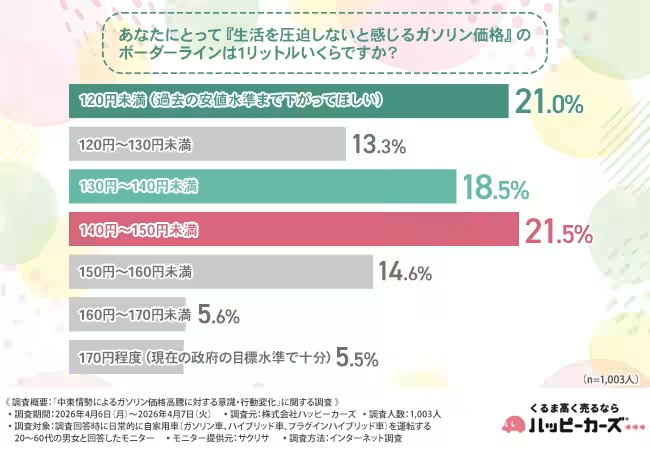
The survey also touched on the ideal gas price that consumers believe would not infringe upon their daily lives, revealing that many view ¥140 to ¥150 as acceptable. Alarmingly, over 20% wish for prices to revert to below ¥120, indicating a stark disconnect between consumer ideal prices and current market rates.
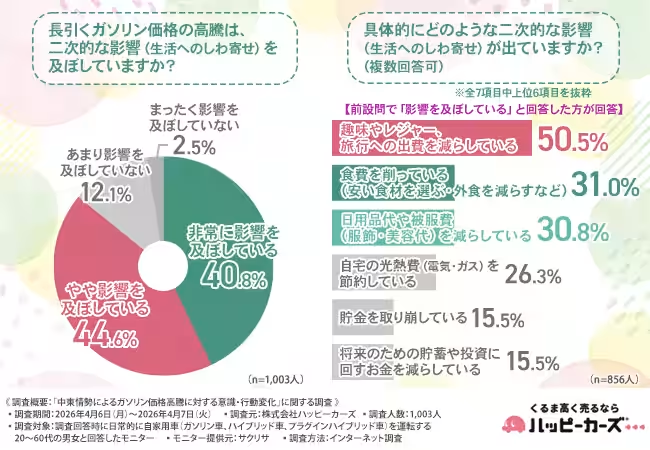
A staggering 90% of respondents acknowledged that prolonged gas price increases create secondary impacts on their lives, compelling them to cut back on leisure activities, groceries, and other essentials. This shift underscores a fundamental change in consumer discourse, transitioning from vehicle enjoyment to stringent cost management.
Many participants reported experiencing pressures such as insufficient commuting allowances, reduced use of air conditioning to cut costs, and diminished spending on personal pursuits. They expressed frustrations over the burden of high gas prices, highlighting that the increased cost not only limits their travel but adversely affects their mental well-being and convenience.
Dissatisfaction Amidst Taxation
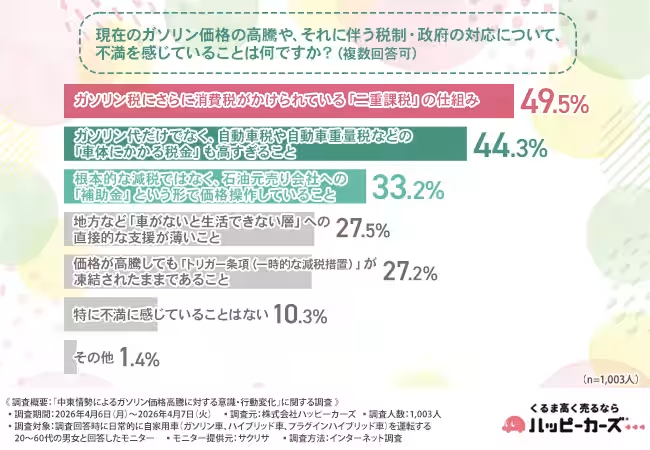
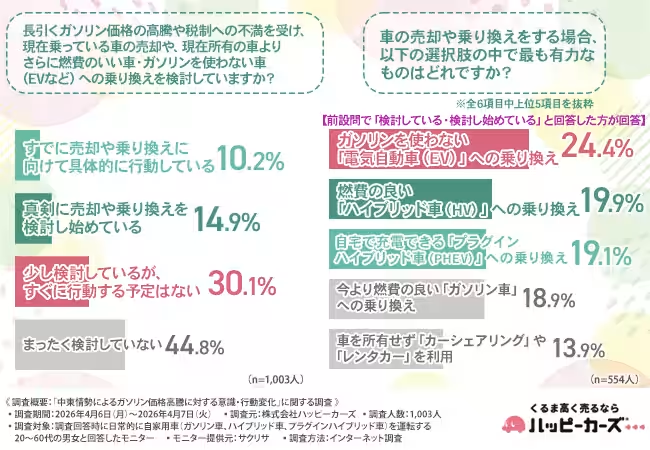
When asked about their frustrations concerning the current gasoline price hikes and related taxation, nearly half the respondents raised issues regarding double taxation involving gas taxes and consumption taxes. Such sentiments point to a broader dissatisfaction with the structural tax framework in place, particularly among those who view their vehicles as increasingly expensive luxuries. More than half of the respondents hinted at considering selling or trading their cars in light of rising costs and taxes.
Eco-Friendly Alternatives
In response to the high fuel prices, interest in electric vehicles (EVs) is notably growing, with around 24.4% of respondents expressing a preference for them as a viable replacement for their current cars. This shift towards EVs indicates a fundamental reevaluation triggered by rising upkeep costs, with consumers prioritizing fuel efficiency beyond environmental concerns.
Overall, the survey findings illustrate a dynamic change in how gasoline prices, influenced by socio-political factors, significantly impact consumer behavior. With many viewing their vehicles through a lens of risk management rather than personal enjoyment, the implications for the automotive market are profound. As consumers redefine their vehicle ownership experiences, we expect the trend towards downsizing and transitioning to more fuel-efficient options to continue evolving.



Topics Consumer Products & Retail)


【About Using Articles】
You can freely use the title and article content by linking to the page where the article is posted.
※ Images cannot be used.
【About Links】
Links are free to use.